Monstera Types and Variety Guide | Comprehensive Comparison from Deliciosa to Adansonii
Comprehensive comparison of popular Monstera houseplant varieties. This guide explains the characteristics, identification methods, and cultivation differences of each variety.
Key Takeaways
Comprehensive comparison of popular Monstera houseplant varieties. This guide explains the characteristics, identification methods, and cultivation differences of each variety.
Monstera is one of the most popular houseplants, characterized by deep cuts and holes in its large leaves. As an interior element, it has an outstanding presence and is frequently seen in displays at cafes and shops. However, "Monstera" encompasses multiple types, and they differ considerably in both characteristics and appearance. This guide explains the main Monstera varieties and their individual features.
Characteristics and Cultivation of Deliciosa (M. deliciosa)
The most common Monstera variety, also known as the Ceriman or Swiss Cheese Plant.
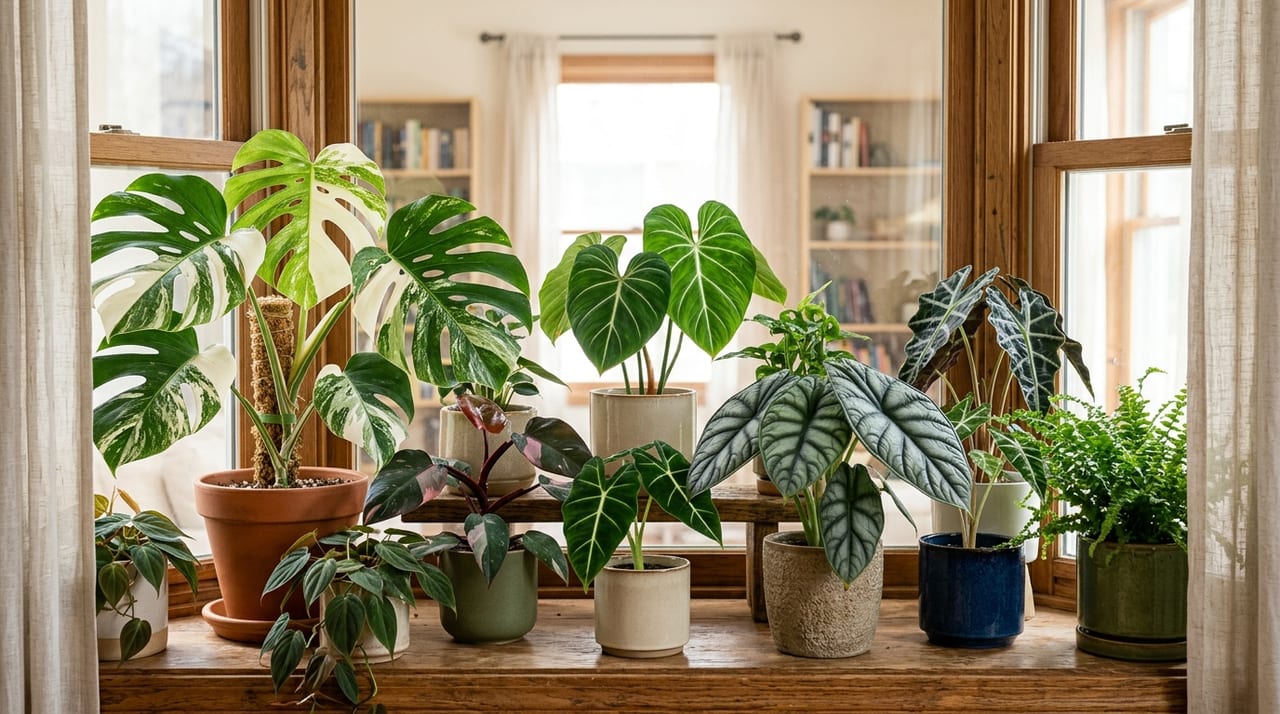
Appearance and Characteristics When mature, this is a large-growing variety with leaves exceeding 50 cm in diameter. The leaf cuts are deep, and the holes (fenestrations) are also prominent. Young plants have heart-shaped leaves without cuts, but as they mature, the leaves develop their characteristic slitted appearance.
Cultivation Tips It tolerates some shade and grows well indoors in bright locations. However, insufficient light makes it harder for the characteristic leaf cuts to develop, so a bright spot near a sheer curtain is ideal. During spring through autumn, water thoroughly when the soil surface dries; in winter, keep it slightly dry. As aerial roots emerge, guide them onto a moss pole or support stake for a natural appearance.
Variegated Deliciosa Variegated varieties such as the white-variegated 'White Monster' and yellow-variegated 'Yellow Marylin' enjoy extremely high popularity. Variegated varieties grow more slowly, and the variegated sections are prone to sunburn in direct sunlight, requiring more delicate care.
Characteristics of Adansonii (M. adansonii)
A smaller variety than deliciosa with a strong climbing habit.
Appearance and Characteristics The leaves are approximately 15–30 cm, smaller than deliciosa, with numerous holes being the defining feature. Unlike deliciosa, it has holes but no cuts—a major distinction. Its strong vining habit makes it versatile for display: it can be grown trailing in hanging baskets or trained to climb a support.
Cultivation Tips It has greater shade tolerance than deliciosa and grows in somewhat dimmer locations. Watering is similar to deliciosa, but because its leaves are thinner, it is more susceptible to drying, so regular foliar misting is effective. Its rapid growth sometimes requires repotting once or twice a year.
Why It's Popular It doesn't require as much space as deliciosa, allowing you to enjoy a Monstera feel even in small spaces, making it popular with those in studio apartments and beginners. Its relatively affordable price is another appealing aspect.
Other Notable Monstera Varieties
Beyond deliciosa and adansonii, there are other compelling varieties.
| Variety | Characteristics |
|---|---|
| Dubia (M. dubia) | Young leaves are flat with silvery markings and adhere to walls and supports as they grow. With maturity, leaves develop the characteristic cuts typical of other Monsteras. The dramatic transformation from juvenile to mature leaves makes this a highly sought variety by collectors. |
| Pertusa (M. pertusa) | Similar to adansonii but with a different hole pattern. In the market, it is often confused with adansonii and sold mislabeled, so care is needed when purchasing. |
| Obliqua (M. obliqua) | A remarkable variety with extremely large holes in the leaves—the hole area is actually wider than the leaf area. It has very limited availability, and authentic obliqua commands high prices. Adansonii is frequently mislabeled as obliqua, making it important to purchase from a trustworthy seller. |
Reshaping and Propagating Monstera
Managing Monstera as it grows large is also important.
| Method | Details |
|---|---|
| Reshaping | Left to its own devices, Monstera can spread sideways and become covered in aerial roots, resulting in poor appearance. Cut below a node; use the upper portion for water propagation or cuttings to start new plants. The lower plant will sprout lateral buds and can be reshaped into a more compact form. |
| Propagation via Horizontal Stem | Cutting stems into single nodes and laying them horizontally on moist sphagnum moss—a method called "horizontal stem propagation"—is simple and has a high success rate. New shoots emerge from each node. At temperatures above 25°C and high humidity, roots and shoots develop within 2–4 weeks. |
| Water Propagation Tips | Propagating cut stems in water is also popular. Placing them in a transparent container lets you observe root growth and enjoy them as a decorative element. Change the water every 2–3 days, and once roots reach 5 cm or more, pot them in soil. |
Tips for Successful Variety Selection
Choosing a variety that suits you from the wide array available is both enjoyable and daunting. Refer to these points to make a variety selection you won't regret.
- Prioritize choosing a variety suited to your growing conditions. Consider whether you can provide a bright location, what your winter minimum temperature is, and how much time you can devote to watering. Be honest with yourself about your lifestyle and environment. Selecting based on appearance alone when you cannot adequately care for the plant is the most unfortunate scenario.
- Starting with well-established varieties with abundant information is a wise choice. Popular varieties have plentiful cultivation information online, making it easier to find solutions if problems arise. Rare varieties have limited information, and losing one inflicts greater economic and emotional damage.
- Verify the mature size of each variety. Some varieties grow larger than expected, and you may run out of space. Determine the final size and select a variety suited to your available space.
- Combining multiple varieties expands your collection and reduces monotony. Pairing varieties with different sizes, colors, and forms creates a visually rich display.
Selection and Purchase Tips for Monstera
Here are tips for finding your ideal Monstera.
Identifying Healthy Plants Select plants with firm, deep green leaves. Avoid specimens with brown leaf tips, many yellowing leaves, or a wobbly base.
Choosing Variegated Varieties Variegated Monsteras vary considerably between individuals, and even the same variety has unique variegation patterns on each plant. Photos may look different from the actual specimen, so it's important to purchase from a trustworthy seller.
At GrowerDirect, you can purchase directly from growers who specialize in cultivating Monstera. Since variegated varieties have significant individual variation, GrowerDirect's advantage is the ability to check photos directly with the grower and ask about variegation stability.