Complete Guide to Monstera Types and Care | Differences Between Deliciosa, Adansonii, and Variegated Varieties
A thorough comparison of major Monstera varieties, one of the most popular houseplants. This guide explains in detail the differences between Deliciosa and Adansonii, tips for managing variegated Monstera, how to handle aerial roots, and how to install supports.
Key Takeaways
A thorough comparison of major Monstera varieties, one of the most popular houseplants. This guide explains in detail the differences between Deliciosa and Adansonii, tips for managing variegated Monstera, how to handle aerial roots, and how to install supports.
Related Species
What Kind of Plant Is Monstera?
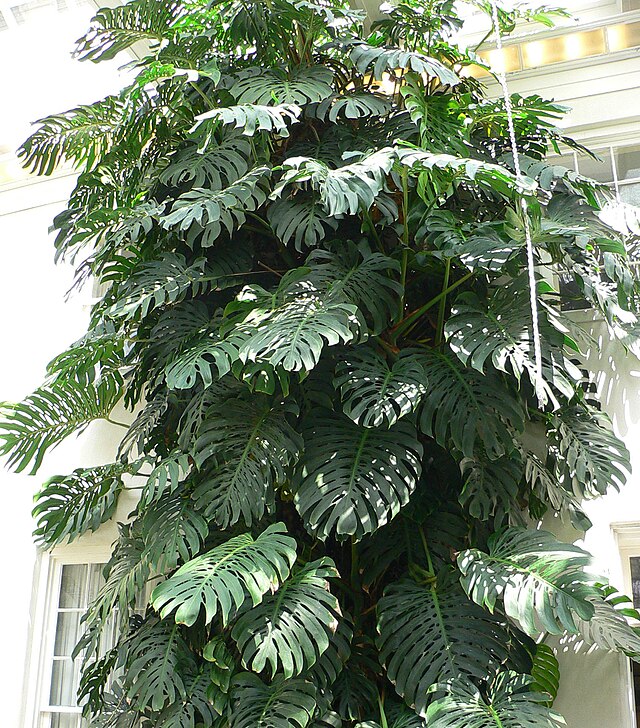
Monstera is an evergreen plant of the Araceae family native to tropical rainforests of Central and South America, and its unique leaf shape with large distinctive cuts is beloved worldwide. The genus name "Monstera" is derived from the Latin "monstrum" (monster, anomaly), which succinctly expresses its distinctive leaf form. In its native habitat, it is an epiphytic plant that can exceed 10 meters in height, climbing upward while wrapping its aerial roots around trees.
Its popularity as a houseplant spread globally in the 1970s and has received renewed attention with the recent interior greenery boom. Its relatively fast growth and moderate shade tolerance make it easy to grow indoors, which is one reason it is chosen by everyone from beginners to advanced growers. For more detailed variety comparisons, see Monstera Types and Varieties Guide, and for daily care instructions, see Complete Monstera Care Guide.
Main Types and Variety Differences
Monstera deliciosa
This is the most popular species and is generally what is meant when referring to "Monstera." Mature leaves can reach 60–90 cm in width and are characterized by deep cuts and holes (fenestrations). Young leaves lack these holes and change shape as the plant grows. These "leaf holes" are thought to be an adaptation that prevents leaves from tearing in strong winds, and are also believed to serve the function of allowing light to reach lower leaves. The conditions for fenestration formation are explained in detail in Conditions for Monstera Leaf Fenestration Formation.
Monstera adansonii
Also called "Hime Monstera," Adansonii has smaller, more oval-shaped leaves than Deliciosa, characterized by a higher proportion of fenestrations. It has strong vining growth and can be kept compact in hanging planters or as a stake-trained specimen, making it suitable for tight spaces. With fast growth and ease of care, it is also popular as an introductory Monstera variety.
Variegated Varieties
Variegated varieties have attracted the most attention in recent years. Three representative types are as follows:
- Monstera deliciosa Albo Variegata: The most common variegated variety, featuring white to cream-colored variegation. It has become more readily available thanks to the widespread use of tissue culture propagation.
- Monstera Thai Constellation: A variety created through tissue culture, with fine white speckles scattered across the leaf like a constellation. The variegation is stable and resistant to fading.
- Monstera Aurea (Yellow Variegation): A rare variety with yellow to lime-green variegation. It has lower circulation than white-variegated varieties and is traded at higher price points.
Variegated varieties have lower chlorophyll content and therefore reduced photosynthetic ability, resulting in slightly slower growth, and care must be taken to avoid leaf burn from direct sunlight. For care instructions for variegated varieties in general, see Variegated Houseplant Guide.
Light Requirements and Placement
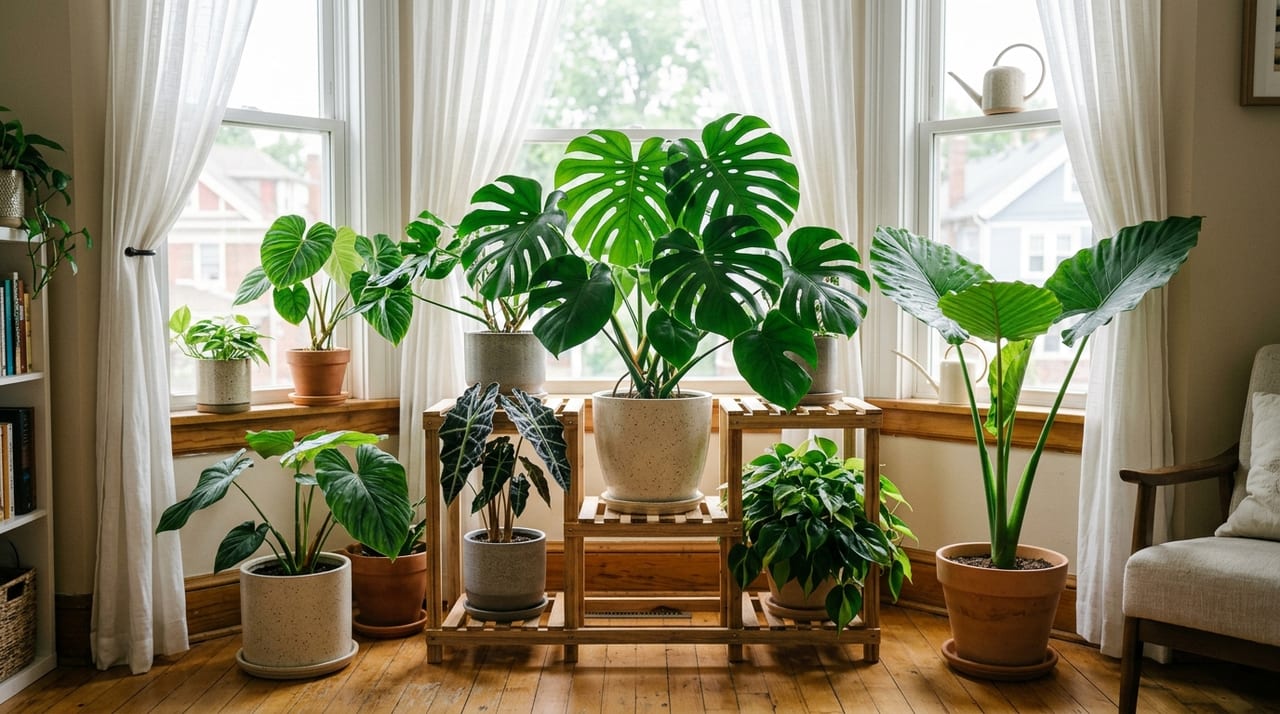
Monstera prefers bright indirect light. A windowsill filtered through sheer curtains is an ideal location; avoid direct summer sunlight, as it can cause leaf burn. However, in overly dark spaces, growth becomes significantly slower and fenestration is less likely to develop.
Indoors, aim for a location "within 1–2 meters of a bright living room window." Variegated varieties need particularly good light, so place them in the brightest location possible. If insufficient light is available, using a plant grow LED as supplemental lighting is also effective.
Since solar altitude varies with the seasons, maintaining good condition year-round can be achieved by increasing shading in summer and moving the plant to a brighter location in winter.
Watering and Fertilizing
Watering
The basic rule for watering Monstera is "water only after the soil dries out." Water thoroughly until it drains from the bottom of the pot, and always empty any water that collects in the saucer. Root rot is the biggest risk for Monstera; prolonged wet conditions damage the roots, causing leaves to yellow and eventually killing the entire plant.
During the growing season from spring to summer (April–September), water when the soil surface dries out; in fall and winter, reduce watering to about 2–3 days after the soil has completely dried. Misting the leaves (spraying water on the foliage with a spray bottle) maintains leaf shine and helps prevent pests like spider mites; doing this once or twice a week is effective.
Fertilizing
During the growing season from spring to summer, apply liquid fertilizer diluted to twice the standard concentration about once every two weeks. A balanced houseplant fertilizer containing nitrogen, phosphorus, and potassium is appropriate. Reduce fertilization after fall, and do not fertilize in winter as a general rule. Excessive fertilization of variegated varieties can lead to loss of variegation (reversion to green), so follow recommended dosages.
Repotting and Training
Root emergence from the bottom of the pot or soil drying quickly after watering are signs it is time to repot. The ideal timing is during the growing season from April to June; move to a pot 1–2 sizes larger. A soil mix of "houseplant potting mix : perlite = 7:3" provides good drainage and water retention balance, creating an environment that helps prevent root rot.
Large varieties like Deliciosa develop aerial roots as they grow. When you guide these aerial roots along a support and onto a moss pole, they absorb moisture and the leaves grow larger. The key to developing a beautiful large specimen is to preserve and utilize the aerial roots rather than cutting them off. How to select supports and moss poles is covered in detail in Houseplant Support and Moss Pole Guide.
Strongly vining varieties like Adansonii look better when displayed in a hanging basket as a trailing plant or trained by wrapping around a mesh pole.
Pests, Diseases, and Precautions
Monstera commonly suffers from three pests: spider mites, scale insects, and aphids. Spider mites develop easily in dry indoor environments and appear as fine white dots on the undersides of leaves; manage them with regular misting and miticide spray when infestations occur. Scale insects appear as white, cottony masses at the base of leaves and stems; remove them physically with a toothbrush, then treat with pesticide.
Additionally, the leaves, stems, and roots of Monstera contain calcium oxalate, which can cause irritation if it comes into contact with skin or mucous membranes. In households with pets or small children, it is recommended to place the plant out of reach or wear gloves when handling.
With proper environment and care, Monstera can be enjoyed for 10, 20 years or more. Understanding the characteristics of each variety and providing appropriate care for each is the shortcut to developing beautiful plants.