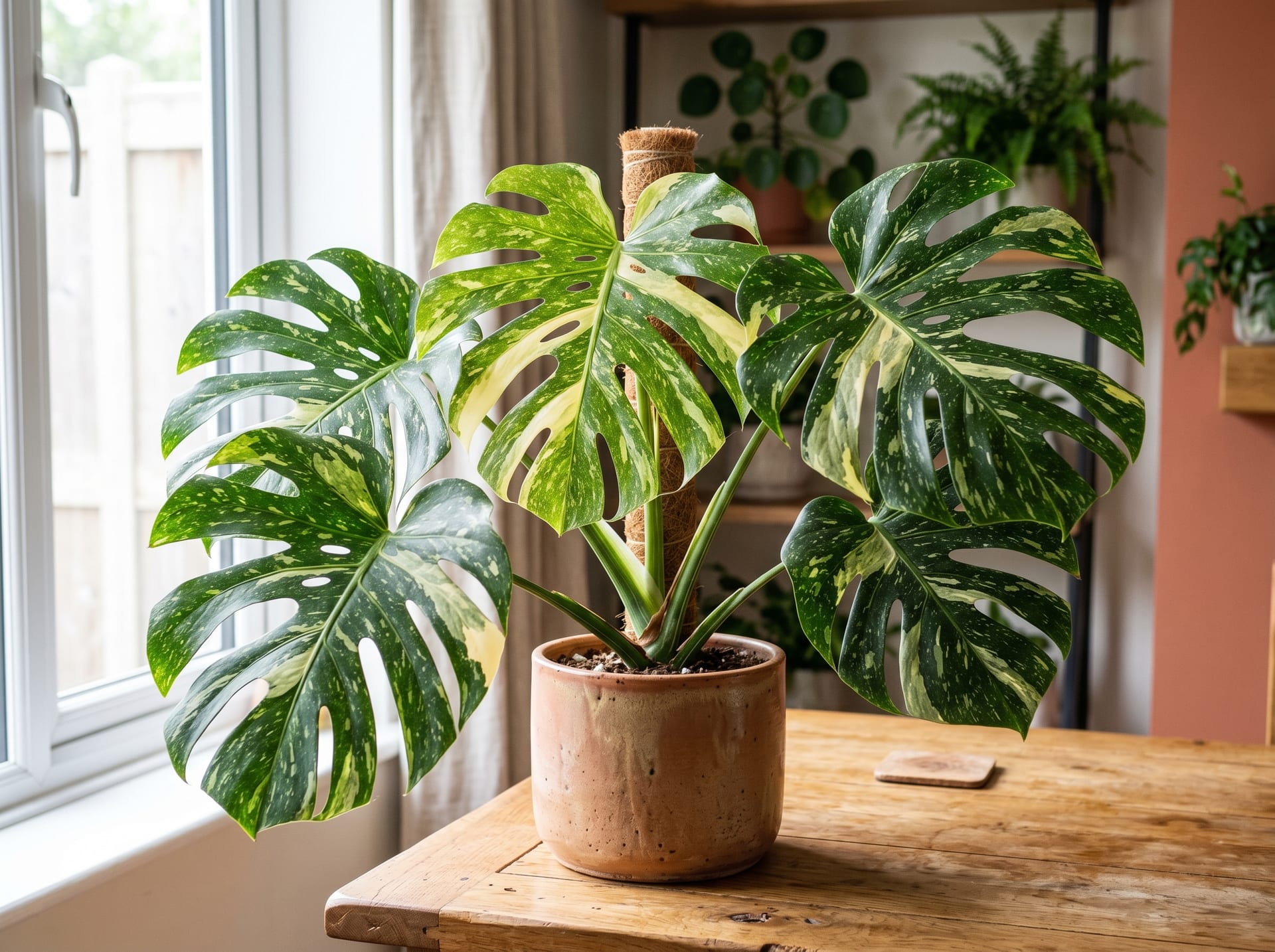
AI-generated image
Monstera Thai Constellation
IntermediateMonstera deliciosa 'Thai Constellation'
A popular monstera with cream variegation like constellations. High value for stable variegation.
Overview
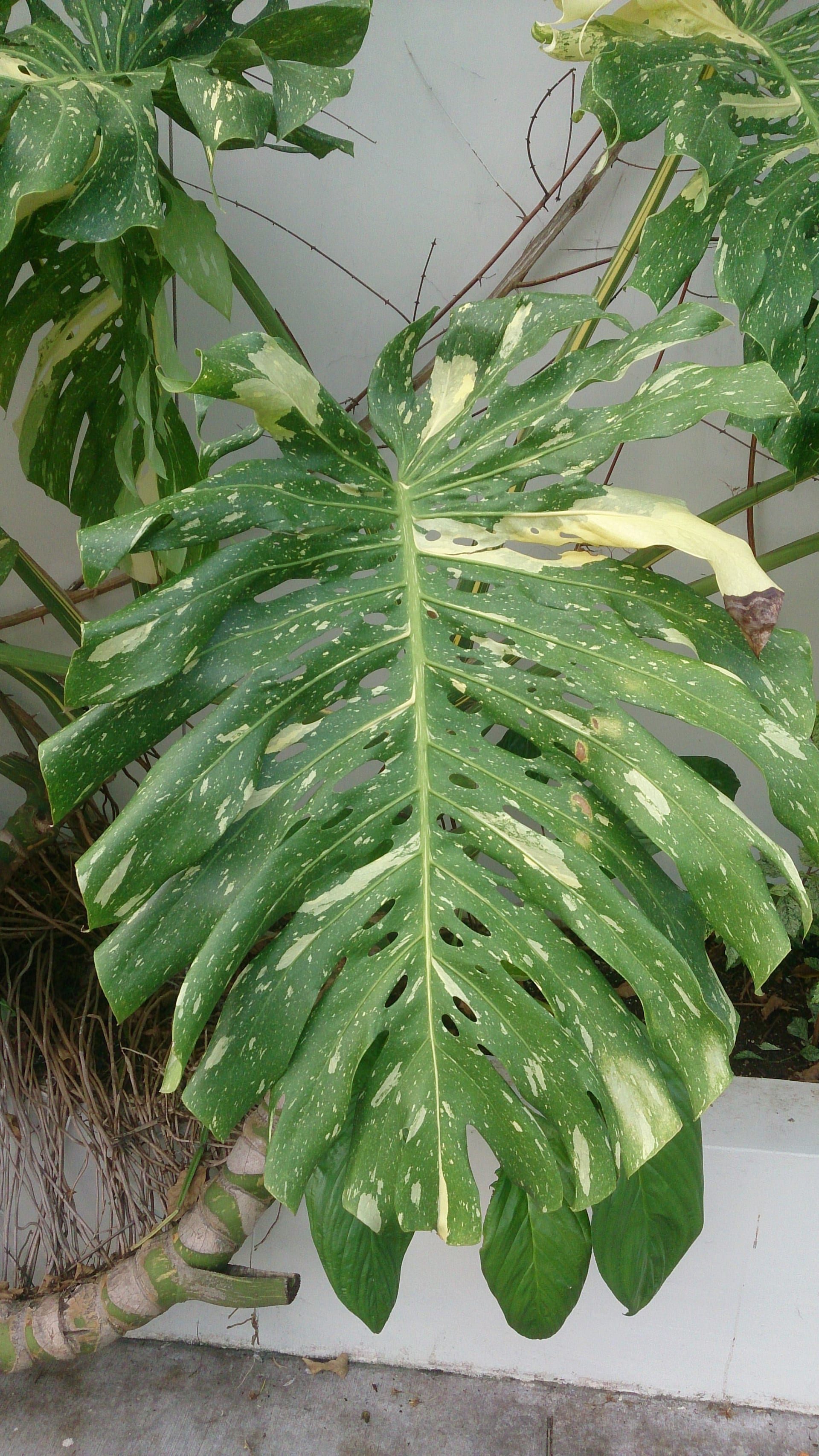
Monstera deliciosa 'Thai Constellation' is a variegated cultivar of Monstera deliciosa, originally developed through tissue culture at a nursery in Thailand. It is one of the most coveted houseplants among collectors worldwide, prized for its large, fenestrated leaves splashed with irregular cream and white variegation that resembles a star constellation against the deep green background. Unlike some other variegated monsteras, 'Thai Constellation' produces relatively stable variegation through tissue culture propagation, contributing to its sustained premium market value. Care requirements are similar to standard M. deliciosa: bright indirect light is optimal (variegated portions are more susceptible to sun scorch), and water thoroughly once the soil dries. Growth rate is moderate. Propagated by stem cuttings, though variegation patterns vary between individuals. A statement collector's plant that commands attention in any interior.
Lifespan of the Monstera Thai Constellation
The Monstera Thai Constellation lives 20+ years.
Size of the Monstera Thai Constellation
The Monstera Thai Constellation grows to 60-200cm.
Basic Info
Origin
Garden cultivar (tissue culture, developed in Thailand)
Lifespan
20+ years
Size
60-200cm
Temperature
15〜30℃
Humidity
50〜70%
Growing Tips
Light & Placement
Bright indirect light is ideal. The variegated areas scorch more easily than green leaves, so avoid direct sun.
Watering
Water thoroughly once the soil has dried. Growth is slower due to variegation, so check dryness first to avoid overwatering.
Temperature & Overwintering
Like its parent Monstera it is tropical and cold-sensitive. In winter keep it away from cold windows in a warm room.
Soil & Repotting
Use a free-draining mix, and move to a pot one size larger once roots fill the container to prevent root binding.
Propagation
Propagate by cuttings. Variegation varies by plant, so choose a stem with well-balanced variegation.
Notes
Variegated parts can't photosynthesize, slower growth
Monstera Thai Constellation FAQ
QWhat is the growing difficulty level for Monstera Thai Constellation?
Intermediate. A variety suitable for intermediate growers. Requires some cultivation experience and knowledge of environment management. Pay careful attention to temperature and humidity control.
QWhat is the lifespan of Monstera Thai Constellation?
The average lifespan of Monstera Thai Constellation is 20+ years. With proper cultivation environment and nutrient management, you can keep it healthy for a long time.
QHow large does Monstera Thai Constellation get?
The mature size of Monstera Thai Constellation is 60-200cm. This may vary slightly depending on cultivation environment and individual differences.
QWhat is the typical price for Monstera Thai Constellation?
The price of Monstera Thai Constellation varies significantly by variety, characteristics, size, and lineage. Please check GrowerDirect's price guide for the latest market information.
Last updated: September 25, 2026
Growing Specifications
- USDA Zone
- 10–12
- Hardiness (RHS)
- H1b
Sources: Missouri Botanical Garden Plant Finder / RHS - Monstera deliciosa
References & Sources
Edited & verified by: GrowerDirect Editorial Team
The classifications, regulations, and growing data on this page are created and verified based on the primary information database below.
Taxonomy & Authority
Regulations & Conservation Status
Foliage plant. Confirmed by document review to be non-applicable to CITES Appendix (Flora), designated invasive species, or designated animals (the genus does not appear in the CITES flora section; Dracaena spp. listings in CITES refer to a reptile genus of the same name; the plant Dracaena is not applicable).
Sources: CITES Appendices I/II/III (flora section, grepped via dbca mirror) / CITES Appendices (official) / Ministry of the Environment List of Specified Invasive Alien Species
Regulations may change. Always verify the latest information with the relevant authorities.
Related Species
Find listings for this species
Related Articles
Why Monstera Fenestration Is Difficult to Develop: Causes and Solutions
Discover why Monstera leaves struggle to develop cuts and holes (fenestration). We break down the key causes—insufficient light, plant growth stage, nutrient balance, humidity and temperature, and air circulation—and share practical strategies to encourage fenestrated leaves.
Complete Monstera Care Guide | In-Depth Explanation of Leaf Fenestration, Aerial Roots, and Training Methods
Complete guide to caring for Monstera, a popular foliage plant. We explain in detail the conditions for leaf fenestration, how to utilize aerial roots, how to set up stakes and moss poles, managing variegated varieties, and propagation methods.
Advanced Monstera Care Guide | Rare Varieties, Variegation, Aerial Root Management, and Strategies for Growing Large Plants
From Monstera deliciosa to variegated varieties (Albo Variegata, Thai Constellation), this guide covers advanced cultivation techniques, strategies for growing larger plants, aerial root management, and sourcing and caring for rare varieties.
Monstera Types and Variety Guide | Comprehensive Comparison from Deliciosa to Adansonii
Comprehensive comparison of popular Monstera houseplant varieties. This guide explains the characteristics, identification methods, and cultivation differences of each variety.
🩺 Common diseases
Can't find the plant you're looking for?
Post your wishes for free and growers with matching plants will contact you with introductions.