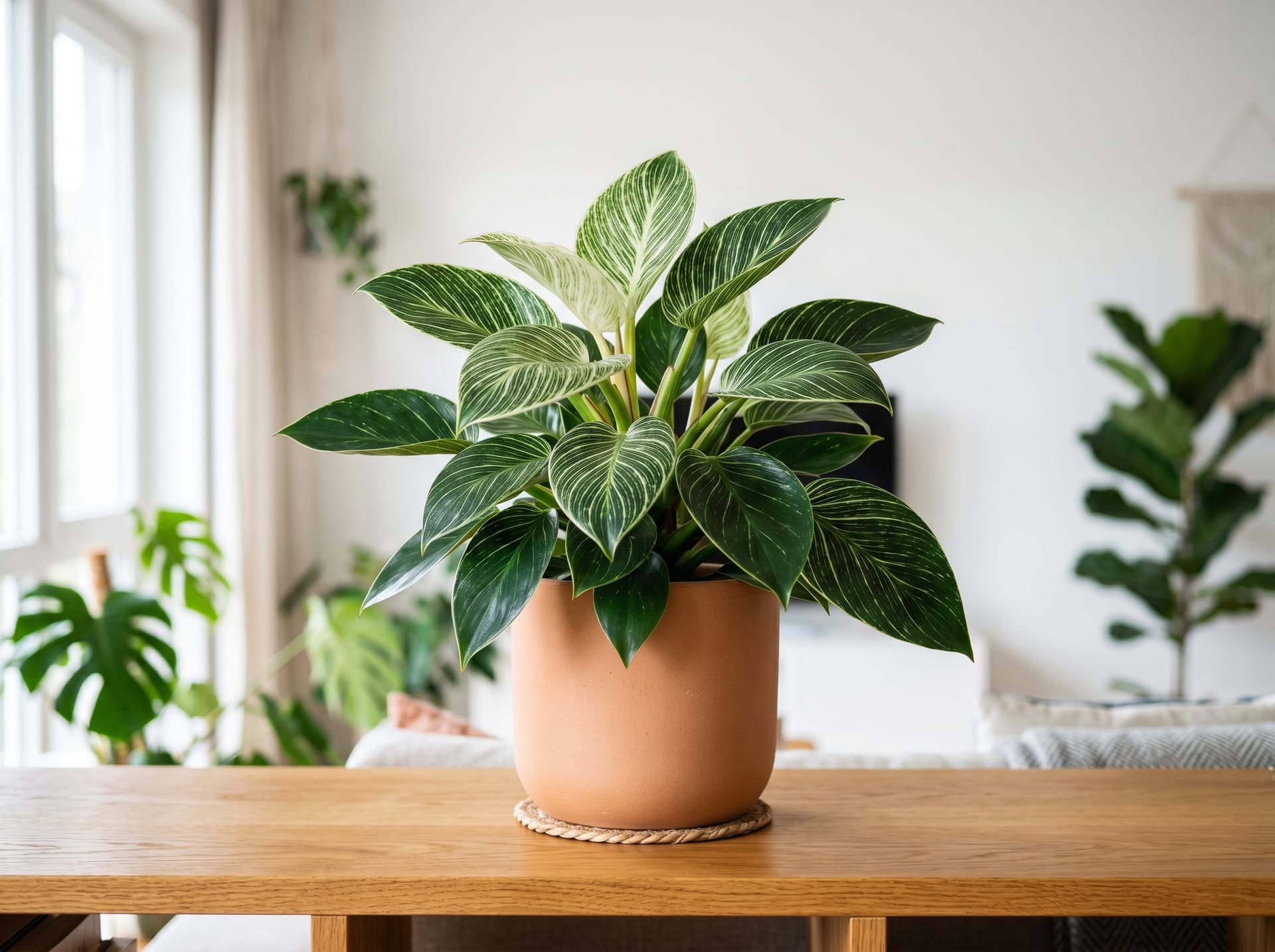
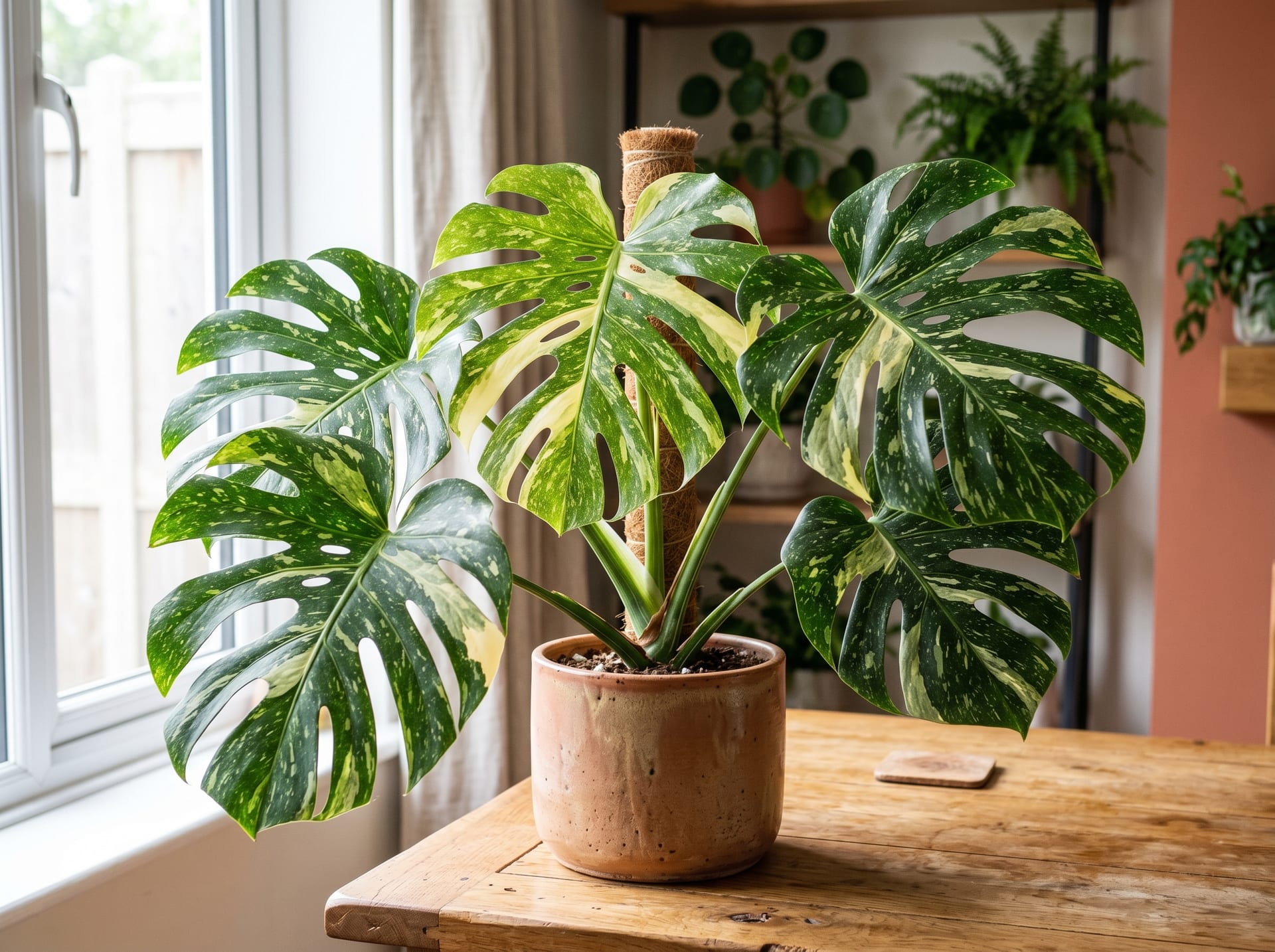
AI-generated image
Philodendron Birkin
BeginnerPhilodendron 'Birkin'
A popular variegated Philodendron with dark green leaves and white pinstripes. Compact enough for indoor display. The stripe patterns change as it grows.
Overview
Philodendron 'Birkin' is a cultivar that arose as a spontaneous sport (mutation) from Philodendron 'Rojo Congo'. Its rounded, deep green leaves are decorated with thin, creamy-white pinstripes radiating from the midrib — a pattern that appears more pronounced in brighter light. One of the most appealing aspects of Birkin is the way its variegation patterns shift and evolve with each new leaf, offering continual visual interest as the plant grows. Compact in size (30–60 cm), it fits comfortably on shelves, desks, or tabletops. Care is straightforward: water when the soil surface dries, avoid overwatering, and maintain moderate to high humidity to prevent spider mites. Occasionally the plant may revert to all-green growth ('Rojo Congo'); moving to a brighter position often encourages a return to variegated growth. Its elegant, graphic patterning sits naturally within contemporary interior design.
Lifespan of the Philodendron Birkin
The Philodendron Birkin lives 15+ years.
Size of the Philodendron Birkin
The Philodendron Birkin grows to 30-80cm.
Temperature & humidity for the Philodendron Birkin
The ideal temperature for the Philodendron Birkin is 18〜30℃. Ideal humidity is 50〜70%.
Basic Info
Origin
Garden cultivar (mutation of Philodendron 'Rojo Congo')
Lifespan
15+ years
Size
30-80cm
Temperature
18〜30℃
Humidity
50〜70%
Watering & Fertilizer
Liquid fertilizer 1-2x monthly in spring-fall
Growing Tips
Placement
Bright indirect light is optimal. Enhances stripe pattern
Watering
Water when topsoil dries. Use well-draining mix
Temperature & Overwintering
Optimal range is 18-30°C. It is cold-sensitive, so keep it in a warm room in winter and aim for 50-70% humidity.
Fertilizer
Feed liquid fertilizer once or twice a month from spring to autumn. As a compact variety, keep doses light and diluted.
Pests & Cautions
Spider mites appear easily in dry conditions. If it reverts and keeps producing all-green leaves, move it to a brighter spot.
Notes
Contains calcium oxalate. Toxic to pets and children
Philodendron Birkin FAQ
QWhat is the growing difficulty level for Philodendron Birkin?
Beginner. A variety suitable for beginners. No special equipment or experience is required—you can grow it without problems by setting up a basic cultivation environment.
QWhat is the ideal temperature for Philodendron Birkin?
The ideal temperature for Philodendron Birkin is 18〜30℃. Recommended humidity is 50〜70%. Avoid sudden temperature changes and maintain a stable environment.
QWhat is the lifespan of Philodendron Birkin?
The average lifespan of Philodendron Birkin is 15+ years. With proper cultivation environment and nutrient management, you can keep it healthy for a long time.
QHow large does Philodendron Birkin get?
The mature size of Philodendron Birkin is 30-80cm. This may vary slightly depending on cultivation environment and individual differences.
QHow should I water and fertilize Philodendron Birkin?
Philodendron Birkin: watering & fertilizer — Liquid fertilizer 1-2x monthly in spring-fall. Aim for appropriate frequency and amount.
QWhat is the typical price for Philodendron Birkin?
The price of Philodendron Birkin varies significantly by variety, characteristics, size, and lineage. Please check GrowerDirect's price guide for the latest market information.
Last updated: September 17, 2026
References & Sources
Edited & verified by: GrowerDirect Editorial Team
The classifications, regulations, and growing data on this page are created and verified based on the primary information database below.
Regulations & Conservation Status
Foliage plant. Confirmed by document review to be non-applicable to CITES Appendix (Flora), designated invasive species, or designated animals (the genus does not appear in the CITES flora section; Dracaena spp. listings in CITES refer to a reptile genus of the same name; the plant Dracaena is not applicable).
Sources: CITES Appendices I/II/III (flora section, grepped via dbca mirror) / CITES Appendices (official) / Ministry of the Environment List of Specified Invasive Alien Species
Regulations may change. Always verify the latest information with the relevant authorities.
Related Species
Find listings for this species
Related Articles
Philodendron Care Complete Guide | Characteristics of Popular Varieties and Cultivation Tips
A detailed explanation of how to care for Philodendrons, a popular foliage plant in the Araceae family. We introduce the characteristics of popular varieties, watering and light management methods, soil care, and tips for propagation.
Philodendron Types and Growing Guide | Comprehensive Guide to Rapidly Rising Popular Varieties
Comprehensive explanation of popular Philodendron varieties and growing methods. Features variety comparisons (Birkin, Pink Princess, Gloriosum, etc.), propagation techniques, pest and disease control, and tips for identifying plants at purchase.
Growing Philodendron Pink Princess from Seed | From Sowing to Mature Plant, Pink Variegation Development Conditions and Artificial Pollination
Explaining how to grow Pink Princess Philodendron from seed, the conditions for pink variegation development, and the procedure for artificial pollination.
Optimizing Foliage Plant Leaf Shine | Humidity Management to Achieve Gloss and Plant Health
Environmental management techniques to bring out glossy shine on foliage plant leaves. Techniques to achieve healthy and beautiful leaf expression through optimizing light, humidity, and water quality.
🩺 Common diseases
Can't find the plant you're looking for?
Post your wishes for free and growers with matching plants will contact you with introductions.