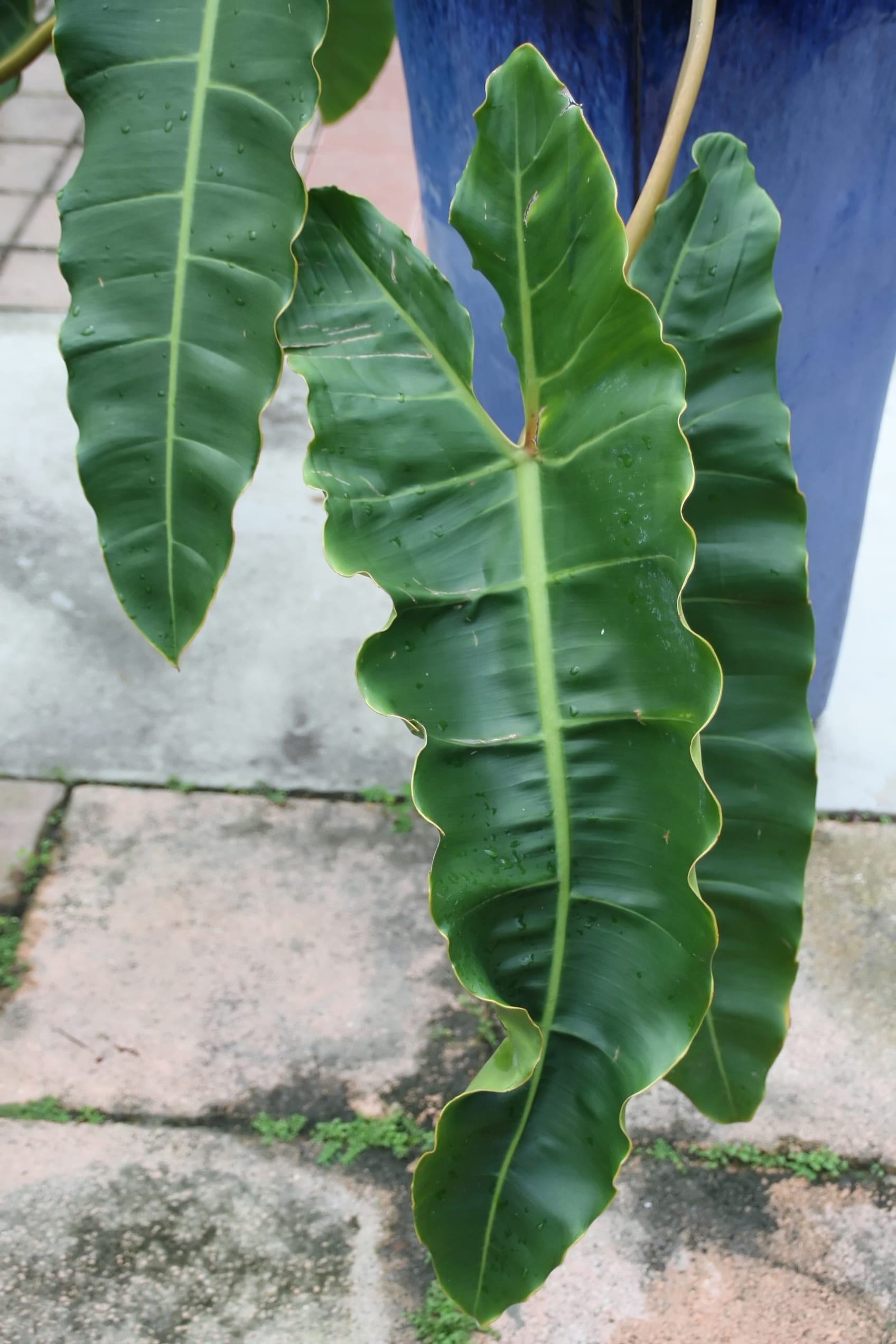
Source: Wikimedia Commons
Philodendron billietiae
IntermediatePhilodendron billietiae
A philodendron with long, narrow arrow-shaped leaves on striking orange-yellow petioles. The leaf margins are wavy and the leaves lengthen as the plant matures.
About
Philodendron billietiae Croat is a hemi-epiphytic aroid native to lowland rainforest in Brazil, Guyana and French Guiana. It was found by Frieda Billiet in French Guiana in 1981, living material was grown in the greenhouses of the National Botanic Garden of Belgium at Meise, and it was described as a new species in 1995; the epithet honours its discoverer. Its most distinctive features are the orange-yellow petioles and the long, narrow leaves with wavy edges, which set it apart at a glance from philodendrons with green leaf stalks. As a climber it develops larger leaves when trained up a moss pole or similar support. General care follows the genus: bright light without direct sun, fairly high humidity and warmth. It dislikes cold and waterlogging, so in Japan it must be kept in a warm room in winter. Species-specific data on growing temperatures or adult size are scarce. In Japan it is sold as a collector's aroid by specialist nurseries and online shops, from tissue-culture plantlets to large plants.
Source: Wikipedia (CC BY-SA 4.0)
Basic Info
Origin
Northern South America (Brazil, Guyana, French Guiana)
Lifespan
Perennial
Size
Few sources give adult size; leaves grow larger when the plant climbs a support
Temperature
15〜30℃
Humidity
50〜70%
Watering & Fertilizer
Dilute liquid feed in the growing season
Growing Tips
Light & Placement
Bright indoor light out of direct sun, such as behind a sheer curtain.
Watering
Water well when the surface dries. Roots suffer if kept constantly wet, so prioritise drainage. Water less in winter.
Temperature & Overwintering
A tropical lowland plant that dislikes cold. Keep it in a warm room in winter, away from cold windows and direct heater draughts.
Soil & Repotting
Use a coarse, airy aroid mix. As a hemi-epiphytic climber it produces larger leaves when trained up a support.
Propagation
Propagate from stem cuttings with a node or by laying stem sections on moist media.
Pests & Cautions
Watch for spider mites and scale; mites increase in dry air, so mist the leaves. Philodendrons contain calcium oxalate, so keep the plant away from pets and children.
Philodendron billietiae FAQ
QWhat is the growing difficulty level for Philodendron billietiae?
Intermediate. A variety suitable for intermediate growers. Requires some cultivation experience and knowledge of environment management. Pay careful attention to temperature and humidity control.
QHow should I water and fertilize Philodendron billietiae?
Philodendron billietiae: watering & fertilizer — Dilute liquid feed in the growing season. Aim for appropriate frequency and amount.
QWhat is the typical price for Philodendron billietiae?
The price of Philodendron billietiae varies significantly by variety, characteristics, size, and lineage. Please check GrowerDirect's price guide for the latest market information.
Last updated: September 23, 2026
References & Sources
Edited & verified by: GrowerDirect Editorial Team
The classifications, regulations, and growing data on this page are created and verified based on the primary information database below.
Taxonomy & Authority
Regulations & Conservation Status
Not listed in the CITES Appendices. Not a designated invasive alien species in Japan, nor a nationally rare species under the Act on Conservation of Endangered Species.
Sources: Species+ (CITES listing check) / Ministry of the Environment: List of Invasive Alien Species
Regulations may change. Always verify the latest information with the relevant authorities.
Related Species
Find listings for this species
Related Articles
Philodendron Care Complete Guide | Characteristics of Popular Varieties and Cultivation Tips
A detailed explanation of how to care for Philodendrons, a popular foliage plant in the Araceae family. We introduce the characteristics of popular varieties, watering and light management methods, soil care, and tips for propagation.
Philodendron Types and Growing Guide | Comprehensive Guide to Rapidly Rising Popular Varieties
Comprehensive explanation of popular Philodendron varieties and growing methods. Features variety comparisons (Birkin, Pink Princess, Gloriosum, etc.), propagation techniques, pest and disease control, and tips for identifying plants at purchase.
Growing Philodendron Pink Princess from Seed | From Sowing to Mature Plant, Pink Variegation Development Conditions and Artificial Pollination
Explaining how to grow Pink Princess Philodendron from seed, the conditions for pink variegation development, and the procedure for artificial pollination.
Why New Leaves on Foliage Plants Are Smaller — Practical Solutions for Light, Humidity, and Nutrition
We analyze the causes behind stunted growth and smaller new leaves on foliage plants. From light environment and humidity management to fertilization strategy and root health, we explain each factor based on empirical data and introduce methods to restore new leaf size.
🩺 Common diseases
Can't find the plant you're looking for?
Post your wishes for free and growers with matching plants will contact you with introductions.