Why New Leaves on Foliage Plants Are Smaller — Practical Solutions for Light, Humidity, and Nutrition
We analyze the causes behind stunted growth and smaller new leaves on foliage plants. From light environment and humidity management to fertilization strategy and root health, we explain each factor based on empirical data and introduce methods to restore new leaf size.
Key Takeaways
We analyze the causes behind stunted growth and smaller new leaves on foliage plants. From light environment and humidity management to fertilization strategy and root health, we explain each factor based on empirical data and introduce methods to restore new leaf size.
Related Species
When growing foliage plants, there comes a moment when you notice, "The recent new leaves are noticeably smaller than before." A smaller leaf catching your eye just as you anticipated growth is a silent signal from the plant. The size of new leaves directly reflects the quality of the environment in which the plant is placed, and by correctly identifying the cause and taking action, you can recover robust leaves from the next bud onward. In this article, we organize the causes from four perspectives—light, humidity, nutrition, and root condition—and provide concrete solutions you can implement at home.
What Leaf Size Tells Us About the Plant's Condition
When a plant is growing healthily, new leaves typically unfold at the same size or larger than older leaves. This is a result of the plant's native strategy to prioritize sending water and nutrients to young tissues and maximize photosynthetic area.
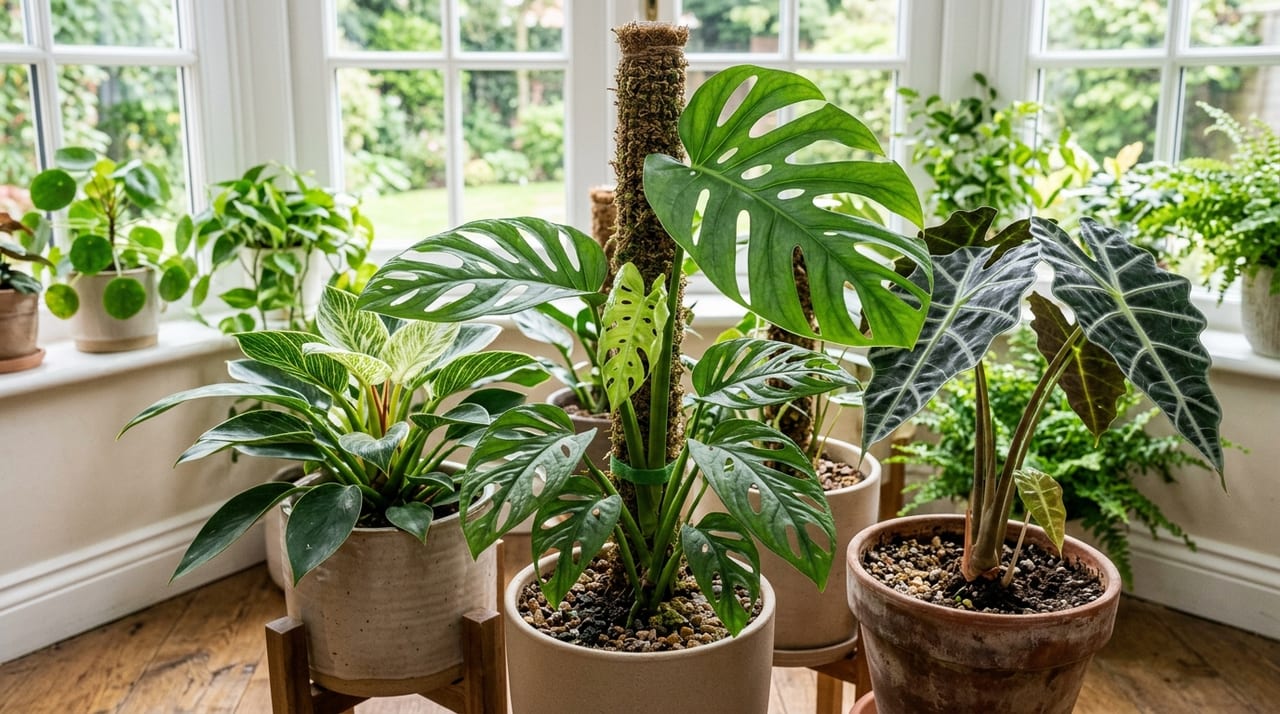
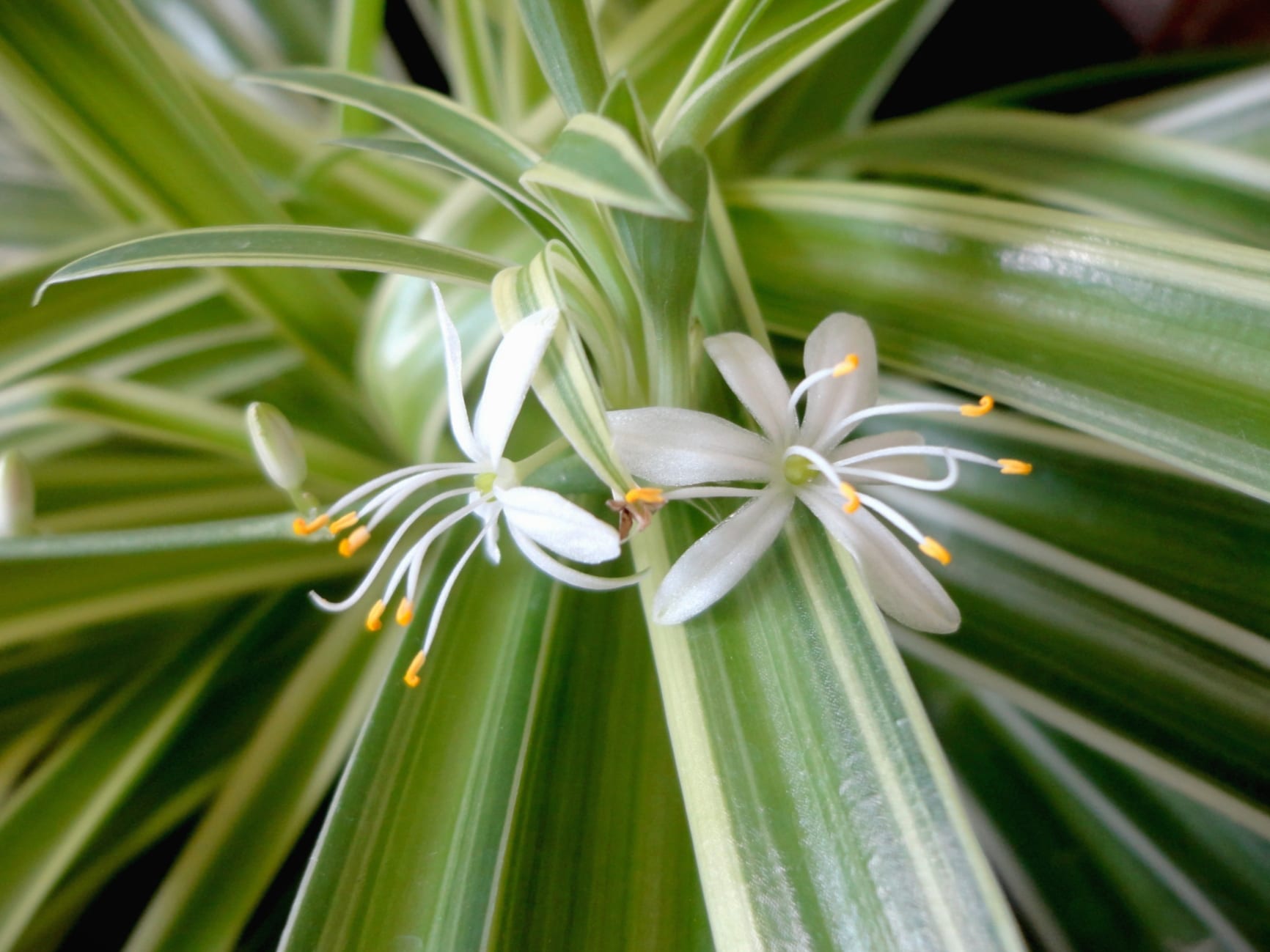
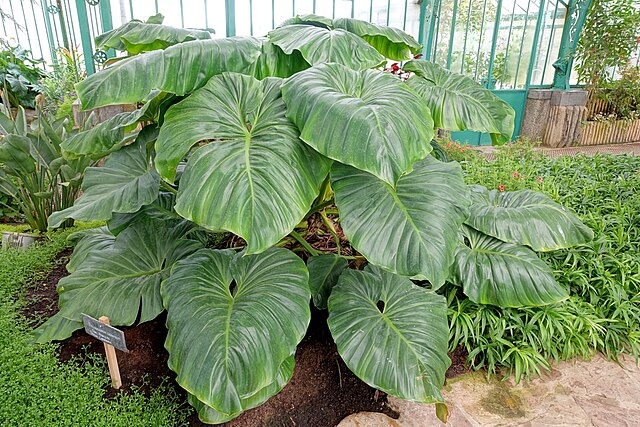
Conversely, when the environment deteriorates, the plant switches to energy-conservation mode. Because the energy available to invest in new leaves is limited, it creates smaller leaves to reduce costs. Species that naturally develop large leaves—such as rubber plants (Ficus elastica), Monstera, Philodendron, and spider plants—show this reduction trend in a particularly visible way.
It is commonly misunderstood that "small new leaves mean growth," but more precisely it indicates a state of "growth is occurring, but not optimally." Because the cause is not always singular, and multiple factors often overlap, it is important to adopt a perspective of reviewing the entire environment.
Checking for and Addressing Light Deficiency
The most frequent cause of reduced new leaf size is insufficient light. Though foliage plants are often described as growing "even in shade," achieving full new leaf expansion requires a level of light above what is minimally necessary for survival. As a guideline, stable new leaf deployment calls for 500 lux or more—ideally 1,000 to 2,000 lux.
Indoor light levels are far lower than most people imagine; 2 to 3 meters away from a window, illumination often drops to just 50–100 lux. In winter, shorter daylight hours mean even near the window, light levels fall dramatically.
To improve the light environment, follow these steps:
- Move the plant close to a south- or east-facing window (use sheer curtains if direct sunlight is intense)
- Wipe away window glass dirt and condensation to maximize transmitted light
- If relocation is difficult, introduce a plant-growth LED light and provide 12–14 hours of supplemental light daily
- Make a habit of reviewing placement seasonally
When using a growth light, selecting a product with balanced red and blue spectrum improves photosynthetic efficiency. Position it about 20–40 cm from the plant for optimal effect.
The Link Between Humidity Management and Leaf Expansion
Most foliage plants are tropical or subtropical in origin and are adapted to high-humidity environments. Especially at the moment when a new leaf unfolds from its curled state, delicate and vulnerable tissue is exposed; low surrounding humidity causes moisture to escape rapidly, leading to leaf curling and restricted leaf size.
When indoor relative humidity drops below 40%, nearly all foliage plants tend to experience compromised new leaf expansion. Special attention is needed during winter when heating is in use, and in summer when air conditioning runs for long periods.
The following methods are effective for raising humidity:
- Grouping plants: Placing multiple plants close together allows water vapor transpired from leaves to circulate, raising humidity locally.
- Water trays: Fill a tray lined with gravel or pumice beneath the pot and position the pot at a height where the bottom does not contact water directly; evaporation from the water surface will humidify the air.
- Foliar misting: Spray leaves with water in the morning or mid-morning. Avoid spraying in the evening or later, as wet foliage at night encourages pathogenic fungi.
- Humidifier: The most stable method. Aim to maintain relative humidity at 40–60%.
Attention to Both Nutrient Deficiency and Excess Fertilization
Without proper nutrition, a plant cannot produce large new leaves. However, root damage from overfertilization (fertilizer burn) causes reduced new leaf size just as insufficient feeding does.
Nitrogen (N) deficiency results in yellowish-green leaves that develop smaller. Phosphorus (P) deficiency impedes root and new bud formation. Potassium (K) deficiency weakens stem and leaf strength. The basis is to select liquid fertilizer with balanced primary nutrients—a product with even N-P-K ratio.
Basic fertilization principles are organized as follows:
- Growing season (spring–summer): Apply diluted liquid fertilizer at half the recommended strength every 2–4 weeks
- Early autumn through fall: Gradually reduce frequency to about once per month
- Winter (dormancy period): Pause fertilization or use very dilute solution at roughly once per month
- Immediately after repotting: Avoid fertilizing for 1–2 months, as feeding roots that are already damaged easily triggers fertilizer burn
Applying slow-release solid fertilizer placed on top of the substrate also provides sustained effect and is effective. Even with solid fertilizer, take care not to exceed the usage amount noted on the package.
Why Root Condition Directly Affects Aboveground Growth
When new leaf size does not improve despite adequate light, humidity, and fertilizer, root problems should be considered. Roots are the organs that absorb water and nutrients; if roots are not healthy, the supply to aboveground parts is limited.
Root-bound conditions can be confirmed by roots protruding from the pot's drainage holes or by water not penetrating the soil readily even after watering. In this state, roots have expanded too densely within the pot and activity has declined; repotting into a slightly larger container is effective.
Conversely, root rot occurs when excess moisture creates oxygen deficiency, causing the roots to decay. Break apart the soil, examine the roots, and remove any that are blackened or mushy to the touch using clean scissors. Then repot in fresh, dry substrate, and water sparingly for a while to support recovery.
Key points for maintaining root health are as follows:
- Water on the principle of "water thoroughly when the soil surface is dry," and always empty the saucer
- Use well-aerated, well-draining substrate (foliage plant-specific potting mix or a mixture amended with perlite or pumice)
- Repot in spring every few years to refresh old substrate
Timeframe to Seeing Improvement and a Holistic Approach
After improving environmental conditions, some time passes before new leaf size visibly recovers. Already-unfolded leaves will not change, but observing newly emerging buds afterward confirms the improvement's effect. Generally, it is realistic to assess size changes based on new leaves appearing 1–2 months after environmental adjustments.
When multiple factors overlap, improving only one may yield limited benefit. Reviewing light, humidity, fertilization, and root condition all at once and bringing each to proper levels is the fastest path to recovery.
New leaves on foliage plants are one of the few indicators by which the plant's internal condition can be assessed from the outside. Do not overlook the change of "smaller leaves," and use it as an opportunity to examine whether something is off in your environment. By continuing thoughtful care, you should eventually see robust, large leaves developing and vitality returning to the entire plant.