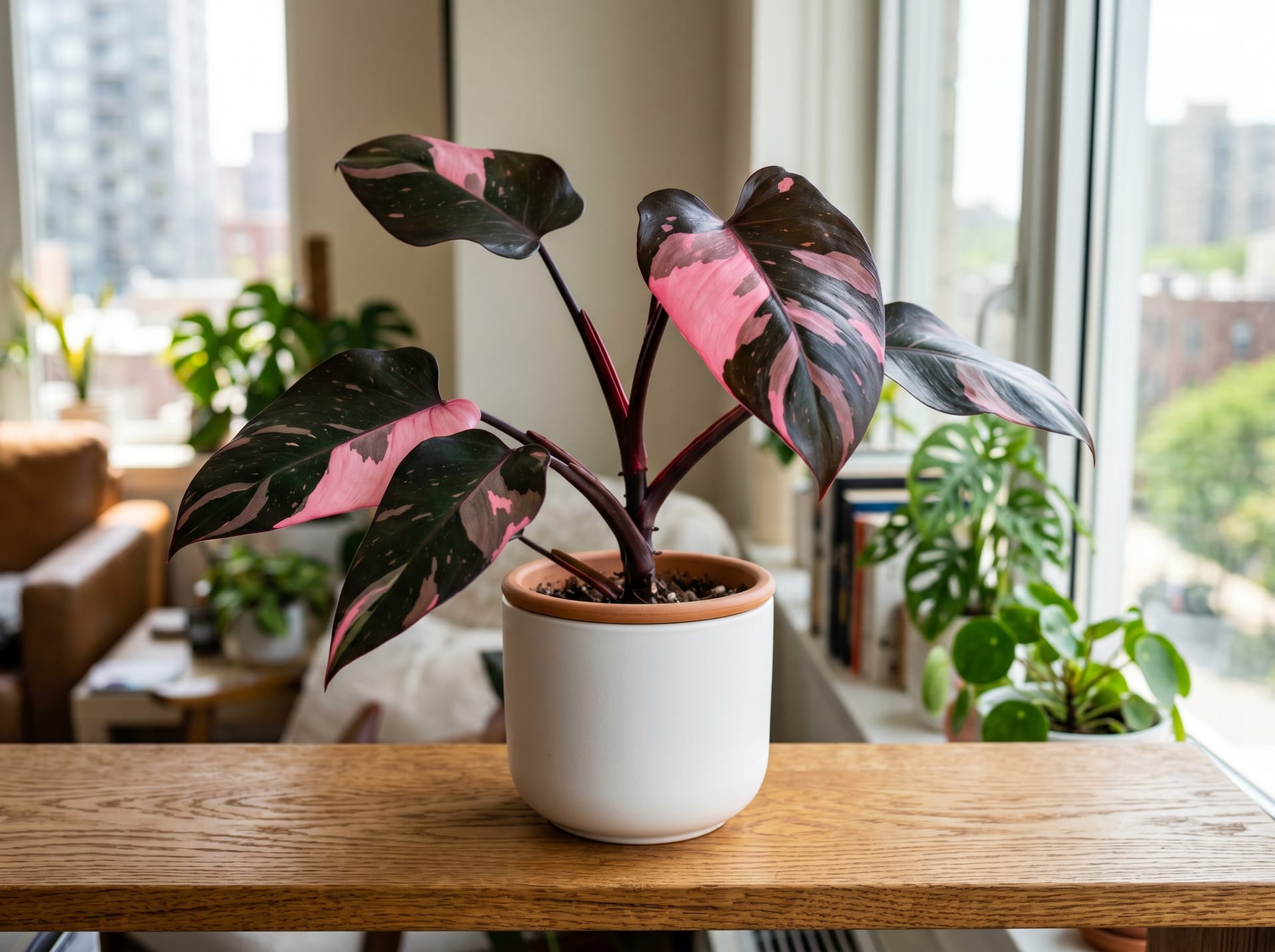
AI-generated image
Philodendron Pink Princess
IntermediatePhilodendron erubescens 'Pink Princess'
A hugely popular philodendron with pink variegation on dark green leaves. Price surged due to Instagram.
About
Philodendron 'Pink Princess' is a cultivar believed to originate from Philodendron erubescens, distinguished by its striking dark green to near-black glossy leaves marked with irregular patches of vivid pink variegation. It became one of the most talked-about houseplants of the late 2010s following explosive popularity on Instagram, with its rarity driving prices to exceptional heights. Bright indirect light is essential to maintain the pink variegation; lower light causes reversion toward solid green. Water when the soil dries; avoid overwatering. Growth is relatively slow, and each new leaf presents a different variegation pattern — part of the plant's enduring appeal. If all-green leaves persist, moving the plant to a brighter location or removing the growing tip may encourage re-emergence of variegated growth. The dramatic contrast between deep, near-black foliage and vivid pink makes this a defining collector's plant of contemporary houseplant culture.
Size of the Philodendron Pink Princess
The Philodendron Pink Princess grows to 30-100cm.
Basic Info
Origin
Garden cultivar (mutation of Philodendron erubescens)
Lifespan
Perennial
Size
30-100cm
Temperature
15〜30℃
Humidity
50〜70%
Growing Tips
Light & Placement
Place in bright indirect light. Direct sun causes leaf burn, so a window filtered by a sheer curtain works well.
Watering
Water thoroughly once the soil dries. Overwatering causes root rot, so never leave water in the saucer.
Temperature & Overwintering
Tropical and cold-sensitive. In winter keep it in a warm room, away from cold windows and direct heater drafts.
Soil & Repotting
Use a free-draining mix and repot one size up once roots fill the pot. Growth is slow, so frequent repotting is unnecessary.
Pruning & Shaping
If all-green leaves keep appearing, moving it to a brighter spot or cutting the growing tip can encourage variegated leaves to return.
Notes
Insufficient light reduces pink variegation
Philodendron Pink Princess FAQ
QWhat is the growing difficulty level for Philodendron Pink Princess?
Intermediate. A variety suitable for intermediate growers. Requires some cultivation experience and knowledge of environment management. Pay careful attention to temperature and humidity control.
QHow large does Philodendron Pink Princess get?
The mature size of Philodendron Pink Princess is 30-100cm. This may vary slightly depending on cultivation environment and individual differences.
QWhat is the typical price for Philodendron Pink Princess?
The price of Philodendron Pink Princess varies significantly by variety, characteristics, size, and lineage. Please check GrowerDirect's price guide for the latest market information.
Last updated: September 25, 2026
Growing Specifications
- USDA Zone
- 10–12
References & Sources
Edited & verified by: GrowerDirect Editorial Team
The classifications, regulations, and growing data on this page are created and verified based on the primary information database below.
Taxonomy & Authority
Regulations & Conservation Status
Foliage plant. Confirmed by document review to be non-applicable to CITES Appendix (Flora), designated invasive species, or designated animals (the genus does not appear in the CITES flora section; Dracaena spp. listings in CITES refer to a reptile genus of the same name; the plant Dracaena is not applicable).
Sources: CITES Appendices I/II/III (flora section, grepped via dbca mirror) / CITES Appendices (official) / Ministry of the Environment List of Specified Invasive Alien Species
Regulations may change. Always verify the latest information with the relevant authorities.
Related Species
Find listings for this species
Related Articles
Philodendron Care Complete Guide | Characteristics of Popular Varieties and Cultivation Tips
A detailed explanation of how to care for Philodendrons, a popular foliage plant in the Araceae family. We introduce the characteristics of popular varieties, watering and light management methods, soil care, and tips for propagation.
Philodendron Types and Growing Guide | Comprehensive Guide to Rapidly Rising Popular Varieties
Comprehensive explanation of popular Philodendron varieties and growing methods. Features variety comparisons (Birkin, Pink Princess, Gloriosum, etc.), propagation techniques, pest and disease control, and tips for identifying plants at purchase.
Growing Philodendron Pink Princess from Seed | From Sowing to Mature Plant, Pink Variegation Development Conditions and Artificial Pollination
Explaining how to grow Pink Princess Philodendron from seed, the conditions for pink variegation development, and the procedure for artificial pollination.
Optimizing Foliage Plant Leaf Shine | Humidity Management to Achieve Gloss and Plant Health
Environmental management techniques to bring out glossy shine on foliage plant leaves. Techniques to achieve healthy and beautiful leaf expression through optimizing light, humidity, and water quality.
🩺 Common diseases
Can't find the plant you're looking for?
Post your wishes for free and growers with matching plants will contact you with introductions.