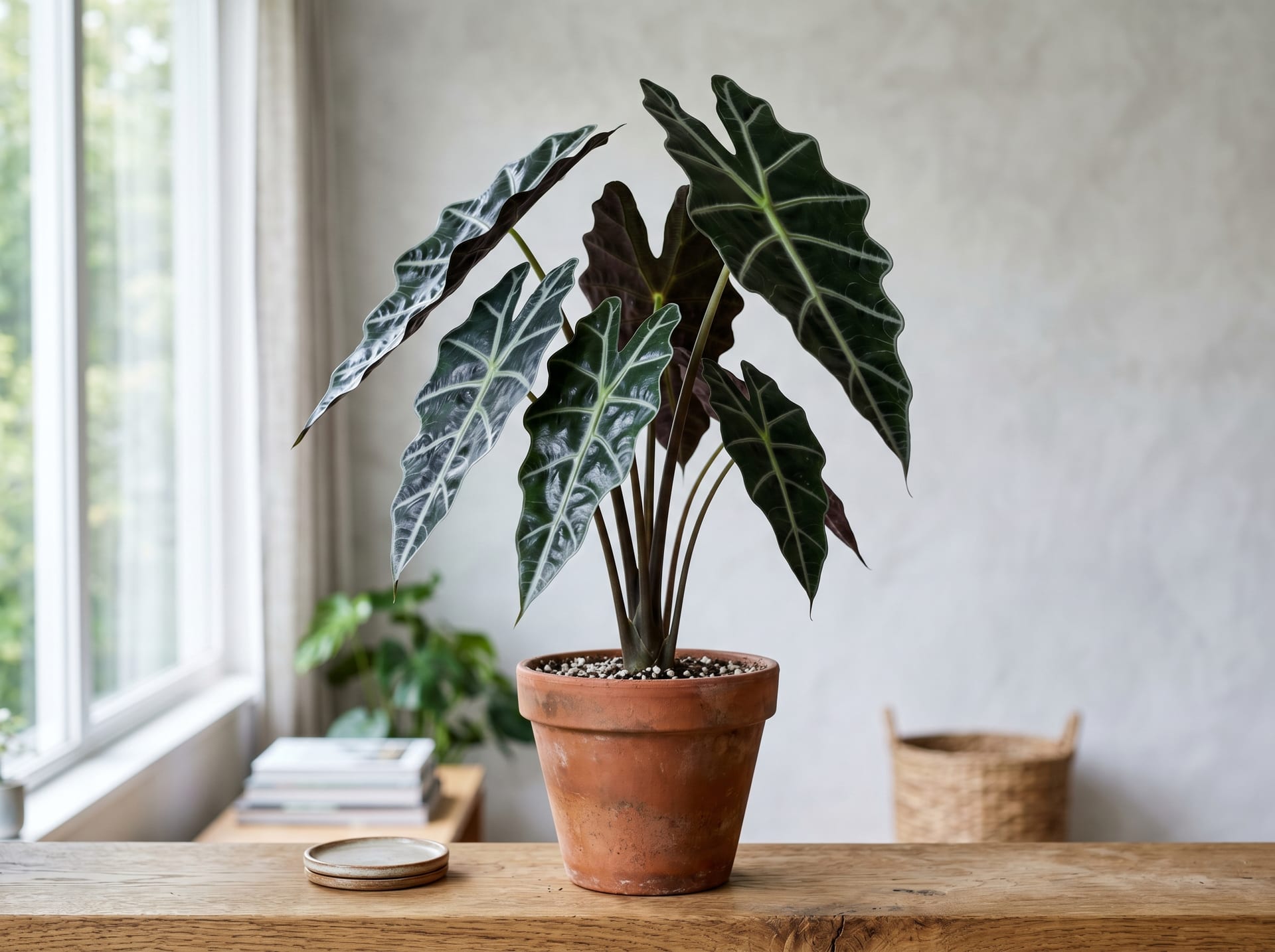
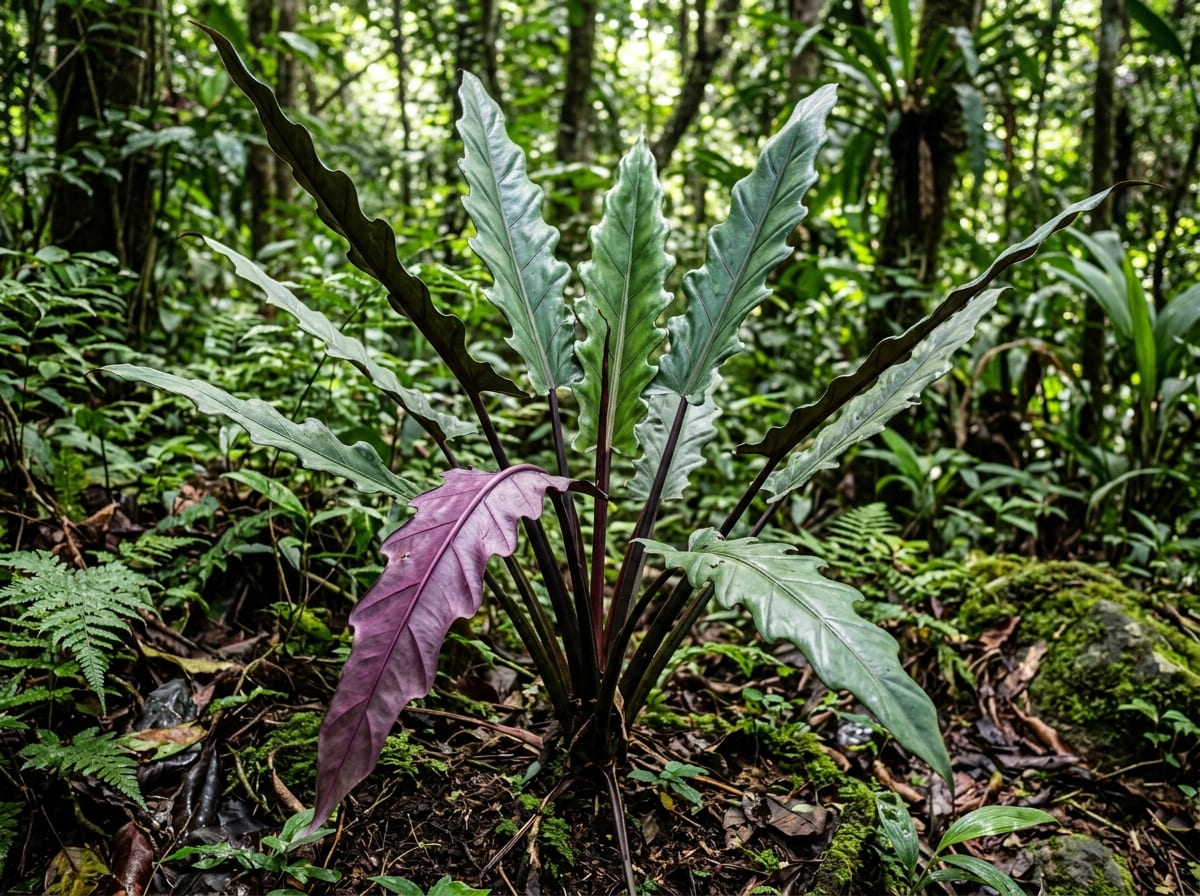
AI-generated image
Alocasia Amazonica
IntermediateAlocasia × amazonica
A bold houseplant with deep green arrow-shaped leaves and striking white veins. Called 'Elephant Ear', it thrives in warm humid indoor conditions.
Overview
Alocasia × amazonica, marketed as the African mask plant or Amazonian elephant ear, is a hybrid cultivar created by crossing several Southeast Asian Alocasia species — despite its common name, it has no connection to Africa. Its arrow-shaped, deeply lobed, glossy dark green leaves with bold, contrasting white venation and wavy, undulating margins create one of the most dramatic appearances in the houseplant world. Leaf undersides are a vivid purple. It requires bright indirect light; direct sun causes leaf scorch. Water when the soil surface dries, avoiding overwatering which leads to root and corm rot. Growth slows in winter and the rhizome may enter dormancy. Despite its demanding nature, its spectacular, mask-like foliage makes it one of the most striking and sought-after aroid houseplants available.
Lifespan of the Alocasia Amazonica
The Alocasia Amazonica lives 10+ years.
Size of the Alocasia Amazonica
The Alocasia Amazonica grows to 30-100cm.
Temperature & humidity for the Alocasia Amazonica
The ideal temperature for the Alocasia Amazonica is 22〜28℃. Ideal humidity is 60〜80%.
As a tropical plant, it prefers warm temperatures (above 18°C) and high humidity (above 60%); dry conditions invite spider mites.
Basic Info
Origin
Garden hybrid developed from Southeast Asian Alocasia species
Lifespan
10+ years
Size
30-100cm
Temperature
18〜30℃
Humidity
60〜80%
Watering & Fertilizer
Liquid fertilizer twice monthly in spring-fall
Growing Tips
Placement
Bright indirect light optimal. Avoid direct sun
Watering
Water thoroughly when topsoil dries. Avoid waterlogging
Humidity
Prefers high humidity. Use humidifier or misting
Temperature & Overwintering
Ideal temperature is 22-28°C; keep it above 18°C. Growth slows in winter and the bulb may go dormant, so water less and keep it in a warm room.
Soil & Repotting
Overwatering causes root and bulb rot, so plant in a well-draining mix. Feed liquid fertilizer twice a month during the spring to autumn growing season.
Notes
Contains calcium oxalate throughout. Toxic to pets and children
Alocasia Amazonica FAQ
QWhat is the growing difficulty level for Alocasia Amazonica?
Intermediate. A variety suitable for intermediate growers. Requires some cultivation experience and knowledge of environment management. Pay careful attention to temperature and humidity control.
QWhat is the ideal temperature for Alocasia Amazonica?
The ideal temperature for Alocasia Amazonica is 22〜28℃. Recommended humidity is 60〜80%. Avoid sudden temperature changes and maintain a stable environment.
QWhat is the lifespan of Alocasia Amazonica?
The average lifespan of Alocasia Amazonica is 10+ years. With proper cultivation environment and nutrient management, you can keep it healthy for a long time.
QHow large does Alocasia Amazonica get?
The mature size of Alocasia Amazonica is 30-100cm. This may vary slightly depending on cultivation environment and individual differences.
QHow should I water and fertilize Alocasia Amazonica?
Alocasia Amazonica: watering & fertilizer — Liquid fertilizer twice monthly in spring-fall. Aim for appropriate frequency and amount.
QWhat is the typical price for Alocasia Amazonica?
The price of Alocasia Amazonica varies significantly by variety, characteristics, size, and lineage. Please check GrowerDirect's price guide for the latest market information.
Last updated: June 24, 2026
Growing Specifications
- USDA Zone
- 10–12
Sources: Missouri Botanical Garden Plant Finder - Alocasia x amazonica
References & Sources
Edited & verified by: GrowerDirect Editorial Team
The classifications, regulations, and growing data on this page are created and verified based on the primary information database below.
Taxonomy & Authority
Regulations & Conservation Status
Foliage plant. Confirmed by document review to be non-applicable to CITES Appendix (Flora), designated invasive species, or designated animals (the genus does not appear in the CITES flora section; Dracaena spp. listings in CITES refer to a reptile genus of the same name; the plant Dracaena is not applicable).
Sources: CITES Appendices I/II/III (flora section, grepped via dbca mirror) / CITES Appendices (official) / Ministry of the Environment List of Specified Invasive Alien Species
Regulations may change. Always verify the latest information with the relevant authorities.
Related Species
Find listings for this species
Related Articles
Alocasia Care Guide: Choosing Varieties, Watering, Summer Care, and Winter Dormancy
Learn the basics of Alocasia care. We explain the characteristics of popular varieties like Polly and Amazonica, proper watering and lighting conditions, heat management during summer, and overwintering methods.
Optimizing Foliage Plant Leaf Shine | Humidity Management to Achieve Gloss and Plant Health
Environmental management techniques to bring out glossy shine on foliage plant leaves. Techniques to achieve healthy and beautiful leaf expression through optimizing light, humidity, and water quality.
Why New Leaves on Foliage Plants Are Smaller — Practical Solutions for Light, Humidity, and Nutrition
We analyze the causes behind stunted growth and smaller new leaves on foliage plants. From light environment and humidity management to fertilization strategy and root health, we explain each factor based on empirical data and introduce methods to restore new leaf size.
Spider Mite and Scale Insect Control: Practical Pest Prevention
Learn to identify spider mites and scale insects on houseplants and recognize damage signs, master practical spider mite control methods, discover effective scale insect elimination techniques, create pest-resistant environments with seasonal management, understand pesticide safety precautions, and discover early detection and prevention strategies.
🩺 Common diseases
Can't find the plant you're looking for?
Post your wishes for free and growers with matching plants will contact you with introductions.