Alocasia Care Guide: Choosing Varieties, Watering, Summer Care, and Winter Dormancy
Learn the basics of Alocasia care. We explain the characteristics of popular varieties like Polly and Amazonica, proper watering and lighting conditions, heat management during summer, and overwintering methods.
Key Takeaways
Learn the basics of Alocasia care. We explain the characteristics of popular varieties like Polly and Amazonica, proper watering and lighting conditions, heat management during summer, and overwintering methods.
Related Species
Alocasia (Alocasia) is a foliage plant in the Araceae family, native to Southeast Asia and South Asia. It is prized as an interior plant for its distinctive arrowhead-shaped or shield-shaped leaves and beautiful vein contrast. However, many people struggle with its care, citing challenges such as "difficult watering," "leaf drop in winter," and "sudden loss of vigor in summer."
This guide explains the characteristics of Alocasia and provides practical methods for growing it beautifully for years to come.
Alocasia Characteristics and Basic Information
Plant Characteristics
Native Habitat and Growing Environment: Tropical rainforests of Southeast and South Asia. It naturally grows on the humid forest floor to the forest edge in hot, humid climates, and requires a warm environment year-round.
Leaf Characteristics: While they vary by type, Alocasia leaves are characterized by a glossy surface, well-defined veins, and vibrant green to dark green coloring. Some varieties have velvety-textured foliage, while others feature white-highlighted veins, with each variety having its own unique appeal.
Size Range: Alocasia size varies considerably by variety, ranging from compact desk-top varieties to large specimens exceeding 2 meters in height.
Toxicity: All parts of Alocasia contain calcium oxalate crystals, which can cause irritation and inflammation of the mouth and digestive tract if ingested. Families with pets or small children should take care when placing the plant.
Main Varieties and Their Characteristics
Alocasia Amazonica (Alocasia 'Amazonica')
One of the most popular varieties. It features deep dark green leaves with white veins, creating striking contrast. Despite its name, it is actually a natural hybrid with no connection to the Amazon River and is native to Southeast Asia. Its medium size makes it easy to place indoors.
Alocasia Polly (Alocasia 'Polly')
A refined cultivar of Amazonica. It has a more compact size with sharper leaf shape. It is easy to care for and beginner-friendly.
Alocasia Macrorrhiza (Alocasia macrorrhiza)
A relative of taro and a large-growing species. It has extremely large leaves (exceeding 1 meter when mature) and is suited for gardens and large spaces. It has good heat and cold tolerance and is quite hardy.
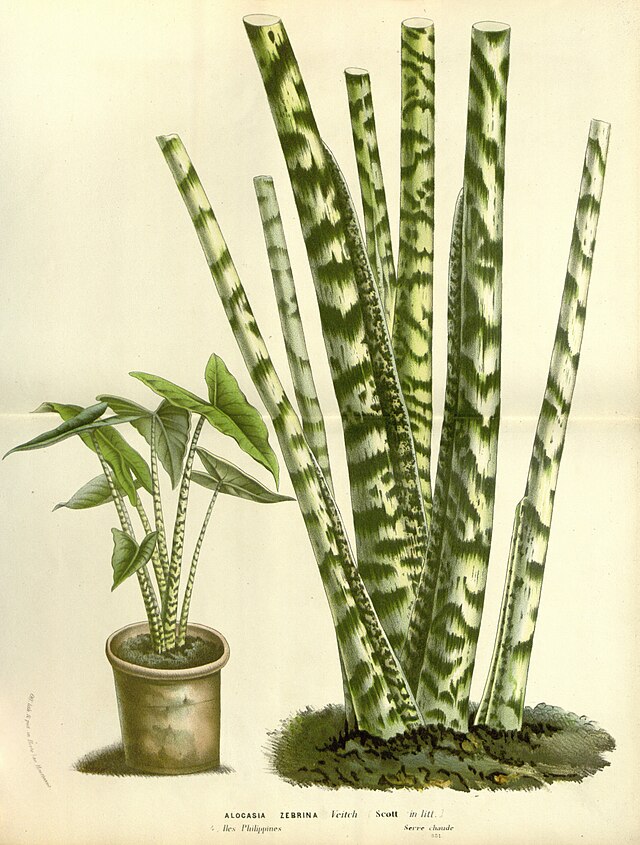
Alocasia Zebrina (Alocasia zebrina)
A distinctive variety with zebra-like striped petioles (the stem portion). The leaves are elongated arrowhead-shaped with a glossy finish.
Alocasia Nigra (Alocasia 'Black Stem')
A luxurious variety with stems in deep purple to near-black. The dark-toned foliage creates a cohesive, elegant appearance.
Alocasia Longiloba (Alocasia longiloba)
A variety with silvery-white glowing veins. It has elongated leaves with unique elegance. This is a true species from Southeast Asia.
Placement and Light Management
Basic Light Requirements
Alocasia prefers bright indirect light. Direct sunlight, especially strong summer sun, causes leaf burn.
Ideal Placement:
- A bright window indoors (filtered through sheer curtains)
- An east-facing window (where soft morning light shines)
- As an interior plant in a bright living room
Places to Avoid:
- Direct summer sunlight (south-facing or west-facing windows)
- Areas that are too dark (growth stalls and leaf color deteriorates)
- Places with direct air conditioning flow (causes leaf drying and damage)
Signs of Insufficient Light
- Stems become elongated and prone to falling over
- Leaf color fades and loses its natural vibrancy
- Leaves become smaller
If these symptoms appear, move the plant to a brighter location.
Watering Methods and Timing
Watering is one of the most common points of failure with Alocasia. Overwatering due to the mistaken belief that "tropical plants from hot, humid regions need plenty of water" causes root rot.
Watering Basics
Growing Season (Spring to Summer): Water thoroughly 2-3 days after the soil surface dries out. Water until it drains into the saucer below, then always empty the saucer afterward.
Fall to Winter: Reduce watering frequency. As temperatures drop and growth slows, extend the interval to watering about 4-5 days after the soil surface dries.
Winter (below 10℃): Water only 2-3 times per month with minimal amounts. Overwatering during this period is the leading cause of root rot.
Signs of Root Rot and How to Handle It
- Leaves suddenly wilt or progressively yellow and drop
- A foul smell comes from the base of the plant
- The base of the stem becomes soft
If these signs appear, root rot is likely. Remove the plant from its pot, inspect the roots, trim any rotted roots with clean scissors, and repot in fresh soil.
The Importance of Humidity Management
Alocasia thrives in high humidity. Dry indoor air, especially from heating systems in winter, causes leaf drying and discoloration.
Ways to Increase Humidity:
- Misting (spraying the leaves with a spray bottle): 1-2 times daily
- Using a humidifier
- Placing the pot on a water-filled tray (ensuring the pot bottom doesn't sit in water)
- Keeping it in a terrarium-like high-humidity environment
The target is 60% humidity or higher. Prolonged dryness makes spider mites more likely, so regular misting also helps prevent pests and diseases.
Temperature and Seasonal Management
Summer Care
While Alocasia is relatively heat-tolerant, Japan's humid summer climate poses a risk of rot.
- Ensure good air circulation (place in a breezy location)
- Ensure water doesn't accumulate in the pot after watering
- Avoid direct sunlight
Winter Care
Alocasia has low cold tolerance. In temperatures below 10℃, growth stops completely, and further cooling causes leaf drop and plant decline.
Overwintering Tips:
- Move indoors to a warm location before minimum temperatures drop below 10℃
- Place away from direct heating vents
- Significantly reduce watering (to prevent root rot)
- If the bulbs or rhizomes remain alive, new leaves will emerge in spring even if all leaves drop
If Leaves Drop in Winter: Don't discard the plant in panic. If the underground bulbs or rhizomes are alive, new shoots will emerge in spring. Minimize watering and keep the plant in a warm location until spring arrives.
Choosing Soil and Pots
Recommended Soil
Alocasia thrives in soil with balanced drainage and water retention.
Basic Mix: Houseplant potting soil 5 : Perlite 2 : Vermiculite 2 : Small red lava balls 1
It's sufficient to mix 2-3 parts perlite into store-bought houseplant soil to improve drainage.
Choosing a Pot
- Size: Choose a pot slightly larger than the root ball (about 2-3 cm wider in diameter). Oversized pots retain excess moisture.
- Material: Terracotta pots offer excellent drainage and are less prone to root rot. Plastic pots are lightweight and convenient, but require slightly less frequent watering.
Repotting Timing and Method
The best time to repot is May to July (early growing season). Signs that repotting is needed include roots emerging from the pot drainage holes or soil drying quickly after watering.
- Prepare a new pot and fresh soil
- Remove the plant from its pot and gently loosen the old soil
- Trim any rotted or damaged roots with clean scissors
- Repot with fresh soil
- Water thoroughly after repotting and place in bright shade away from direct sunlight for 1-2 weeks
Fertilizing
During the growing season (April to September), apply diluted liquid fertilizer 1-2 times per month as a substitute for regular watering. Use a balanced houseplant fertilizer containing nitrogen, phosphorus, and potassium.
Stop fertilizing from fall onward (October through March). Applying fertilizer during the dormant period can damage roots.
Common Pests and Diseases and How to Deal With Them
Spider Mites
These thrive in dry air. Look for fine spider web-like strands on the leaf undersides or stippled leaves. Prevent them with regular misting; use a miticide if they appear.
Aphids
These cluster on new growth and young leaves. Remove small infestations by hand; use an aphid-specific insecticide for larger populations.
Scale Insects
These appear as white spots on stems and leaf undersides. Scrub them off with a toothbrush or cotton swab, then treat with a systemic insecticide.
Leaf Burn
This causes brown spots from direct sunlight. Move the plant to shade immediately and trim affected leaves.
Find Rare Varieties on GrowerDirect
Alocasia boasts an enormous variety of species, and many rare types are unavailable at regular garden centers. On GrowerDirect, growers specializing in Alocasia offer rare varieties, large specimens, and cuttings for direct purchase. You can ask growers about care before buying, so even new varieties feel approachable. If you're searching for the perfect Alocasia, be sure to explore GrowerDirect.