Variegated Monstera Selection and Color Maintenance | Variegation Stability and Environmental Factors
This article explains how variegation develops in Monsteras and covers the key management points for light, temperature, humidity, and fertilization needed to maintain variegation stably. We also introduce methods for handling reversion.
Key Takeaways
This article explains how variegation develops in Monsteras and covers the key management points for light, temperature, humidity, and fertilization needed to maintain variegation stably. We also introduce methods for handling reversion.
Related Species
What Is Variegation in Monsteras
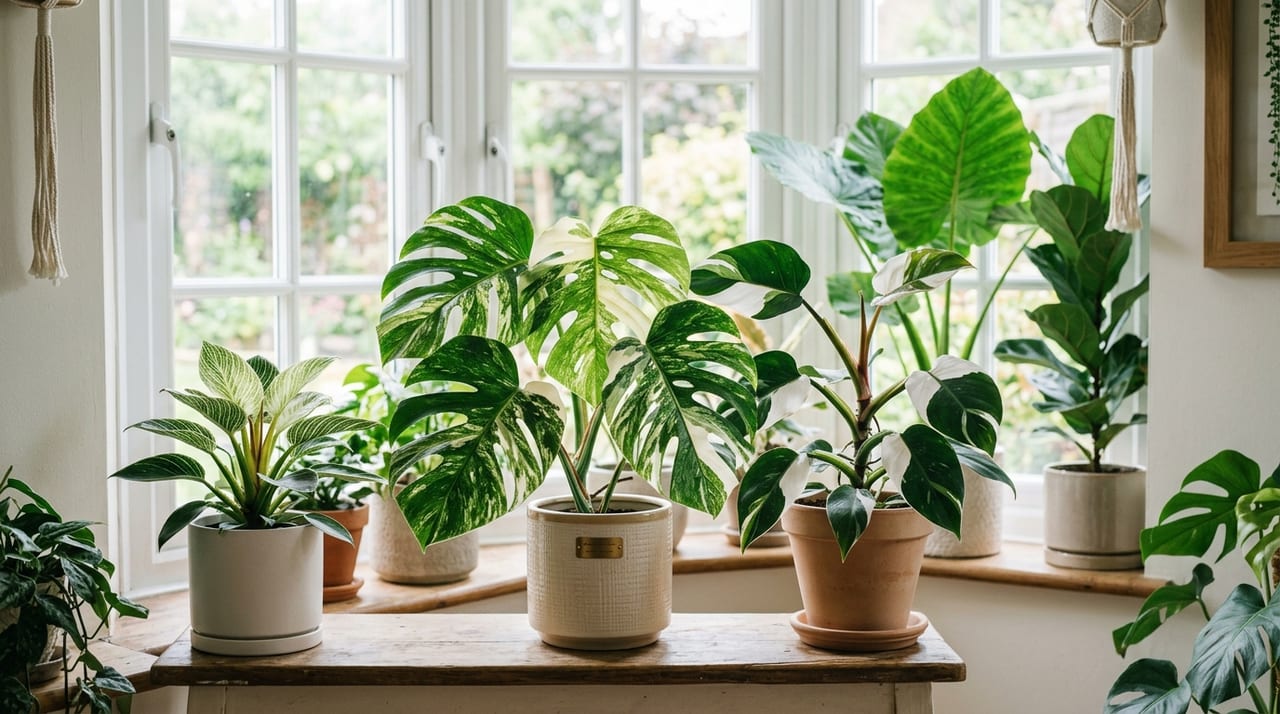
Variegation in Monsteras refers to patterns created when white or yellow cells lacking chlorophyll are interspersed within normal green tissue. Though the areas without chlorophyll cannot photosynthesize and put the plant at a growth disadvantage, their unique chromatic beauty gives variegated plants a special status in the ornamental plant market. Variegated types of Monstera deliciosa are particularly rare, and value varies greatly depending on the pattern of white variegation—so much so that individual specimens can differ dramatically in worth.
There are two main patterns that cause variegation.
- Variegation from chimeric mutation: A genetic mutation occurring in the chloroplasts within cells. Because it is stably inherited to the next generation through cuttings and division, it is preferred by collectors.
- Viral variegation: Patterns that appear temporarily due to plant virus infection. The variegation may disappear depending on the plant's health, and there is a risk of the virus spreading to other plants through contact or plant sap.
Even though they look similar, their properties are completely different, so it is important to confirm which type you are purchasing. Reliable growers typically document the plant's history (seed-grown, tissue-cultured, or divided), so it is good to develop the habit of carefully reading the listing information.
Differences by Variety and Selection Criteria
Multiple variegated Monstera varieties are available in the market, each with distinctive leaf shapes and variegation patterns. Monstera adansonii and Monstera Thai Constellation are often confused with variegated Deliciosa, but their leaf fenestrations and growth rates differ, so it is recommended that you confirm the exact variety name before planning your cultivation strategy.
When selecting an individual plant, consider the following points:
- Pattern type of variegation: Patterns vary by plant, such as "half-moon (half the leaf is white)," "fine white scattered throughout," or "white leaves appear every other leaf." Whether a line is stable can be somewhat inferred from the grower's documentation of the parent plant's leaves.
- Balance of green and white: While a larger white area may appear to have higher ornamental value, it greatly reduces photosynthetic capacity and results in very slow growth. Choose based on the balance between management effort and desired growth speed.
- Plant health: Check the photos and description for signs of leaf tip burn or root rot, and verify that there is no discoloration or damage on the white areas.
Light Management: Key to Maintaining Stable Variegation
Light intensity is the most influential environmental factor in maintaining the beauty of variegated plants. Since the white areas without chlorophyll cannot photosynthesize, the entire plant's survival depends heavily on the green portions. If light is extremely insufficient, the plant may increase the proportion of green cells as a survival strategy, causing the variegation to gradually fade.
On the other hand, direct sunlight that is too strong will scorch the white areas. White tissue cannot absorb ultraviolet light through chlorophyll and is therefore more susceptible to light damage than green areas. The ideal environment is a location where bright, indirect light through sheer curtains falls consistently throughout the day. For outdoor cultivation, use shade cloth to ensure that direct sunlight does not remain on the plant for extended periods.
Be mindful of seasonal changes in light. Increasing shade during summer and moving the plant closer to the window in winter to ensure adequate light—and making it a habit to adjust placement seasonally—will help maintain beautiful variegation year-round.
Effects of Temperature, Humidity, and Fertilization on Variegation
Temperature and humidity management are important second only to light intensity. Monsteras thrive at approximately 20–28°C, and growth slows significantly below 15°C. When cold temperatures persist, damage easily spreads from the white areas, so the basic principle is to keep the plant indoors in a warm environment during winter. Also avoid locations where air conditioning vents or cold drafts from windows blow directly on the plant.
Regarding humidity, leaf tips are more prone to browning when ambient humidity falls below 40%. Since white areas are particularly susceptible to damage, it is recommended to maintain indoor humidity at around 50–70% using a humidifier or by misting leaves regularly. When misting, avoid leaving water droplets on white areas for long periods, as this can impair transpiration and cause damage. Perform misting in a well-ventilated environment.
As for fertilization, applying too much nitrogen-rich fertilizer can prioritize green cell activity and make the variegation less prominent. To maintain beautiful variegation, use more modest amounts of fertilizer—apply dilute liquid fertilizer approximately twice a month during the growing season (spring to early autumn). Stop fertilizing during winter dormancy and resume in spring with new growth; this cycle leads to more stable management.
Handling Reversion and Variegation Loss
Even in variegated plants resulting from chimeric mutation, a phenomenon called reversion can occur during cultivation. The genetic composition at the growing point shifts, resulting in only solid green leaves without variegation. If you leave a reverted branch to grow, the entire plant may revert to solid green. The basic remedy is to cut off the all-green branch just above the node where variegation remains, and reshape the plant to prioritize growth from the variegated growing point.
Conversely, if white areas increase excessively and growth becomes severely weak, deliberately retaining branches with a higher proportion of green to balance photosynthetic capacity is an important decision in long-term management. The key perspective is to prioritize plant health while gradually working toward your ideal variegation balance.
What to Confirm When Purchasing from a Grower and Aftercare
Variegated Monsteras vary greatly between individuals, and judging by photos alone sometimes results in the plant differing from expectations when it arrives. Before purchasing, carefully verify the plant's history, variegation type, and growing conditions listed in the product description, and do not hesitate to contact the grower with any questions.
Aftercare following arrival is also important. Transport stress from temperature fluctuations and dryness can temporarily cause leaves to droop and white areas to lose their luster. It is recommended that you avoid strong light immediately upon arrival, observe the plant in bright shade for a few days, and then gradually transition to normal growing conditions. Plants with extensive white areas are particularly sensitive to environmental changes, so acclimating them slowly without rushing will help maintain their appearance long-term.
The appeal of variegated Monsteras lies in the fact that with proper conditions and careful management, you can enjoy them for many years. Understanding how chimeric mutation works and the characteristics of each variety, selecting an individual suited to your growing environment, and balancing light, temperature, humidity, and fertilization is the shortcut to maintaining beautiful variegation long-term.