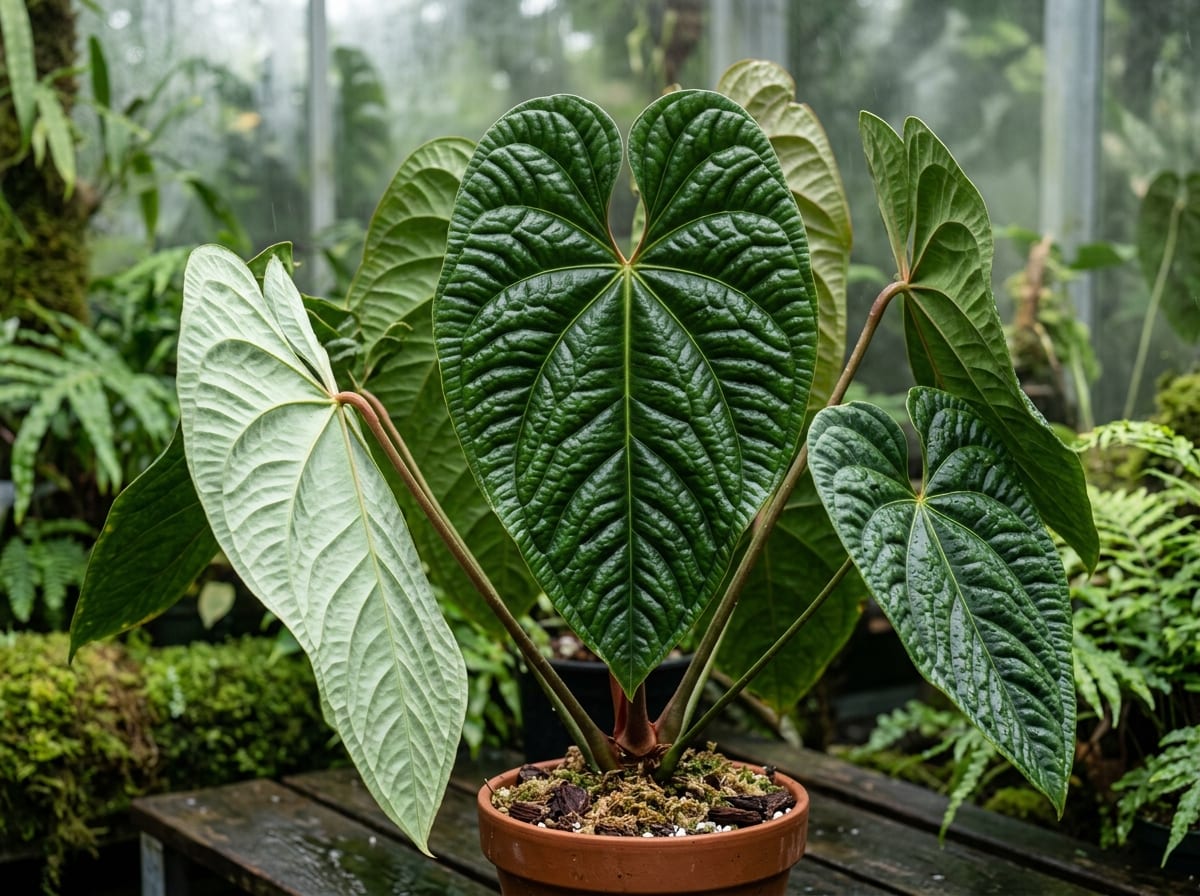
Anthurium luxurians
Anthurium luxurians is a species native to Colombia. Its most striking feature is its thick, leathery leaves, which bulge dramatically along the veins to form a quilted, textured surface. The upper side is a deep, glossy green, while the underside is noticeably paler — a contrast worth admiring up close. Described relatively recently, in 2005, this perennial rewards patient growers who watch it develop over the years. It's considered a plant for growers with some prior experience, but that effort pays off in one of the more distinctive leaf textures in the genus.
View Anthurium luxurians encyclopedia →0% commission on your first sales!Register by September 30, 2026 and your first 2 plants are commission-free!
Grower Wanted!
List your plants on GrowerDirect and sell directly to customers nationwide!
6 Transparency Commitments from GrowerDirect
Every Grower selling Foliage Plants provides complete transparency: variety, origin, light requirements, and care difficulty.
- Variety Information
- Real Photos
- True Colors
- Origin Information
- Light Requirements
- Care Difficulty
Browse all 139 varieties
Light Requirements
Care Difficulty
Verified growers wanted for Foliage Plants
Growers are signing up now ahead of launch. Subscribe to be notified when new listings go live.
Getting alerts is free with a member account. When new listings match your saved search, we'll notify you by email and in-app.
Browse other categories
Verified growers (preview)
Are you growing foliage plants?
Register as a grower and connect with buyers directly.
Apply as a growerAnthurium luxurians key facts
- Growing Difficulty
- Intermediate
- Lifespan
- Perennial
- Size
- Blades 15-50 cm wide; petioles 25-89 cm
- Temperature
- 18〜29℃
- Watering
- Dilute liquid feed in the growing season
- Light & Placement
- Bright indirect light. Direct sun scorches the leaves; too little light slows growth.
- Watering
- Water when the surface dries and avoid constant wetness; rain or purified water is best.
- Temperature & Overwintering
- About 18-29°C, as for the genus. It is cold-sensitive, so keep it warm and fairly humid indoors in winter.
- Soil & Repotting
- Although terrestrial, its roots like air, so use a free-draining mix with bark chips or pumice.
- Propagation
- Propagate by division or seed; growth is fairly slow.
- Pests & Cautions
- Leaf tips brown in dry air. Anthuriums contain calcium oxalate crystals; chewing causes mouth pain, swelling and drooling. Keep out of reach of pets and small children.
About Anthurium luxurians
Anthurium luxurians, native to Colombia, is a foliage plant valued for its thick, leathery leaves that bulge into a quilted texture along the veins. Described in 2005, this relatively recent perennial species benefits from some intermediate-level growing know-how.
7 things to know before growing Anthurium luxurians
1Bright, Indirect Light
Anthurium luxurians can scorch under prolonged direct sun, so a spot with bright, filtered light — like near a sheer-curtained window — works best. Its thick leaves unfurl more slowly in low light, so don't place it too far from a light source.
2Water When Topsoil Dries
Let the top layer of soil dry out before watering again, since constantly soggy soil leads to root rot. This species also appreciates humidity, so misting the leaves alongside regular watering helps keep them looking their best.
3Airy, Well-Draining Mix
Anthurium luxurians grows in the ground, but its roots like air, so a free-draining mix with bark chips and pumice suits it. Standard potting soil alone tends to stay too wet around the roots.
4Repot When Roots Fill the Pot
Roots emerging from the drainage holes or slowing growth are signs it's time to repot. Move up to a slightly larger pot so the roots have room to support the thick leaves and long petioles.
5Watch Winter Warmth and Humidity
Growth tends to stall once temperatures drop below its comfort range, so keep it indoors in a warm spot through winter. Heated indoor air can dry out leaf tips, so running a humidifier nearby helps offset that.
6Check Leaf Texture and Petioles
When choosing a plant, look for clearly defined ridges along the leaf veins and sturdy petioles. Leaf blades eventually reach 15-50cm wide with petioles up to 25-89cm, so plan its eventual footprint when picking a spot.
7An Intermediate-Level Plant
This species is generally considered suited to growers with some prior experience, particularly around watering and humidity. As a perennial that develops gradually, it rewards patient, season-by-season observation.
Frequently asked questions about Anthurium luxurians
- Q.Is this a good plant for beginners?
- A.This species is generally rated as suited to intermediate growers rather than absolute beginners. Getting the watering rhythm and humidity level right takes a bit of practice.
- Q.Is the bumpy leaf texture a sign of disease?
- A.No, the raised, quilted texture between the veins is a natural characteristic of this species. It comes from how the leaf tissue develops along the vein structure, not from any pest or illness.
- Q.How large does this plant get?
- A.Leaf blades typically reach 15-50cm wide, with petioles growing 25-89cm long. The exact final size varies depending on the individual plant and its growing conditions.
- Q.How often should I mist the leaves?
- A.There's no fixed schedule, but since this plant enjoys higher humidity, misting more frequently during dry seasons helps keep the leaves looking their best. Just avoid placing it where air conditioning blows directly on the foliage.
- Q.What kind of plant is this — is it a perennial?
- A.It's a species of Anthurium native to Colombia and is a perennial. It was described relatively recently, in 2005, and is known for its thick, leathery leaves.
Handy Growing Tools for Anthurium luxurians
Learn more about Anthurium luxurians in the encyclopedia
View Anthurium luxurians encyclopedia entry →
Care difficulty, size, origin and light needs — all basics covered.
More in this category
Can't find the plant you're looking for?
Post your wishes for free and growers with matching plants will contact you with introductions.