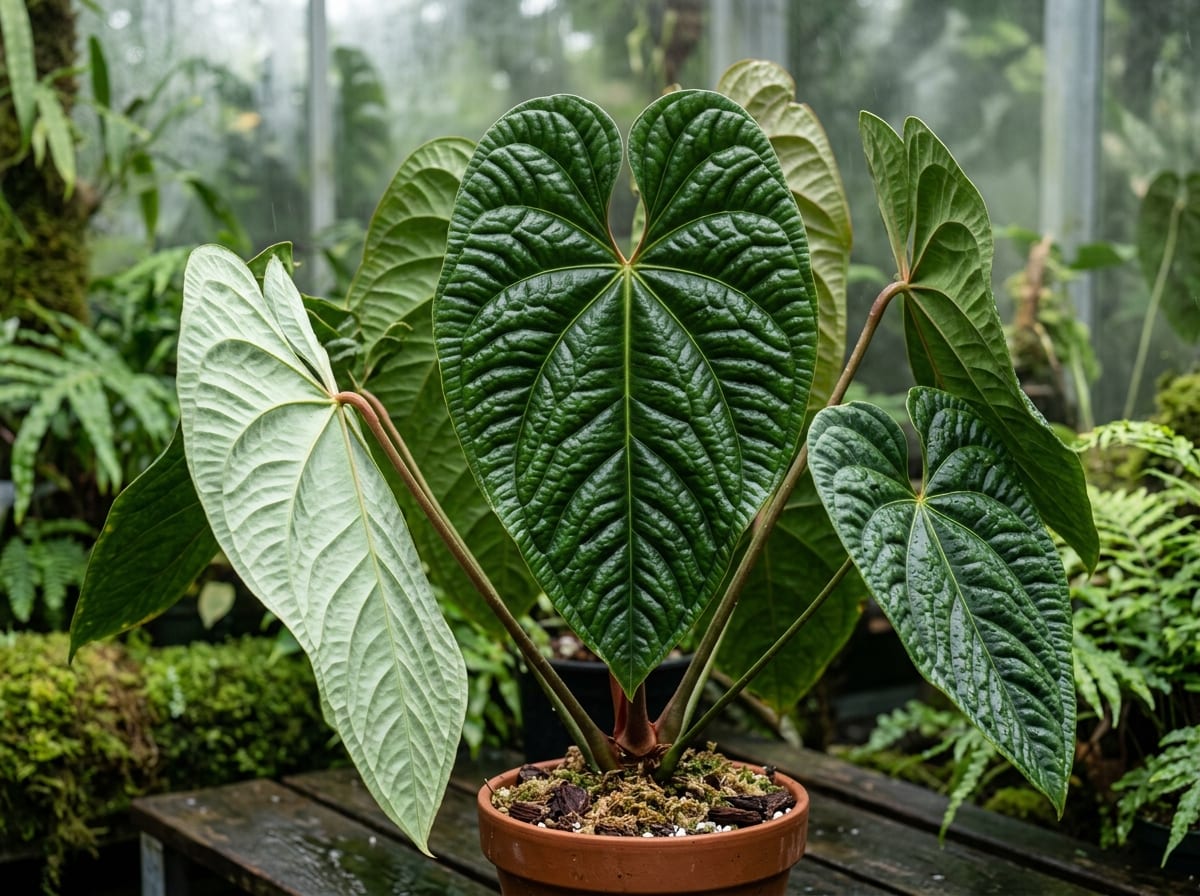
AI-generated image
Anthurium luxurians
IntermediateAnthurium luxurians
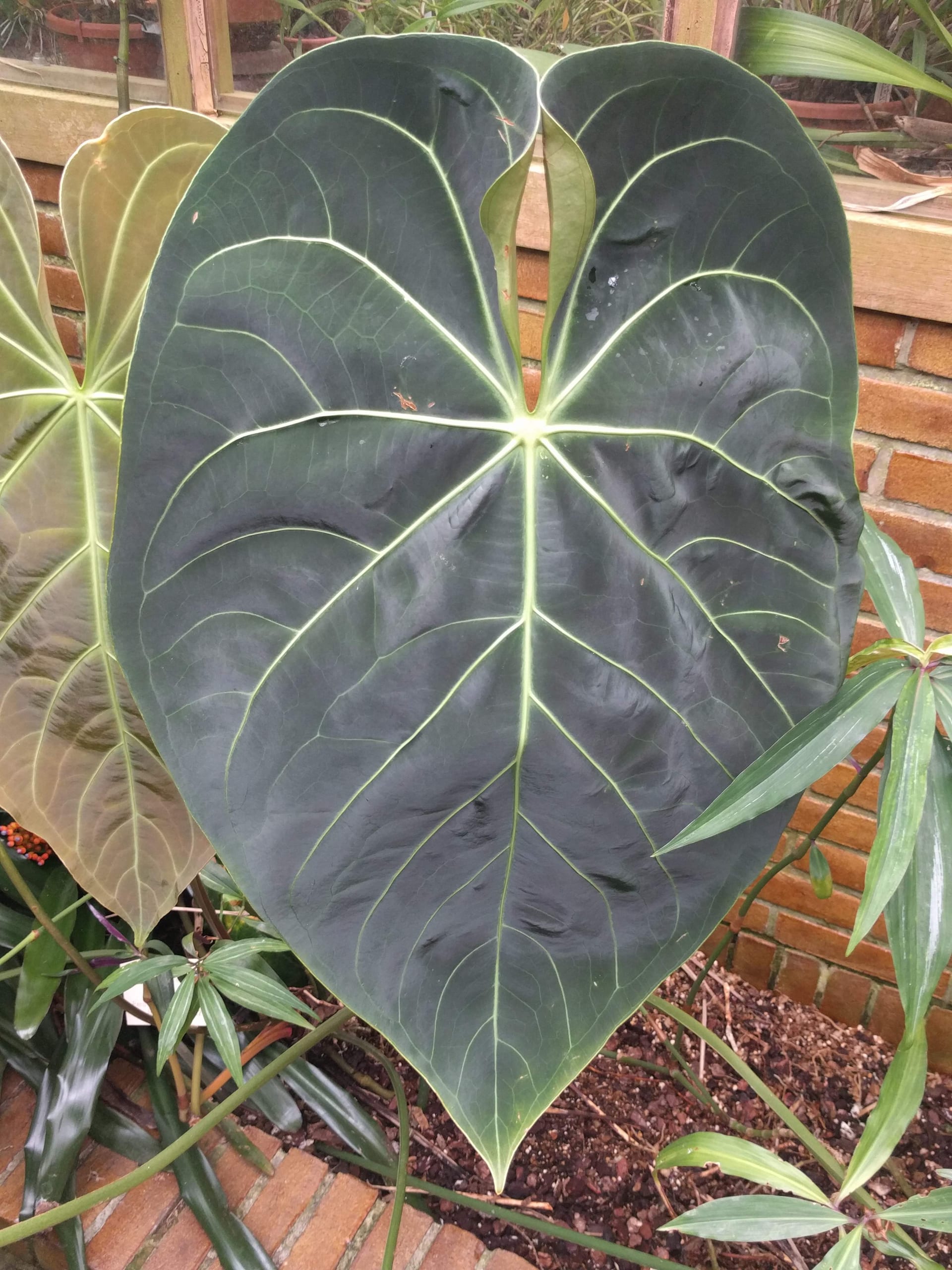
A Colombian Anthurium whose thick, leathery leaves bulge strongly between the veins, giving a quilted surface. The upper side is glossy dark green and the underside much paler. It was described only in 2005.
About
Anthurium luxurians is a terrestrial aroid from Colombia, described in 2005 by Croat and Cirino in Aroideana, the journal of the International Aroid Society. It has short, stout stems and petioles 25-89 cm long bearing ovate to narrowly ovate blades 15-50 cm wide. The blades are thick and leathery and conspicuously bullate: the major veins sit in grooves and the tissue between them bulges, producing a quilted surface. The upper side is glossy dark green, the underside much paler, and the margins are rolled under. Among textured anthuriums it is recognised by this combination of thick glossy leaves and deep quilting. It is also used as a parent in hybrids, so check labels if you want the pure species. The cataphylls around the stem are strongly tinged reddish brown and weather into fibres before falling. In Japan it is available from specialist houseplant nurseries and online shops, but not in large numbers.
Size of the Anthurium luxurians
The Anthurium luxurians grows to Blades 15-50 cm wide; petioles 25-89 cm.
Temperature & humidity for the Anthurium luxurians
The ideal temperature for the Anthurium luxurians is 18〜29℃.
Basic Info
Origin
Colombia
Lifespan
Perennial
Size
Blades 15-50 cm wide; petioles 25-89 cm
Temperature
18〜29℃
Humidity
50〜70%
Watering & Fertilizer
Dilute liquid feed in the growing season
Growing Tips
Light & Placement
Bright indirect light. Direct sun scorches the leaves; too little light slows growth.
Watering
Water when the surface dries and avoid constant wetness; rain or purified water is best.
Temperature & Overwintering
About 18-29°C, as for the genus. It is cold-sensitive, so keep it warm and fairly humid indoors in winter.
Soil & Repotting
Although terrestrial, its roots like air, so use a free-draining mix with bark chips or pumice.
Propagation
Propagate by division or seed; growth is fairly slow.
Pests & Cautions
Leaf tips brown in dry air. Anthuriums contain calcium oxalate crystals; chewing causes mouth pain, swelling and drooling. Keep out of reach of pets and small children.
Anthurium luxurians FAQ
QWhat is the growing difficulty level for Anthurium luxurians?
Intermediate. A variety suitable for intermediate growers. Requires some cultivation experience and knowledge of environment management. Pay careful attention to temperature and humidity control.
QWhat is the ideal temperature for Anthurium luxurians?
The ideal temperature for Anthurium luxurians is 18〜29℃. Avoid sudden temperature changes and maintain a stable environment.
QHow large does Anthurium luxurians get?
The mature size of Anthurium luxurians is Blades 15-50 cm wide; petioles 25-89 cm. This may vary slightly depending on cultivation environment and individual differences.
QHow should I water and fertilize Anthurium luxurians?
Anthurium luxurians: watering & fertilizer — Dilute liquid feed in the growing season. Aim for appropriate frequency and amount.
QWhat is the typical price for Anthurium luxurians?
The price of Anthurium luxurians varies significantly by variety, characteristics, size, and lineage. Please check GrowerDirect's price guide for the latest market information.
Last updated: September 23, 2026
References & Sources
Edited & verified by: GrowerDirect Editorial Team
The classifications, regulations, and growing data on this page are created and verified based on the primary information database below.
Taxonomy & Authority
Regulations & Conservation Status
Not listed in the CITES Appendices. Not a designated invasive alien species in Japan, nor a nationally rare species under the Act on Conservation of Endangered Species.
Sources: Species+ (CITES listing check) / Ministry of the Environment: List of Invasive Alien Species
Regulations may change. Always verify the latest information with the relevant authorities.
Related Species
Find listings for this species
Related Articles
Complete Guide to Growing Anthuriums (Red Flowers) | Optimal Light, Water, and Humidity Conditions
A complete guide to cultivation methods for producing red spathes (bracts) on Anthuriums every month. Detailed explanations of reproducing the native habitat environment, optimal lighting (no direct sun), maintaining 60%+ humidity, soil design to prevent root rot, and seasonal management.
Why New Leaves on Foliage Plants Are Smaller — Practical Solutions for Light, Humidity, and Nutrition
We analyze the causes behind stunted growth and smaller new leaves on foliage plants. From light environment and humidity management to fertilization strategy and root health, we explain each factor based on empirical data and introduce methods to restore new leaf size.
Spider Mite and Scale Insect Control: Practical Pest Prevention
Learn to identify spider mites and scale insects on houseplants and recognize damage signs, master practical spider mite control methods, discover effective scale insect elimination techniques, create pest-resistant environments with seasonal management, understand pesticide safety precautions, and discover early detection and prevention strategies.
Root Rot Prevention and Root Zone Regeneration Management in Foliage Plants | Soil Selection, Watering, and Early Diagnosis & Recovery Techniques
Root rot is the greatest threat to foliage plants. This article covers practical knowledge from the mechanisms of root rot development to prevention, early-stage diagnosis and treatment methods, and ensuring long-term plant health through soil and watering management.
🩺 Common diseases
Can't find the plant you're looking for?
Post your wishes for free and growers with matching plants will contact you with introductions.