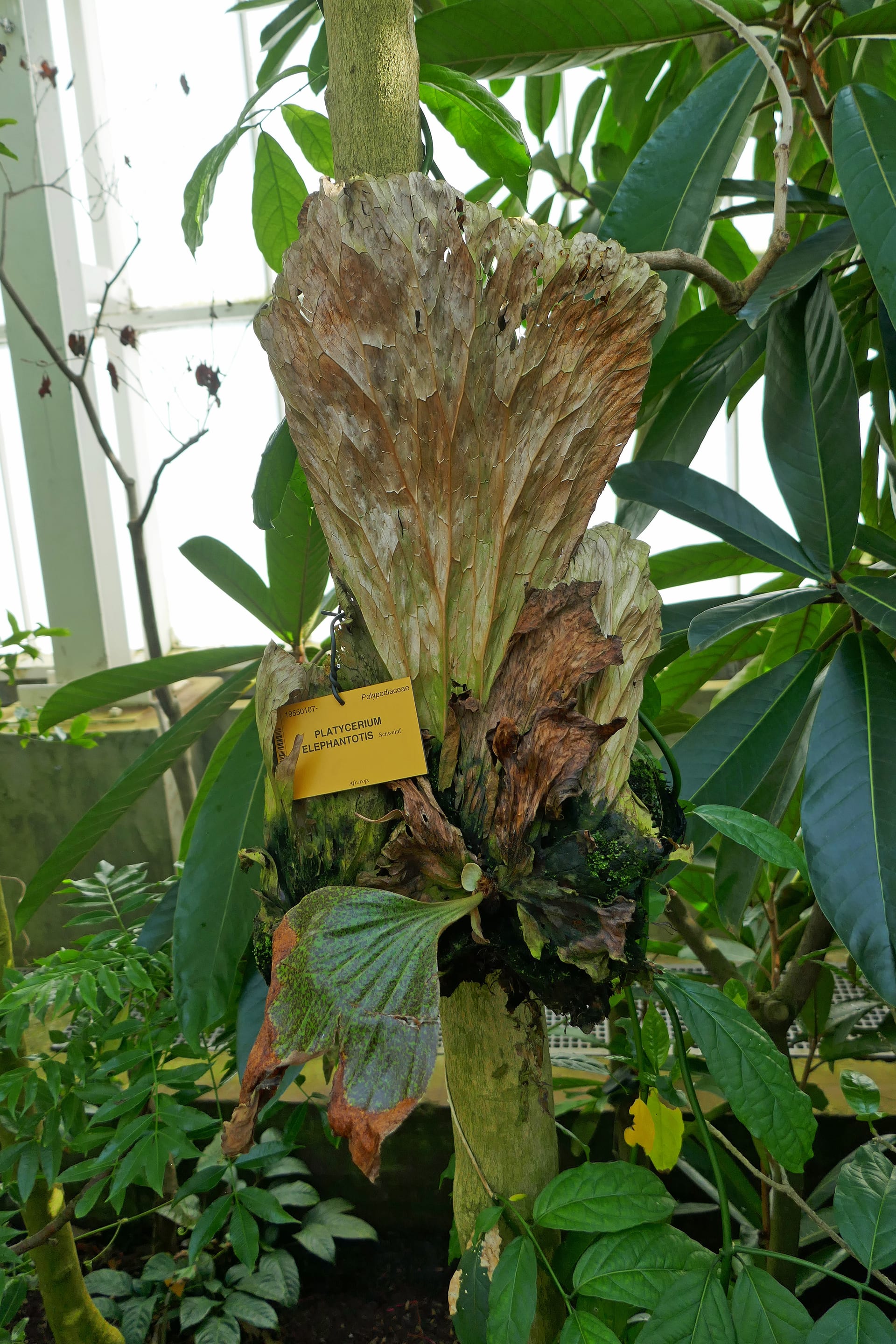
 © Ji-Elle / CC BY-SA 4.0
Elephant Ear Staghorn Fern (Platycerium elephantotis)
Platycerium elephantotis, commonly known as the Elephant Ear Staghorn Fern, stands out among staghorn ferns for its broad, undivided fertile fronds that hang down like a pair of elephant ears rather than branching into antler-like points. Native to tropical Africa, this epiphytic fern produces bright green shield fronds that are replaced seasonally as the plant grows. Its bold, sculptural silhouette makes it a striking addition to any indoor plant collection, though its epiphytic growing habits call for a bit more experience than typical houseplants. With the right care routine, it rewards growers with a truly distinctive centerpiece.
View Elephant Ear Staghorn Fern (Platycerium elephantotis) encyclopedia →0% commission on your first sales!Register by September 30, 2026 and your first 2 plants are commission-free!
Grower Wanted!
List your plants on GrowerDirect and sell directly to customers nationwide!
6 Transparency Commitments from GrowerDirect
Every Grower selling Foliage Plants provides complete transparency: variety, origin, light requirements, and care difficulty.
- Variety Information
- Real Photos
- True Colors
- Origin Information
- Light Requirements
- Care Difficulty
Browse all 139 varieties
Light Requirements
Care Difficulty
Verified growers wanted for Foliage Plants
Growers are signing up now ahead of launch. Subscribe to be notified when new listings go live.
Getting alerts is free with a member account. When new listings match your saved search, we'll notify you by email and in-app.
Browse other categories
Verified growers (preview)
Are you growing foliage plants?
Register as a grower and connect with buyers directly.
Apply as a growerElephant Ear Staghorn Fern (Platycerium elephantotis) key facts
- Growing Difficulty
- Intermediate
- Lifespan
- Perennial (epiphytic fern)
- Size
- Little measured data; fertile fronds are long, broad and pendulous
- Watering
- Little data on feeding; in the wild, leaf litter trapped by the shield fronds decomposes to supply nutrients
- Light & Placement
- Likes bright, warm conditions; kept wet in low light it rots easily.
- Watering
- In the growing season water the crown and let the roots dry slightly between waterings. It recovers well from wilting, but avoid constant wetness.
- Temperature & Overwintering
- A tropical African species that dislikes cold. Keep it in a warm room in winter.
- Soil & Repotting
- Grow mounted or in sphagnum. Last year's shields die in spring and new ones form in summer; trimming the tops of the old shields helps the new ones grow upright.
- Propagation
- In bright, warm conditions it pups freely; divide well-grown pups.
- Pests & Cautions
- Seasonal die-back of the shield fronds is part of the growth cycle, so do not discard the plant. Watch for spider mites, aphids and mealybugs. The white star-shaped hairs on the fronds protect the plant, so do not rub them off.
About Elephant Ear Staghorn Fern (Platycerium elephantotis)
The Elephant Ear Staghorn Fern (Platycerium elephantotis) is an epiphytic fern from tropical Africa, known for its broad, undivided fronds and seasonally renewed shield fronds. Best suited to growers with some experience.
7 things to know before growing Elephant Ear Staghorn Fern (Platycerium elephantotis)
1Light and Placement
Elephantotis prefers bright, indirect light rather than direct sun, which can scorch its fronds. If moving it outdoors in summer, choose a shaded spot with good airflow rather than full sun.
2Watering Rhythm
Because this fern is typically grown mounted or in a hanging basket, let the moss or growing medium dry out before watering thoroughly. Its broad shield fronds help the plant retain moisture, so it doesn't need to stay constantly wet.
3An Epiphytic Habit
In the wild, this fern clings to tree trunks and branches rather than growing in soil, so it's not suited to a typical potting-soil setup. Mounting it on a board or growing it in a basket that keeps the roots exposed to air suits its natural habit best.
4Growing Medium
Sphagnum moss or bark are commonly packed around the roots and secured to a mounting board or basket. Choose materials that drain well, since soggy conditions around the roots can lead to rot.
5Repotting and Remounting
When roots start growing past the edge of the mount or the shield fronds outgrow their base, it's time to move the plant to a larger board or basket. Doing this while the plant is actively growing, rather than during a slow period, reduces stress on the roots.
6Seasonal Changes
The shield fronds naturally cycle through the seasons, so older fronds turning brown and papery is a normal part of growth rather than a sign of decline. During cooler, drier months, space out watering and keep the plant in a bright, warm spot indoors to ease the transition.
7Choosing a Healthy Plant
Look for a plant whose shield fronds hug the base tightly and whose fertile fronds are free of major damage or discoloration. Since this is an epiphytic fern, also check that the base feels secure rather than loose.
Frequently asked questions about Elephant Ear Staghorn Fern (Platycerium elephantotis)
- Q.Can beginners grow this fern?
- A.Because of its epiphytic growing habits, this fern is generally considered better suited to growers with some experience. Once you understand the basics of watering and placement, it's manageable for anyone who has grown houseplants before.
- Q.Why don't the fertile fronds branch like antlers?
- A.Unlike many staghorn fern varieties, elephantotis naturally produces broad, undivided fertile fronds rather than forked ones. This distinctive shape is what gives the plant its "elephant ear" name.
- Q.Should I mount it on a board or grow it in a pot?
- A.As an epiphytic fern, mounting it on a board or basket with sphagnum moss suits its natural growth habit best. If growing it in a container instead, choose a well-draining medium made for epiphytes to help prevent root rot.
- Q.Is it a problem if a shield frond turns brown?
- A.Shield fronds are replaced on a seasonal cycle, so older ones turning brown and papery is a natural part of growth rather than a sign of a problem. As long as new shield fronds are emerging, there's nothing to worry about.
- Q.Do the fertile fronds need trimming as they grow?
- A.These fronds are best left untrimmed and allowed to hang naturally, since that drooping shape is part of the plant's appeal. Just make sure there's enough surrounding space so the fronds don't get damaged by rubbing against a wall or floor.
Handy Growing Tools for Elephant Ear Staghorn Fern (Platycerium elephantotis)
Learn more about Elephant Ear Staghorn Fern (Platycerium elephantotis) in the encyclopedia
View Elephant Ear Staghorn Fern (Platycerium elephantotis) encyclopedia entry →
Care difficulty, size, origin and light needs — all basics covered.
More in this category
Can't find the plant you're looking for?
Post your wishes for free and growers with matching plants will contact you with introductions.