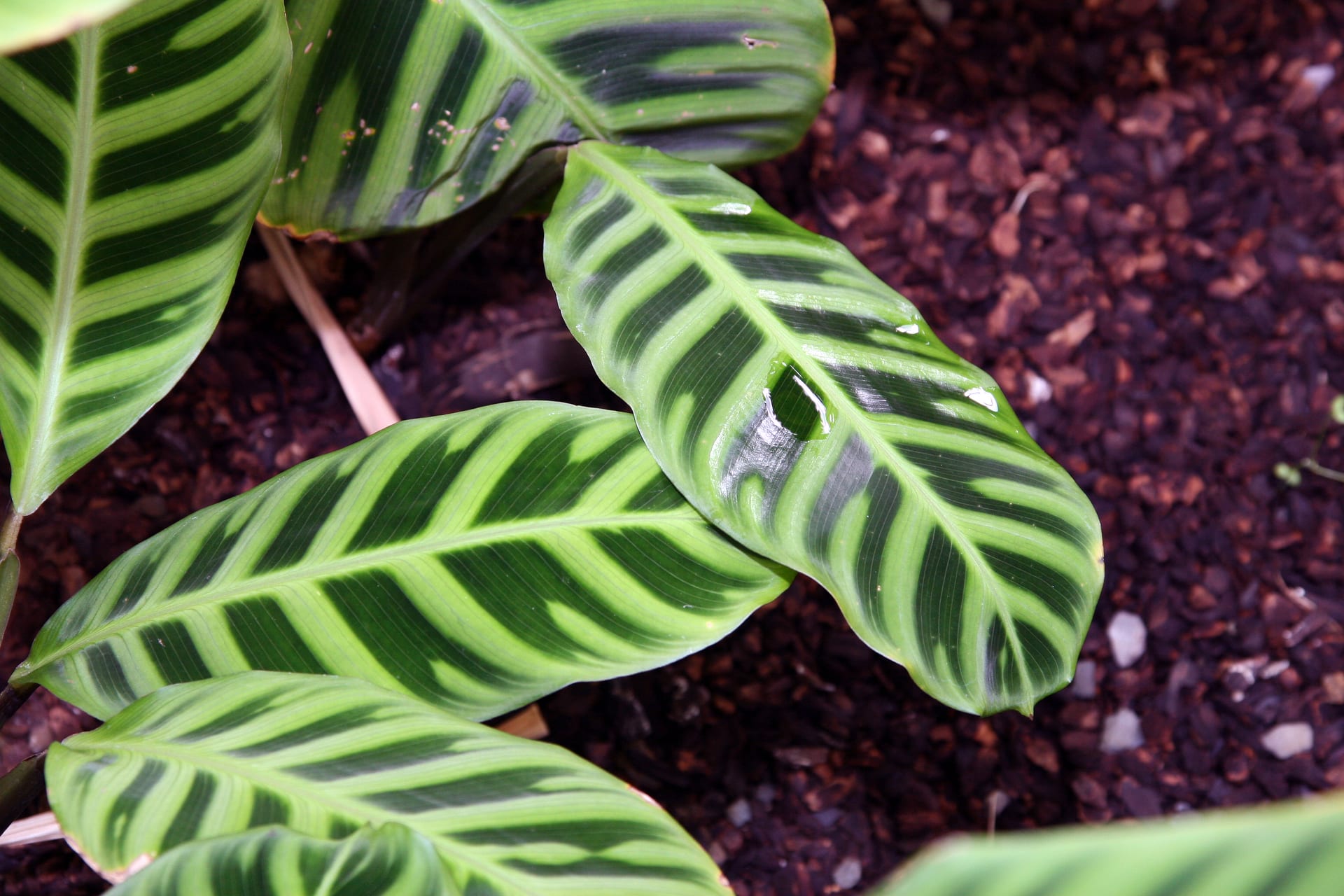
 © Photo by David J. Stang / CC BY-SA 4.0
Zebra Plant
Calathea zebrina, commonly known as the Zebra Plant, is prized for its large, velvety dark green leaves marked with bold light yellow-green stripes running along the veins — a pattern that inspired its common name. The undersides of the leaves carry a subtle reddish-purple hue, and the foliage rises and folds shut each evening before reopening in the morning, a quiet movement that makes this plant fun to observe over time. A perennial, it typically grows 30cm to 1m tall with leaves reaching around 45cm in length. Considered suitable for intermediate growers, it isn't very cold-hardy, so keeping it in a spot that stays around 16°C or warmer is key to keeping it healthy. Its striking foliage makes a strong statement as an indoor houseplant.
View Zebra Plant encyclopedia →0% commission on your first sales!Register by September 30, 2026 and your first 2 plants are commission-free!
Grower Wanted!
List your plants on GrowerDirect and sell directly to customers nationwide!
6 Transparency Commitments from GrowerDirect
Every Grower selling Foliage Plants provides complete transparency: variety, origin, light requirements, and care difficulty.
- Variety Information
- Real Photos
- True Colors
- Origin Information
- Light Requirements
- Care Difficulty
Browse all 139 varieties
Light Requirements
Care Difficulty
Verified growers wanted for Foliage Plants
Growers are signing up now ahead of launch. Subscribe to be notified when new listings go live.
Getting alerts is free with a member account. When new listings match your saved search, we'll notify you by email and in-app.
Browse other categories
Verified growers (preview)
Are you growing foliage plants?
Register as a grower and connect with buyers directly.
Apply as a growerZebra Plant key facts
- Growing Difficulty
- Intermediate
- Lifespan
- Perennial
- Size
- 30 cm to 1 m tall; leaves about 45 cm long
- Temperature
- 18〜24℃
- Watering
- Monthly liquid feed in the growing season; none in winter
- Light & Placement
- Bright indirect light or part shade; it does not tolerate direct sun.
- Watering
- Keep the mix moist in summer, when it cannot tolerate drought, but never waterlogged. Fluoride in tap water can brown leaf tips, so rain or purified water is better.
- Temperature & Overwintering
- Prefers a steady 18-24°C with humidity above 60%, and needs at least about 16°C. Avoid sudden temperature changes and drafts.
- Soil & Repotting
- Use a free-draining peat-based or African violet mix and repot about every two years in spring.
- Fertiliser
- Feed monthly with liquid fertiliser from spring to autumn; do not feed in winter.
- Propagation
- Propagate by division.
- Pests & Cautions
- Watch for spider mites, mealybugs, aphids and scale. Low humidity or drought causes leaf curl. Calatheas are listed as non-toxic to dogs and cats.
About Zebra Plant
Calathea zebrina is a houseplant with velvety dark green leaves marked by zebra-like stripes. A perennial, it grows 30cm to 1m tall with leaves around 45cm long, suits intermediate growers, and does best kept above 16°C in winter.
7 things to know before growing Zebra Plant
1Bright, Indirect Light Only
Calathea zebrina is sensitive to direct sun and can scorch easily, so place it near a window with soft, filtered light, such as behind a sheer curtain. Too little light can cause the leaf pattern to fade, so aim for a bright but shaded spot.
2Watering and Humidity
Water thoroughly once the soil surface has dried, and empty any water left in the saucer afterward. This plant also dislikes dry air, so misting the leaves or keeping humidity up nearby helps prevent the leaf tips from browning and curling.
3Soil: Balance Drainage and Moisture
Mix leaf mold or perlite into a standard houseplant potting soil to balance drainage with moisture retention. This helps roots stay healthy by avoiding both waterlogging and excessive dryness.
4Repot in Spring to Early Summer
Once roots fill the pot, move the plant into a slightly larger one during its active growing season, from spring into early summer. This is also a good time to divide the plant if you'd like to propagate it.
5Keep Winter Temps Above 16°C
Because it's cold-sensitive, keep the plant indoors where temperatures stay around 16°C or higher through winter. Windowsills can get chilly at night, so close the curtains or move the plant toward the center of the room as temperatures drop.
6Leaves Closing at Night Is Normal
Calathea zebrina raises and folds its leaves shut in the evening, then reopens them in the morning — a natural movement. This is simply how the plant behaves, not a sign of illness or stress.
7What to Look for When Choosing a Plant
Choose a plant with firm, unwilted leaves and clear, well-defined striping. Avoid ones with browned, dried leaf tips or a wobbly base, as these can make the plant harder to care for afterward.
Frequently asked questions about Zebra Plant
- Q.Can beginners grow Calathea zebrina?
- A.It's generally considered suitable for intermediate growers, since it needs a bit more attention to temperature and humidity than easier houseplants. Once you get the basics down, it's manageable — it suits growers who already have some houseplant experience.
- Q.Why do the leaves close up at night?
- A.Calathea zebrina naturally raises and folds its leaves in the evening and reopens them in the morning. It isn't a sign of illness — it's simply part of the plant's normal rhythm.
- Q.How large does it grow?
- A.As a perennial, Calathea zebrina typically reaches 30cm to 1m in height, with leaves growing to around 45cm long. As the plant matures, it fills out into a full, striking specimen.
- Q.What should I watch for in winter?
- A.Since the plant is cold-sensitive, aim to keep the room temperature from dropping below about 16°C during winter. Windowsills can get especially cold, so it helps to move the plant toward the center of the room in colder months.
- Q.Why are the leaf tips turning brown?
- A.This is usually caused by dry air or inconsistent watering. Misting the leaves, keeping humidity up nearby, and watering thoroughly once the soil surface dries can help improve the condition.
Handy Growing Tools for Zebra Plant
Learn more about Zebra Plant in the encyclopedia
View Zebra Plant encyclopedia entry →
Care difficulty, size, origin and light needs — all basics covered.
More in this category
Can't find the plant you're looking for?
Post your wishes for free and growers with matching plants will contact you with introductions.