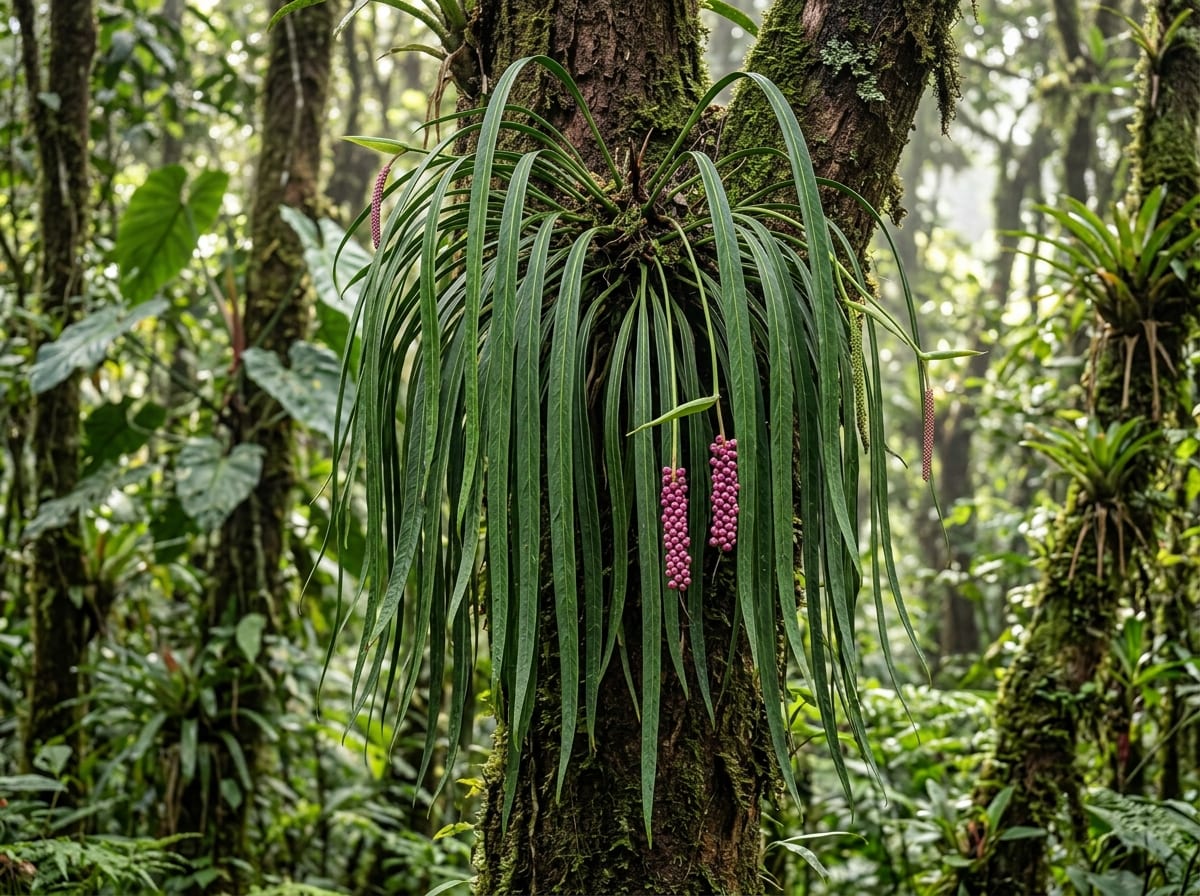
Strap Leaf Anthurium
Anthurium vittariifolium is a distinctive Anthurium prized for its narrow, strap-like leaves that trail gracefully downward. In its native tropical lowland forests of South America, it grows as an epiphyte on trees, with leaves that can stretch over 2 meters long in the wild, though potted plants stay considerably more compact. Grown in a hanging pot, it shows off this natural trailing habit beautifully. As a long-lived perennial, it rewards patient care, and variegated forms are also available for those who enjoy extra leaf pattern. It's best suited to growers with some houseplant experience who are drawn to its unusual, sculptural form.
View Strap Leaf Anthurium encyclopedia →0% commission on your first sales!Register by September 30, 2026 and your first 2 plants are commission-free!
Grower Wanted!
List your plants on GrowerDirect and sell directly to customers nationwide!
6 Transparency Commitments from GrowerDirect
Every Grower selling Foliage Plants provides complete transparency: variety, origin, light requirements, and care difficulty.
- Variety Information
- Real Photos
- True Colors
- Origin Information
- Light Requirements
- Care Difficulty
Browse all 139 varieties
Light Requirements
Care Difficulty
Verified growers wanted for Foliage Plants
Growers are signing up now ahead of launch. Subscribe to be notified when new listings go live.
Getting alerts is free with a member account. When new listings match your saved search, we'll notify you by email and in-app.
Browse other categories
Verified growers (preview)
Are you growing foliage plants?
Register as a grower and connect with buyers directly.
Apply as a growerStrap Leaf Anthurium key facts
- Growing Difficulty
- Intermediate
- Lifespan
- Perennial
- Size
- Leaves up to 2.4 m in the wild; shorter in pots
- Temperature
- 18〜29℃
- Watering
- Dilute liquid feed in the growing season
- Light & Placement
- Hang in bright indirect light; direct sun scorches the leaves.
- Watering
- As an epiphyte, water when the surface of the medium dries, allowing a wet-dry cycle.
- Temperature & Overwintering
- About 18-29°C, as for the genus. A lowland tropical plant that dislikes cold; keep it warm indoors in winter.
- Soil & Repotting
- Plant in a hanging pot with an airy medium such as sphagnum or bark chips.
- Propagation
- Propagate by division, stem cuttings or seed.
- Pests & Cautions
- Leaf tips brown in low humidity. Anthuriums contain calcium oxalate crystals; chewing causes mouth pain, swelling and drooling. Keep out of reach of pets and small children.
About Strap Leaf Anthurium
Anthurium vittariifolium, or Strap Leaf Anthurium, is known for its long, narrow trailing leaves and epiphytic habit from South America's lowland forests. This guide covers how to grow it in a hanging pot, plus answers to common questions.
7 things to know before growing Strap Leaf Anthurium
1Bright, Indirect Light
Avoid direct sun and keep this Anthurium in bright, indirect light, similar to filtered sunlight through a sheer curtain. In its native habitat it grows beneath a forest canopy, so strong afternoon sun should be avoided.
2Grow It as a Hanging Plant
Its long, trailing strap-like leaves are best appreciated in a hanging pot or basket, which lets the plant take on its natural form. Choose a spot with enough clearance below for the leaves to hang freely as they grow.
3Watering Care
As an epiphytic plant, it dislikes constantly wet potting mix, which can lead to root rot. Water thoroughly once the surface has dried out, and avoid letting water sit in the saucer.
4Well-Draining Potting Mix
Because it grows attached to trees in the wild, this Anthurium prefers a loose, well-aerated mix. A bark-based epiphyte blend, or orchid mix combined with regular potting soil, helps keep the roots healthy.
5When to Repot
Repot when roots start showing at the bottom of the pot or drainage noticeably slows down. Doing this during the warmer growing season, rather than when growth has slowed, helps the plant settle in with less stress.
6Seasonal Care
Growth slows as temperatures drop, so reduce watering frequency during cooler months. Keep the plant away from cold drafts and dry air, and place it somewhere warm indoors.
7Choosing a Healthy Plant
Check that leaf tips aren't dried out or browning and that leaf color looks even. If choosing a variegated plant, look closely at the pattern and coloring in person to find one that matches your taste.
Frequently asked questions about Strap Leaf Anthurium
- Q.Is this a good plant for beginners?
- A.Anthurium vittariifolium is considered a plant for intermediate growers, since it requires some understanding of light placement and watering. Learning about its epiphytic nature before you start will help you avoid common mistakes.
- Q.Can I grow it in a regular pot instead of hanging it?
- A.Yes, growing it in a regular pot is possible, but its long, trailing leaves look best in a hanging pot or basket where they can hang freely. If you use a standard pot, make sure there's enough open space below for the leaves to drape.
- Q.What should I do if the leaves grow very long?
- A.In its native habitat, the leaves can reach over 2 meters, and this trailing habit continues even in pots. Giving it plenty of hanging height and open space from the start makes it easier to accommodate the leaves as they lengthen.
- Q.Does a variegated plant need different care than a plain green one?
- A.The basic care is the same, both prefer bright, indirect light and a well-draining mix. Variegated plants may need slightly more light to keep their pattern vivid, so it helps to watch the plant and adjust its placement as needed.
- Q.How often does it need repotting?
- A.This depends on growth speed and pot size, but a good sign it's time is roots appearing at the bottom of the pot or slower drainage. Repotting during the warmer growing season puts less stress on the plant than doing it while growth is slow.
Handy Growing Tools for Strap Leaf Anthurium
Learn more about Strap Leaf Anthurium in the encyclopedia
View Strap Leaf Anthurium encyclopedia entry →
Care difficulty, size, origin and light needs — all basics covered.
More in this category
Can't find the plant you're looking for?
Post your wishes for free and growers with matching plants will contact you with introductions.