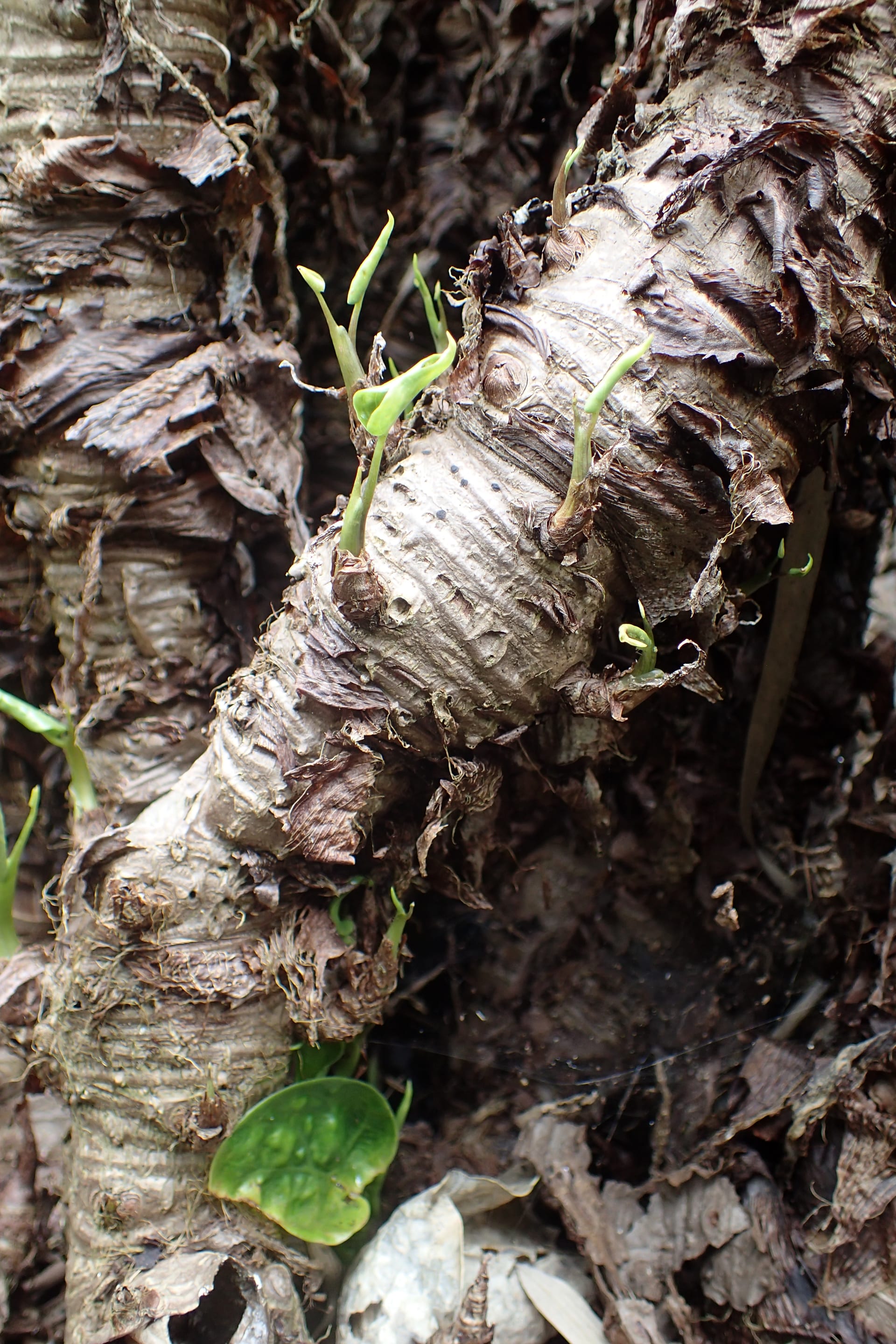
 © Krzysztof Ziarnek, Kenraiz / CC BY-SA 4.0
Chinese Taro / Buddha's Hand
Chinese Taro is a compact Alocasia prized for its glossy, heart-shaped leaves that form a lush clump right at the base of the plant. It branches readily from the base, sending up new offsets that gradually fill out the pot into a fuller clump over time. Noticeably smaller than its larger cousin, it fits comfortably indoors without dominating a room, making it a popular choice for tabletop or shelf displays. Because it tends to be forgiving and easy to manage, it's a great pick for anyone just starting out with houseplants, offering glossy, eye-catching foliage all year round.
View Chinese Taro / Buddha's Hand encyclopedia →0% commission on your first sales!Register by September 30, 2026 and your first 2 plants are commission-free!
Grower Wanted!
List your plants on GrowerDirect and sell directly to customers nationwide!
6 Transparency Commitments from GrowerDirect
Every Grower selling Foliage Plants provides complete transparency: variety, origin, light requirements, and care difficulty.
- Variety Information
- Real Photos
- True Colors
- Origin Information
- Light Requirements
- Care Difficulty
Browse all 139 varieties
Light Requirements
Care Difficulty
Verified growers wanted for Foliage Plants
Growers are signing up now ahead of launch. Subscribe to be notified when new listings go live.
Getting alerts is free with a member account. When new listings match your saved search, we'll notify you by email and in-app.
Browse other categories
Verified growers (preview)
Are you growing foliage plants?
Register as a grower and connect with buyers directly.
Apply as a growerChinese Taro / Buddha's Hand key facts
- Growing Difficulty
- Beginner-friendly
- Lifespan
- Perennial
- Size
- Up to about 1 m tall; blades up to 40 x 28 cm
- Temperature
- 20〜25℃
- Watering
- Regular feeding in the growing season
- Light & Placement
- Prefers part shade or filtered sun. Indoors, keep near a bright window behind a sheer curtain.
- Watering
- Keep moist in the growing season, watering thoroughly when the surface dries. Water sparingly in winter.
- Temperature & Overwintering
- Overwinter indoors in a humid, fairly cool room of about 16-18°C. Keep frost-free.
- Soil & Repotting
- Use an organically rich, moisture-retentive mix. Repot in spring to early summer when offsets crowd the pot.
- Propagation
- Easily propagated by removing offsets. It is vigorous enough that stem or root pieces left in soil will sprout.
- Pests & Cautions
- Watch for spider mites and aphids; overwatering causes spots and rot. It contains calcium oxalate, so keep it away from pets and children.
About Chinese Taro / Buddha's Hand
Chinese Taro is a compact Alocasia with glossy, heart-shaped leaves that cluster and multiply from the base. Smaller than giant taro, it's easy to grow and well suited to indoor spaces.
7 things to know before growing Chinese Taro / Buddha's Hand
1Bright, Indirect Light
Strong direct sun can scorch the leaves, so keep the plant in bright, filtered light, such as behind a sheer curtain. Too little light can cause the stems to stretch and become leggy, so a bright window spot works best.
2Water When Soil Dries
Water thoroughly once the surface of the soil has dried out, and empty any water left in the saucer right away. Constantly soggy soil can lead to root rot, so adjust your watering frequency with the seasons.
3Use Moisture-Retentive Soil
An organic-rich mix that holds moisture suits it well. Don't let it dry out during the growing season; water thoroughly once the surface dries. Prolonged sogginess, however, can cause leaf spots or root rot.
4Repot Every 1-2 Years
As offsets multiply, the pot can quickly become root-bound, so repot into a slightly larger container roughly every one to two years. Doing this during the warmer growing season puts less stress on the plant.
5Overwinter in a Cool, Humid Room
It is said to overwinter best in a somewhat cool, humid room at around 16 to 18°C. Keep it away from frost, and water more sparingly in winter.
6Choose Glossy, Firm Leaves
Look for a plant with thick, glossy leaves free of discoloration or dark spots. One already producing multiple offsets from its base is a sign it's off to a healthy, clustering start.
7Propagate via Offsets
Offsets that have developed their own roots can be separated from the parent plant and potted individually. Thanks to its naturally clustering habit, you can also simply let offsets fill out the same pot for a fuller look.
Frequently asked questions about Chinese Taro / Buddha's Hand
- Q.Is this a good plant for beginners?
- A.Yes, it's considered beginner-friendly. As long as you get the basics of light and watering right, it's an easy plant to manage, and its glossy foliage is easy to enjoy without a lot of extra effort.
- Q.How is it different from giant taro?
- A.Chinese Taro is smaller than giant taro and tends to branch from the base into a clustering clump. Its height tops out at around 1m, making it an easier size to manage indoors.
- Q.How large does it eventually grow?
- A.It can grow to around 1m in height, with individual leaves reaching up to about 40cm long and 28cm wide. Actual growth varies depending on pot size and growing conditions.
- Q.Can I trim it if it gets too full?
- A.It's fine to trim off old or damaged leaves at the base as needed. Since new leaves and offsets keep emerging from the base, it holds its shape well even after trimming.
- Q.How quickly do offsets appear?
- A.Given good growing conditions, offsets naturally appear from the base over time. The pace varies from plant to plant, but forming a clustering clump is a hallmark trait of this variety.
Handy Growing Tools for Chinese Taro / Buddha's Hand
Learn more about Chinese Taro / Buddha's Hand in the encyclopedia
View Chinese Taro / Buddha's Hand encyclopedia entry →
Care difficulty, size, origin and light needs — all basics covered.
More in this category
Can't find the plant you're looking for?
Post your wishes for free and growers with matching plants will contact you with introductions.