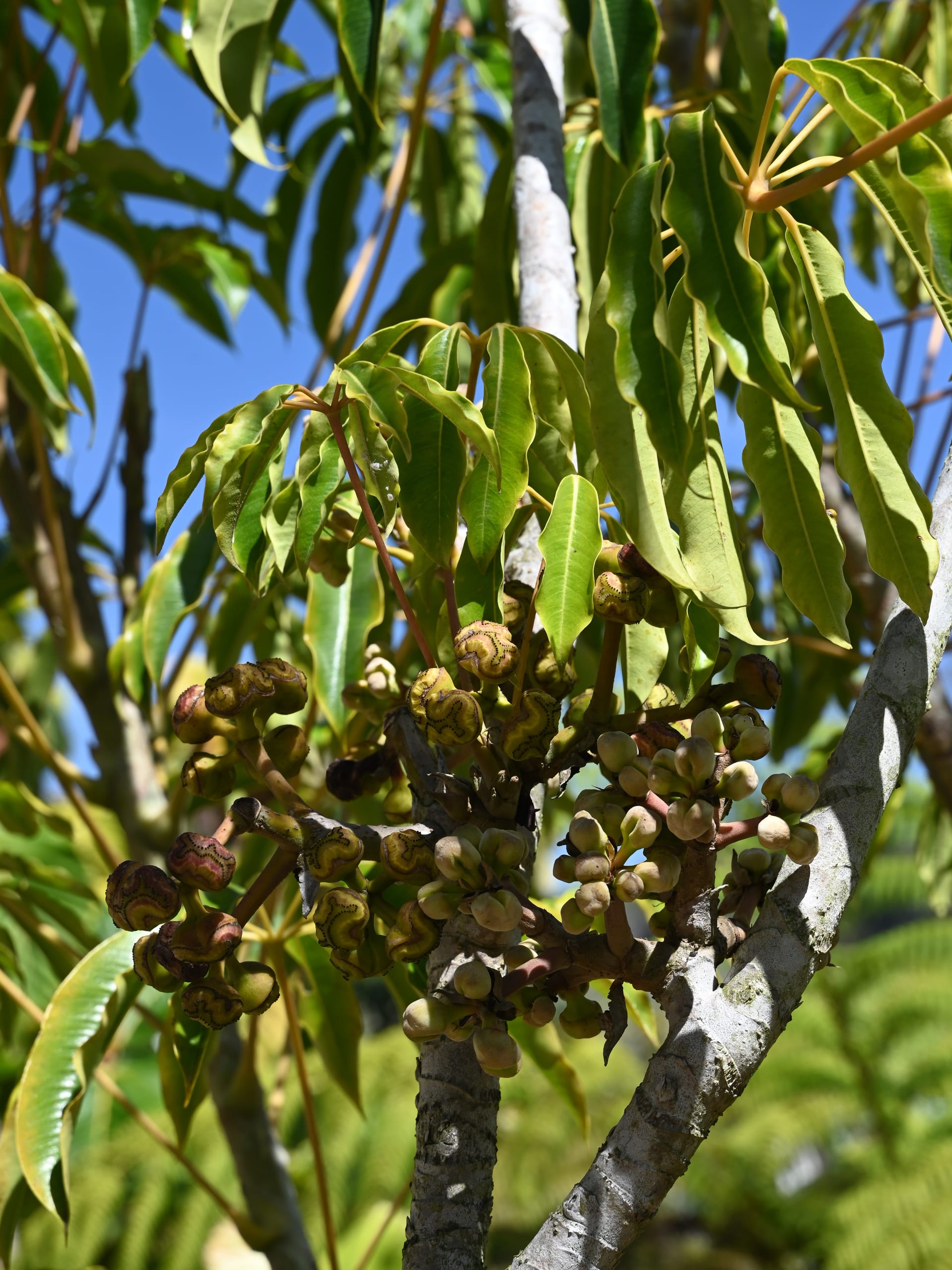
 © Krzysztof Ziarnek, Kenraiz / CC BY-SA 4.0
Tupidanthus (Mallet Flower)
Tupidanthus is an evergreen member of the Araliaceae family, prized for the way its long leaf stalks fan out into seven to eleven broad leaflets, each spanning 12 to 23 centimeters. The dense, drooping foliage gives the plant a lush, layered silhouette that stands out among houseplants. Its common name comes from an older genus classification, Tupidanthus, which is still widely used in the trade today. What truly sets it apart is its remarkable tolerance for low light, making it a forgiving choice for rooms without much direct sun. Combined with its generally undemanding care, it's a great pick for anyone growing houseplants for the first time.
View Tupidanthus (Mallet Flower) encyclopedia →0% commission on your first sales!Register by September 30, 2026 and your first 2 plants are commission-free!
Grower Wanted!
List your plants on GrowerDirect and sell directly to customers nationwide!
6 Transparency Commitments from GrowerDirect
Every Grower selling Foliage Plants provides complete transparency: variety, origin, light requirements, and care difficulty.
- Variety Information
- Real Photos
- True Colors
- Origin Information
- Light Requirements
- Care Difficulty
Browse all 139 varieties
Light Requirements
Care Difficulty
Verified growers wanted for Foliage Plants
Growers are signing up now ahead of launch. Subscribe to be notified when new listings go live.
Getting alerts is free with a member account. When new listings match your saved search, we'll notify you by email and in-app.
Browse other categories
Verified growers (preview)
Are you growing foliage plants?
Register as a grower and connect with buyers directly.
Apply as a growerTupidanthus (Mallet Flower) key facts
- Growing Difficulty
- Beginner-friendly
- Lifespan
- Evergreen woody plant (perennial)
- Size
- 4-10 m tall in the wild; pot plants are kept in check by pruning
- Watering
- Light houseplant feed in the growing season
- Light & Placement
- Shade tolerant and suited to indoor use. Growth is fullest in bright light without direct sun.
- Watering
- Moderate water needs. Water when the surface of the mix dries and do not leave water in the saucer.
- Temperature & Overwintering
- It is not cold hardy, so keep it in a warm room in winter, away from cold windows.
- Soil & Repotting
- Use a well-drained mix. It grows large, so move it to a slightly bigger pot when root-bound.
- Pruning & Shaping
- Prune overlong branches to keep the shape. The branches are weak, so handle the plant carefully when moving it.
- Pests & Cautions
- Parts of the plant can be mildly toxic if eaten in quantity, so keep it away from pets and small children.
About Tupidanthus (Mallet Flower)
Tupidanthus is an easy-care evergreen houseplant with bold, palm-like leaves and excellent shade tolerance. Discover placement, watering tips, and common questions.
7 things to know before growing Tupidanthus (Mallet Flower)
1Placement
Tupidanthus tolerates low light well, so it can thrive indoors near a sheer-curtained window. That said, it naturally prefers brighter conditions, and occasional time in gentle sunlight helps keep the leaves glossy and the growth compact. Avoid direct midday or west-facing summer sun, which can scorch the leaves.
2Watering
Water thoroughly once the soil surface has dried out, then let it dry again before the next watering. The plant dislikes soggy conditions, and standing water in the saucer can lead to root rot. In winter, growth slows, so space out waterings and keep the soil on the drier side.
3Soil
Tupidanthus prefers well-draining soil, so mixing a standard houseplant potting mix with pumice or coarse sand helps improve aeration. Heavy, poorly drained soil raises the risk of root rot. Line the bottom of the pot with drainage stones so excess water can escape freely.
4Repotting
Repot roughly every two to three years, since a root-bound plant tends to lose vigor. Spring through early summer, when growth is most active, is the best time to do this. Move it into a slightly larger pot with fresh soil, gently loosening the root ball before planting.
5Seasonal care
From spring through autumn, during active growth, it can be kept in a bright, shaded spot outdoors, but bring it back indoors once temperatures start to drop in fall. It's sensitive to cold, so keep it in a warm room over winter, away from chilly windowsills. Avoid placing it in the direct path of air conditioning or heating vents, which can dry out and damage the leaves.
6Pruning to control size
In its native habitat, Tupidanthus can grow four to ten meters tall, but in a pot, pruning lets you keep its size and shape in check. Cutting back overgrown stems encourages fresh new growth while keeping the plant compact. Spring through summer, during active growth, is the best time to prune.
7Choosing a healthy plant
Look for leaves that are thick, glossy, and free of yellowing or dark spots. Sturdy petioles and a stable base that doesn't wobble are also signs of a healthy plant. Specimens with dense foliage and that characteristic drooping, layered growth habit tend to look especially attractive.
Frequently asked questions about Tupidanthus (Mallet Flower)
- Q.Is Tupidanthus easy for beginners?
- A.Yes, thanks to its high shade tolerance and generally tough constitution, it's considered a beginner-friendly houseplant. As long as you follow the basics of watering and placement, it tends to grow without major issues.
- Q.How large does it grow?
- A.In its native habitat, Tupidanthus can reach four to ten meters in height, but in a pot, its size can be managed through pruning. When grown indoors, regular pruning is the usual way to keep it compact.
- Q.Can it grow in a room with little sunlight?
- A.Because it has strong shade tolerance, it can be grown even in spots with limited direct sunlight, as long as the room is reasonably bright. Extremely dark locations will slow its growth, so a spot with filtered light through a sheer curtain is ideal.
- Q.How often should I water it?
- A.The general rule is to water thoroughly once the soil surface has dried, with frequency varying by season. During winter, when growth slows, water less often and let the soil stay on the drier side.
- Q.Is the drooping leaf shape a sign of disease?
- A.No, the dense, drooping way the leaves hang is simply a natural characteristic of Tupidanthus. That said, if the plant suddenly looks wilted or loses vigor, it's worth checking for underwatering or root problems.
Handy Growing Tools for Tupidanthus (Mallet Flower)
Learn more about Tupidanthus (Mallet Flower) in the encyclopedia
View Tupidanthus (Mallet Flower) encyclopedia entry →
Care difficulty, size, origin and light needs — all basics covered.
More in this category
Can't find the plant you're looking for?
Post your wishes for free and growers with matching plants will contact you with introductions.