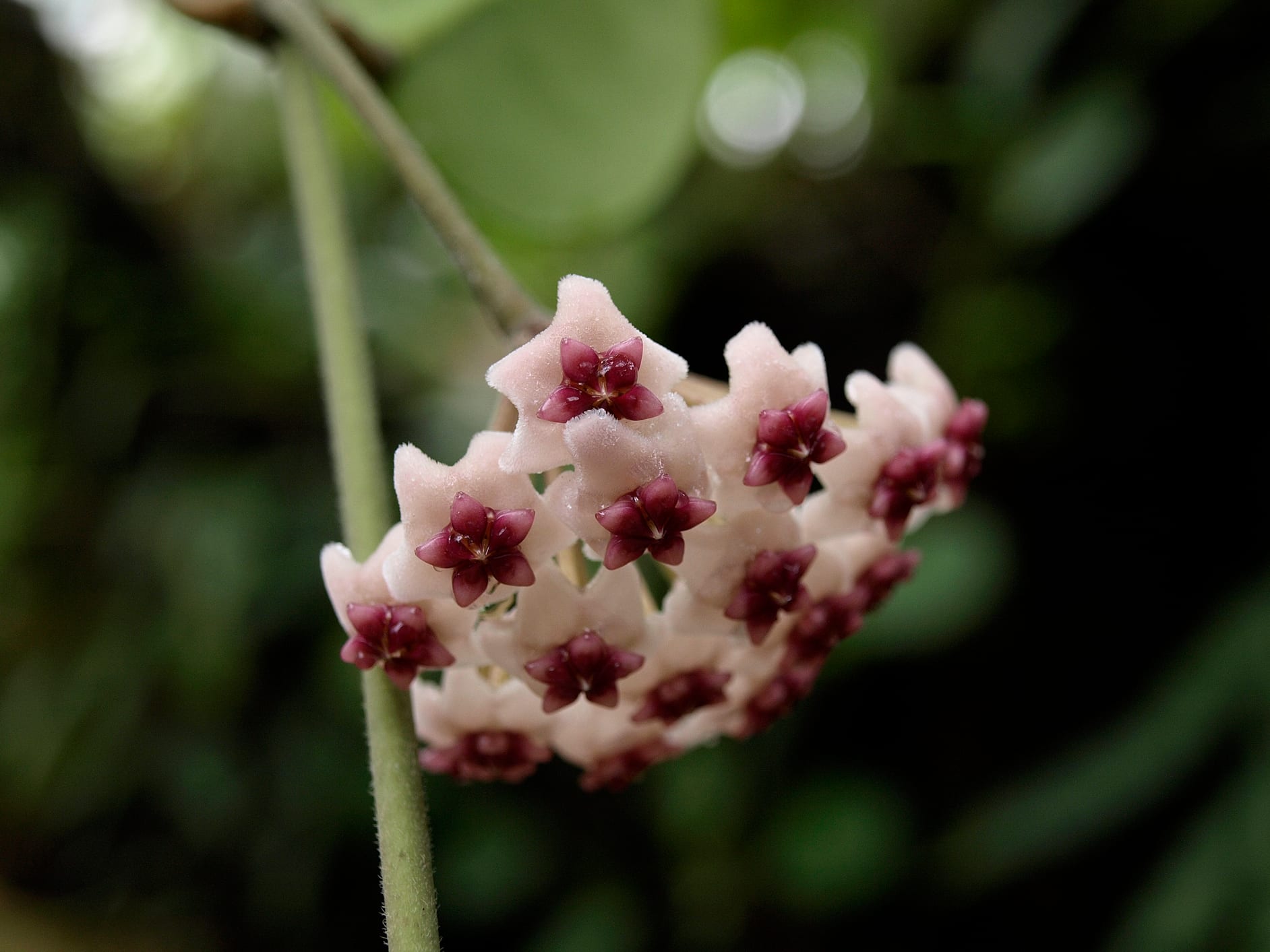
 © Scott Zona from Miami, Florida, USA / CC BY 2.0
Hoya obovata
Hoya obovata is an epiphytic hoya prized for its rounded, thick leaves — the species name obovata refers to their broad, egg-shaped outline. The leaves are succulent, storing water and giving the foliage a satisfying, plump texture. Variegated forms are also grown as houseplants, each showing a slightly different pattern. As a vining plant, it can be trained up a stake or left to trail from a hanging pot, and as a long-lived perennial epiphyte it rewards patient care. It's generally considered a plant for growers with some experience, but its sturdy leaves make its changes easy to observe, making it a satisfying next step for anyone ready to go deeper into hoyas.
View Hoya obovata encyclopedia →0% commission on your first sales!Register by September 30, 2026 and your first 2 plants are commission-free!
Grower Wanted!
List your plants on GrowerDirect and sell directly to customers nationwide!
6 Transparency Commitments from GrowerDirect
Every Grower selling Foliage Plants provides complete transparency: variety, origin, light requirements, and care difficulty.
- Variety Information
- Real Photos
- True Colors
- Origin Information
- Light Requirements
- Care Difficulty
Browse all 139 varieties
Light Requirements
Care Difficulty
Verified growers wanted for Foliage Plants
Growers are signing up now ahead of launch. Subscribe to be notified when new listings go live.
Getting alerts is free with a member account. When new listings match your saved search, we'll notify you by email and in-app.
Browse other categories
Verified growers (preview)
Are you growing foliage plants?
Register as a grower and connect with buyers directly.
Apply as a growerHoya obovata key facts
- Growing Difficulty
- Intermediate
- Lifespan
- Perennial epiphyte
- Size
- A climber grown on supports or in hanging pots; little data on size
- Watering
- Dilute liquid feed in the growing season
- Light & Placement
- Bright light, dappled shade or morning sun; it does not need full sun all day.
- Watering
- As an epiphyte, water after the mix dries and never keep it constantly wet.
- Temperature & Overwintering
- Frost-tender; keep it indoors or in a greenhouse over winter.
- Soil & Repotting
- Use a free-draining organic mix. An oversized pot stays wet, so keep it snug. It grows better trained on a pole or trellis.
- Propagation
- Propagate by stem cuttings.
- Pests & Cautions
- Watch for aphids, spider mites and mealybugs. An oversized pot or overwatering leads to root rot.
About Hoya obovata
Hoya obovata is an epiphytic hoya with thick, rounded succulent leaves, including variegated forms. A vining perennial best grown on a stake or in a hanging pot, suited to growers with some experience.
7 things to know before growing Hoya obovata
1Light: Bright, Indirect
As an epiphyte, Hoya obovata does best in bright, indirect light, such as behind a sheer curtain. Direct sun can scorch the leaves, so adjust its placement with the seasons and window orientation.
2Water After It Dries
Because the thick leaves already store water, let the growing medium dry out before watering again. As an epiphyte, it's prone to root rot if kept constantly wet.
3Use a Fast-Draining Mix
Being epiphytic, Hoya obovata needs a well-draining, airy mix. Blending in bark or perlite helps keep water from sitting around the roots, making the plant easier to manage.
4Provide Something to Climb
This is a vining plant, so it's typically trained up a stake or left to trail from a hanging pot. How you support it changes the overall look, so choose based on the style you want.
5Repot When Rootbound
Repot once the roots have filled the container. Since it's an epiphyte, refresh it into a new, well-draining mix to keep the root environment healthy.
6Adjust Care by Season
As a long-lived perennial epiphyte, its care needs shift with temperature and light through the seasons. Water less often during periods of slower growth.
7Check Leaf Shape and Pattern
Look for the characteristic rounded, obovate leaf shape, and decide whether you want a variegated form. Thick, firm succulent leaves are also a good sign of a healthy plant.
Frequently asked questions about Hoya obovata
- Q.Is Hoya obovata difficult to grow?
- A.It's generally considered a plant for growers with some experience, since getting the watering and soil mix right as an epiphyte takes a bit of practice. Once you understand the basics, it's a manageable plant to build experience with.
- Q.How large does Hoya obovata get?
- A.It's a vining plant typically trained on a stake or grown in a hanging pot. There isn't well-established data on its ultimate size, so it's best to expect open-ended growth rather than a fixed final size.
- Q.What's the difference between variegated and plain forms?
- A.Both are the same Hoya obovata — they simply differ in leaf coloring and pattern. Variegated plants show white or yellow patterning on the leaves, giving them a different look as houseplants.
- Q.Why are the leaves so thick?
- A.Hoya obovata has succulent leaves that store water internally. This gives them a plump texture and some tolerance for drying out between waterings.
- Q.Can beginners grow this plant?
- A.Since it's generally rated for growers with some experience, some basic knowledge of watering and soil for succulents or epiphytes helps. If it's your first hoya, pay particular attention to placement and watering timing.
Handy Growing Tools for Hoya obovata
Learn more about Hoya obovata in the encyclopedia
View Hoya obovata encyclopedia entry →
Care difficulty, size, origin and light needs — all basics covered.
More in this category
Can't find the plant you're looking for?
Post your wishes for free and growers with matching plants will contact you with introductions.