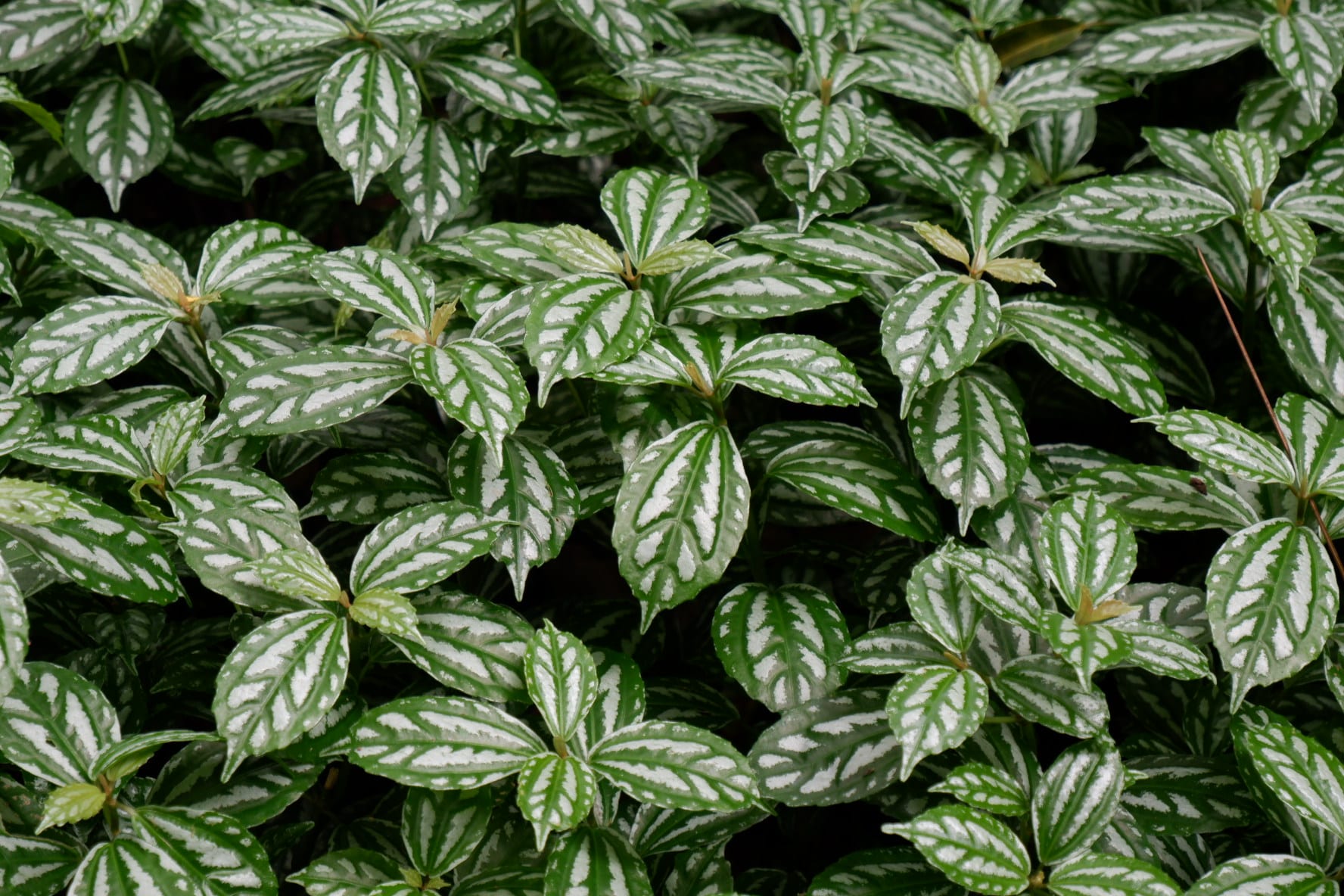
 © Pijri Paijar / CC BY-SA 4.0
Aluminum Plant
Pilea cadierei, commonly known as the Aluminum Plant, is prized for its glossy dark-green leaves brushed with rows of shimmering silver markings that catch the light like flecks of metal. It's a compact perennial, typically staying around 20 to 30 cm tall in a pot, making it an easy fit for a desk, shelf, or windowsill. It likes fairly high humidity, so it needs a little extra moisture in the air during dry seasons, but once you know the basics it's considered a great choice for anyone new to houseplants. It's also non-toxic to dogs and cats, making it a worry-free addition to pet-friendly homes.
View Aluminum Plant encyclopedia →0% commission on your first sales!Register by September 30, 2026 and your first 2 plants are commission-free!
Grower Wanted!
List your plants on GrowerDirect and sell directly to customers nationwide!
6 Transparency Commitments from GrowerDirect
Every Grower selling Foliage Plants provides complete transparency: variety, origin, light requirements, and care difficulty.
- Variety Information
- Real Photos
- True Colors
- Origin Information
- Light Requirements
- Care Difficulty
Browse all 139 varieties
Light Requirements
Care Difficulty
Verified growers wanted for Foliage Plants
Growers are signing up now ahead of launch. Subscribe to be notified when new listings go live.
Getting alerts is free with a member account. When new listings match your saved search, we'll notify you by email and in-app.
Browse other categories
Verified growers (preview)
Are you growing foliage plants?
Register as a grower and connect with buyers directly.
Apply as a growerAluminum Plant key facts
- Growing Difficulty
- Beginner-friendly
- Lifespan
- Perennial (evergreen)
- Size
- About 20-30 cm in pots; up to about 60 cm
- Watering
- Light houseplant feed in the growing season
- Light & Placement
- Bright indirect light; avoid full sun, which scorches the leaves.
- Watering
- Water moderately in the growing season and less from autumn through winter. Overwatering or poor drainage commonly causes root rot.
- Temperature & Overwintering
- A tender tropical plant. Keep it in a warm, humid room in winter.
- Soil & Repotting
- Use a peaty, soil-based mix. It likes humidity, so a humidified room or a tray of wet pebbles helps.
- Propagation
- Pinch stem tips to keep it compact. Young plants have the best foliage, so some growers replace plants each spring from cuttings.
- Pests & Cautions
- Watch for mealybugs, scale, aphids and spider mites. Powdery mildew can appear in high humidity with poor air flow. It is listed as non-toxic to dogs, cats and horses.
About Aluminum Plant
Pilea cadierei, the Aluminum Plant, is a compact, easy-care evergreen perennial with silver-marked dark green leaves, growing 20 to 30cm tall, and safe to keep around dogs and cats.
7 things to know before growing Aluminum Plant
1Bright, Indirect Light
Prolonged direct sun can scorch the leaves, so place your plant near a window with filtered light, such as behind a sheer curtain. Too little light, though, can cause the silvery markings to fade, so aim for a bright spot rather than deep shade.
2Water When Soil Dries
Water thoroughly, letting excess drain from the bottom of the pot, but only once the soil surface has dried out. Overwatering is the most common cause of root rot, so always empty any water left in the saucer.
3Use Well-Draining Soil
A standard houseplant potting mix amended with about 10-20% perlite or pumice provides the drainage this plant prefers. Avoid soil mixes that hold too much moisture, since Pilea cadierei is sensitive to constantly wet roots.
4Repot Every 1-2 Years
Because it grows fairly vigorously, repotting into a slightly larger pot every one to two years helps prevent the roots from becoming crowded. Spring through early summer, when temperatures are stable, is the best time to do this.
5Keep Warm in Winter
This plant is sensitive to cold, so move it to a warm spot indoors as temperatures drop. Growth naturally slows in winter, so cut back on watering frequency during the cooler months.
6Pinch Back Leggy Stems
Stems can stretch and become leggy over time, so pinching or trimming back overgrown growth helps the plant keep a fuller, bushier shape. Trimmed stem cuttings can also be rooted to propagate new plants.
7Choosing a Healthy Plant
Look for a plant with firm, plump leaves and clearly defined silver markings. Avoid plants with yellowing leaves or long, leggy stems, as these can be signs of stress or insufficient light.
Frequently asked questions about Aluminum Plant
- Q.Is this plant good for beginners?
- A.Yes, Pilea cadierei is generally considered an easy plant for beginners. As long as you follow the basics of watering and light, it grows well without much special care.
- Q.How big does it grow?
- A.It's a small species that reaches about 30cm, and in a pot it typically stays around 20 to 30cm tall. Pinching the stem tips helps it keep a compact, bushy shape.
- Q.Is it safe to keep around cats and dogs?
- A.Pilea cadierei is considered non-toxic to dogs and cats. That said, eating any plant material can still cause mild digestive upset, so it's best kept out of reach of curious pets.
- Q.Why are the silvery markings fading?
- A.This is usually a sign of insufficient light. Moving the plant to a brighter spot with indirect light can help the markings regain their definition.
- Q.When should I repot it?
- A.Because it grows fairly actively, repotting roughly every one to two years helps prevent the roots from becoming crowded. Spring to early summer is the best time to repot.
Handy Growing Tools for Aluminum Plant
Learn more about Aluminum Plant in the encyclopedia
View Aluminum Plant encyclopedia entry →
Care difficulty, size, origin and light needs — all basics covered.
More in this category
Can't find the plant you're looking for?
Post your wishes for free and growers with matching plants will contact you with introductions.