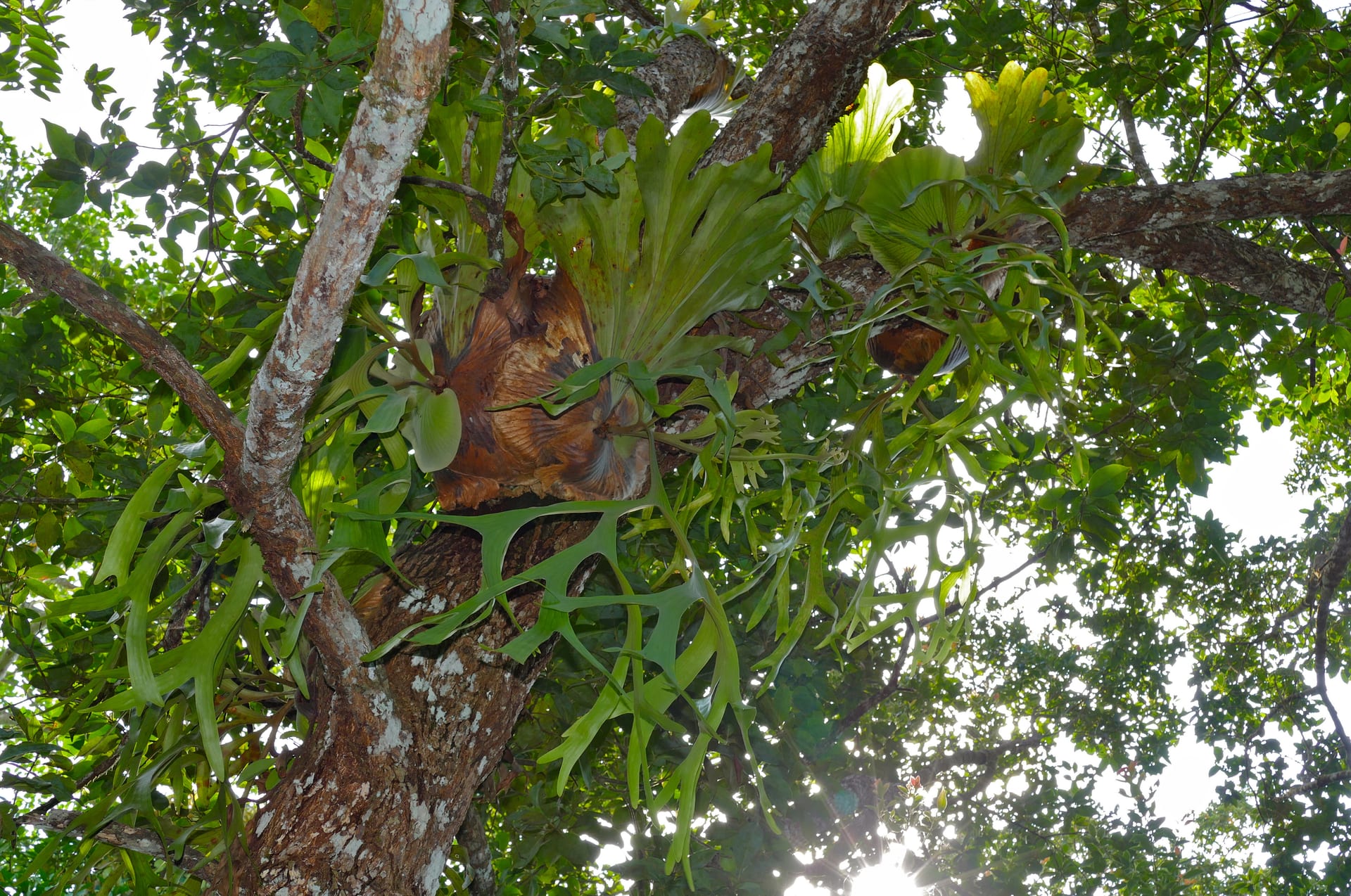
 © Bernard DUPONT from FRANCE / CC BY-SA 2.0
Ridley's Staghorn Fern
Platycerium ridleyi, or Ridley's Staghorn Fern, is an epiphytic fern native to Southeast Asia, prized for its bold and sculptural form. Its rounded, deeply ridged shield fronds overlap like layered shells, wrapping snugly around the base of the plant. From their center, antler-like fertile fronds rise upward with striking presence, giving the plant its distinctive silhouette. Unlike many other staghorn ferns, its spores cluster on small, spoon-shaped fertile segments rather than spreading across the frond tips. Sensitive to both drying out and overwatering, it's generally considered a species for more experienced growers, rewarding attentive care with a uniquely dramatic display that has made it a favorite among staghorn fern enthusiasts.
View Ridley's Staghorn Fern encyclopedia →0% commission on your first sales!Register by September 30, 2026 and your first 2 plants are commission-free!
Grower Wanted!
List your plants on GrowerDirect and sell directly to customers nationwide!
6 Transparency Commitments from GrowerDirect
Every Grower selling Foliage Plants provides complete transparency: variety, origin, light requirements, and care difficulty.
- Variety Information
- Real Photos
- True Colors
- Origin Information
- Light Requirements
- Care Difficulty
Browse all 139 varieties
Light Requirements
Care Difficulty
Verified growers wanted for Foliage Plants
Growers are signing up now ahead of launch. Subscribe to be notified when new listings go live.
Getting alerts is free with a member account. When new listings match your saved search, we'll notify you by email and in-app.
Browse other categories
Verified growers (preview)
Are you growing foliage plants?
Register as a grower and connect with buyers directly.
Apply as a growerRidley's Staghorn Fern key facts
- Growing Difficulty
- Advanced
- Lifespan
- Perennial (epiphytic fern)
- Size
- About 0.5-0.6 m tall; fertile fronds 25-50 cm or more
- Watering
- Little data on feeding; in the wild, leaf litter trapped by the shield fronds decomposes to supply nutrients
- Light & Placement
- Semi-shade to sun. Indoors give it a bright spot, avoiding long hours of harsh direct sun.
- Watering
- Moderate watering with occasional misting to keep humidity up. It likes high humidity but dislikes stagnant air, so ensure good air movement.
- Temperature & Overwintering
- A tropical rainforest species that dislikes cold. In winter keep it indoors or in a greenhouse where warmth and humidity can be maintained.
- Soil & Repotting
- Mount it on a branch, trunk or tree-fern slab (slabs need daily misting). It can also be grown in an open, airy pot loosely packed with sphagnum moss.
- Propagation
- It rarely produces pups, so division is seldom possible; plants are raised from spores or by tissue culture.
- Pests & Cautions
- Growth is slow, so damaged fronds take a long time to be replaced. Watch for spider mites, aphids and mealybugs. The white star-shaped hairs on the fronds protect the plant, so do not rub them off.
About Ridley's Staghorn Fern
Ridley's Staghorn Fern is a Southeast Asian epiphyte known for its shell-like overlapping shield fronds and antler-shaped fertile fronds — a striking houseplant best suited to experienced growers.
7 things to know before growing Ridley's Staghorn Fern
1Bright, Indirect Light
Direct sun can scorch the fronds, so place your Ridley's Staghorn Fern somewhere bright but shaded, like behind a sheer curtain. Dry indoor air can damage the edges of the shield fronds, so aim for a spot with good airflow and reasonable humidity.
2Water With Rhythm
Give the sphagnum moss a thorough soaking once it's dried out, then let it dry again before the next watering. Constantly wet conditions can lead to root rot, so alternating between moist and dry is key.
3Mount It, Don't Pot It
Rather than planting in soil, this fern is typically mounted on a piece of tree fern fiber or wood with its roots wrapped in sphagnum moss. Leaving air pockets around the roots helps prevent rot from excess moisture.
4Repot as Fronds Overlap
New shield fronds grow layered over the old ones, so the plant gradually outgrows its mount as it matures. Once it starts spilling over the edges, move it to a larger mount or container.
5Adjust Care by Season
Growth is most active during warm, stable weather, when both shield and fertile fronds put out fresh growth. As temperatures drop, growth slows, so space out watering and focus on keeping the plant warm.
6Check Frond Condition
Look for shield fronds that are green, plump, and pressed firmly against the base — a sign of a healthy plant. Avoid specimens with discolored fertile fronds or shield fronds that appear blackened or lifting away.
7A More Advanced Species
Ridley's Staghorn Fern is more sensitive to humidity and watering than many other Platycerium, making it better suited to experienced growers. If you've grown other staghorn ferns before or are comfortable managing humidity, you'll have better success with this one.
Frequently asked questions about Ridley's Staghorn Fern
- Q.Is this a good fern for beginners?
- A.This species is generally considered more challenging to grow, and tends to suit growers who already have experience with other staghorn ferns. With some practice managing humidity and watering, beginners can still succeed with patience.
- Q.What's the difference between the shield fronds and fertile fronds?
- A.The shield fronds are the rounded, overlapping fronds that wrap around the base of the plant, storing moisture and nutrients. The fertile fronds are the antler-like fronds that stand upright, bearing spores on small spoon-shaped segments near their tips.
- Q.Can it be grown in soil?
- A.Since Ridley's Staghorn Fern is an epiphyte, it does better mounted on tree fern fiber or wood with its roots wrapped in sphagnum moss than planted in soil. Constantly soggy soil can easily lead to root rot, so this is best avoided.
- Q.What should I watch for during winter care?
- A.Growth slows as temperatures drop, so it's important to space out watering to avoid excess moisture. Also keep the plant away from cold drafts and maintain a reasonably warm environment.
- Q.What should I do if the fronds start turning black?
- A.Discoloration or blackening is often considered a sign of moisture-related stress from overwatering or poor airflow. Consider adjusting your watering frequency and improving airflow around the plant while monitoring how it responds.
Handy Growing Tools for Ridley's Staghorn Fern
Learn more about Ridley's Staghorn Fern in the encyclopedia
View Ridley's Staghorn Fern encyclopedia entry →
Care difficulty, size, origin and light needs — all basics covered.
More in this category
Can't find the plant you're looking for?
Post your wishes for free and growers with matching plants will contact you with introductions.