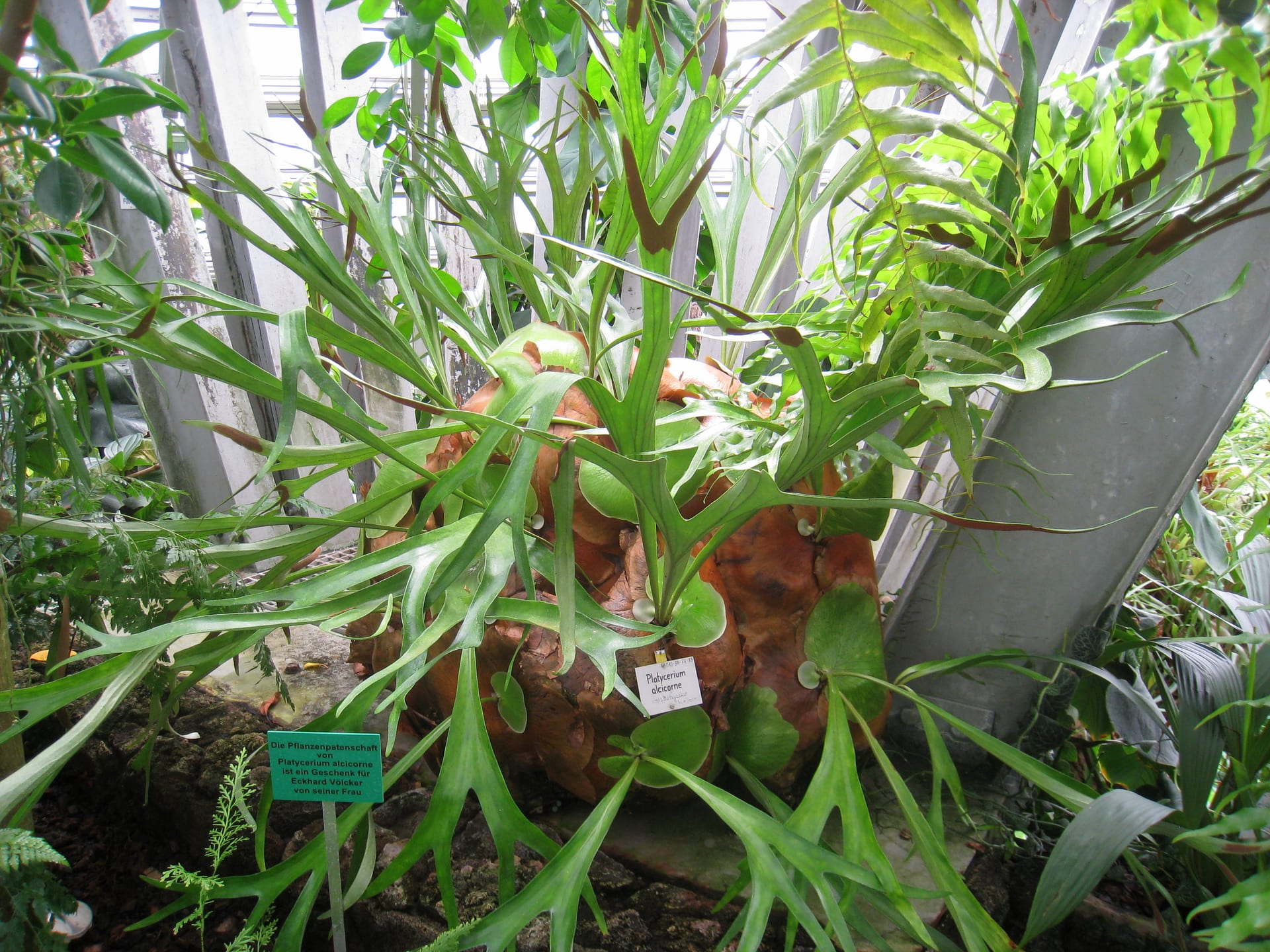
 © Daderot / Public domain
Platycerium alcicorne
Platycerium alcicorne is an epiphytic fern native to a range stretching from East Africa to Madagascar, commonly known as staghorn fern for its antler-shaped fertile fronds. A broad, cupped shield frond wraps around the base of the plant, and its look varies noticeably by origin: African forms tend to be glossy, yellow-green, and nearly hairless, while Madagascan forms are darker green, covered in fine hairs, and develop deep ridges across the shield fronds. As a hardy perennial, it's a popular choice for anyone trying epiphytic plants for the first time.
View Platycerium alcicorne encyclopedia →0% commission on your first sales!Register by September 30, 2026 and your first 2 plants are commission-free!
Grower Wanted!
List your plants on GrowerDirect and sell directly to customers nationwide!
6 Transparency Commitments from GrowerDirect
Every Grower selling Foliage Plants provides complete transparency: variety, origin, light requirements, and care difficulty.
- Variety Information
- Real Photos
- True Colors
- Origin Information
- Light Requirements
- Care Difficulty
Browse all 139 varieties
Light Requirements
Care Difficulty
Verified growers wanted for Foliage Plants
Growers are signing up now ahead of launch. Subscribe to be notified when new listings go live.
Getting alerts is free with a member account. When new listings match your saved search, we'll notify you by email and in-app.
Browse other categories
Verified growers (preview)
Are you growing foliage plants?
Register as a grower and connect with buyers directly.
Apply as a growerPlatycerium alcicorne key facts
- Growing Difficulty
- Beginner-friendly
- Lifespan
- Perennial (epiphytic fern)
- Size
- Little measured data exists for this species
- Watering
- Little data on feeding; in the wild, leaf litter trapped by the shield fronds decomposes to supply nutrients
- Light & Placement
- Likes bright light; Madagascan plants develop deep ridges in their shields when light is ample. Watch for scorching in strong direct sun.
- Watering
- Water the crown regularly and let the roots dry slightly between waterings. The African form is a little less tolerant of excess water, so avoid overwatering.
- Temperature & Overwintering
- Slightly more cold sensitive than P. bifurcatum and not frost tolerant; bring it indoors in winter.
- Soil & Repotting
- Mount on a board or tree-fern slab with sphagnum moss, or pot in an orchid mix or sphagnum. The shield fronds grow over the base to cover the roots, so never peel them off.
- Propagation
- The African form pups freely; divide well-grown pups.
- Pests & Cautions
- Forms differ greatly by origin, so check whether a plant is African or Madagascan when buying. Watch for spider mites, aphids and mealybugs. The white star-shaped hairs on the fronds protect the plant, so do not rub them off.
About Platycerium alcicorne
Platycerium alcicorne is a staghorn fern native from East Africa to Madagascar, prized for its origin-dependent leaf color and texture. A hardy perennial, it's an easy pick for beginners.
7 things to know before growing Platycerium alcicorne
1Bright, Indirect Light
Choose a bright spot with filtered light, such as behind a sheer curtain indoors or a dappled-shade porch outdoors, since prolonged direct sun can scorch the fronds. Because sunlight intensity shifts with the seasons, it helps to watch the fronds and adjust placement as needed.
2Water Thoroughly When Dry
Water generously once the moss or the space between the shield and fertile fronds has dried out, rather than on a fixed schedule. Keeping the base constantly wet can lead to root rot, so let it dry out between waterings.
3Grows Mounted, Not Potted
In the wild it grows attached to tree bark rather than in soil, so it's typically kept mounted on a board or hung in a basket with sphagnum moss packed around the roots. Keep in mind that its care differs from typical potted houseplants for this reason.
4"Repotting" Means Remounting
As the plant outgrows its mount, it's remounted onto a larger board or basket rather than repotted into a bigger pot. Gently remove the old moss and rewrap the roots in fresh sphagnum, taking care not to damage them.
5Watch Winter Cold and Dryness
Cold temperatures can damage the fronds, so it's best moved to a warm spot indoors over winter. During dry months, misting the fronds in addition to regular watering helps keep the plant looking its best.
6Enjoy the Variation by Origin
African-origin plants tend to be glossy, yellow-green, and nearly hairless, while Madagascan-origin plants are darker green, fuzzier, and develop deeper ridges on the shield fronds. Because the two also differ in how easy they are to grow, check whether a plant is of African or Madagascan origin before you buy.
7Forms Offsets Over Time
As the plant matures, offsets, or "pups," emerge from the base and it naturally grows into a clustered form over time. These pups can be divided to propagate new plants, but leaving them attached to grow into a fuller clump is an equally rewarding approach.
Frequently asked questions about Platycerium alcicorne
- Q.Is it suitable for beginners?
- A.Yes — it's a hardy plant, so as long as you get the basics of light and watering right, it's manageable even for first-time growers. It may take a little time to get used to epiphyte-style care, but alternating between thorough watering and drying out is the key habit to build.
- Q.Can it be grown in potting soil?
- A.In its natural habitat it grows attached to tree bark, so it's normally mounted on a board or in a basket with sphagnum moss rather than planted in soil. It's worth knowing upfront that its care differs from a typical potted houseplant.
- Q.Which is easier to grow, African or Madagascan stock?
- A.The two origins differ considerably, including in ease of care. Madagascan plants are difficult to grow and hard to find. The more common African plants are sturdy and produce plenty of pups, but they're a little less tolerant of overly wet conditions than Madagascan plants, so take care not to overwater. Check which origin a plant comes from before you buy.
- Q.Is it normal for the shield frond to turn brown?
- A.Yes — the shield frond naturally turns brown and papery once it has finished its job, and there's no need to peel it off. A new shield frond grows from inside and layers over the old one, which is a normal part of how the plant grows.
- Q.What environment suits it best?
- A.A bright spot with indirect light and good air circulation, out of strong direct sun, suits it well. When growing indoors, aim for a brightness similar to a window filtered through a sheer curtain.
Handy Growing Tools for Platycerium alcicorne
Learn more about Platycerium alcicorne in the encyclopedia
View Platycerium alcicorne encyclopedia entry →
Care difficulty, size, origin and light needs — all basics covered.
More in this category
Can't find the plant you're looking for?
Post your wishes for free and growers with matching plants will contact you with introductions.