Complete Platycerium Mounting Guide | Seedling Selection, Sphagnum Moss, Mounting Methods & Detailed Watering Instructions
Complete guide to mounting platycerium. We walk you through seedling selection, board and materials preparation, using sphagnum moss, mounting techniques, and post-mounting watering and care—with detailed steps anyone can follow.
Key Takeaways
Complete guide to mounting platycerium. We walk you through seedling selection, board and materials preparation, using sphagnum moss, mounting techniques, and post-mounting watering and care—with detailed steps anyone can follow.
Related Species
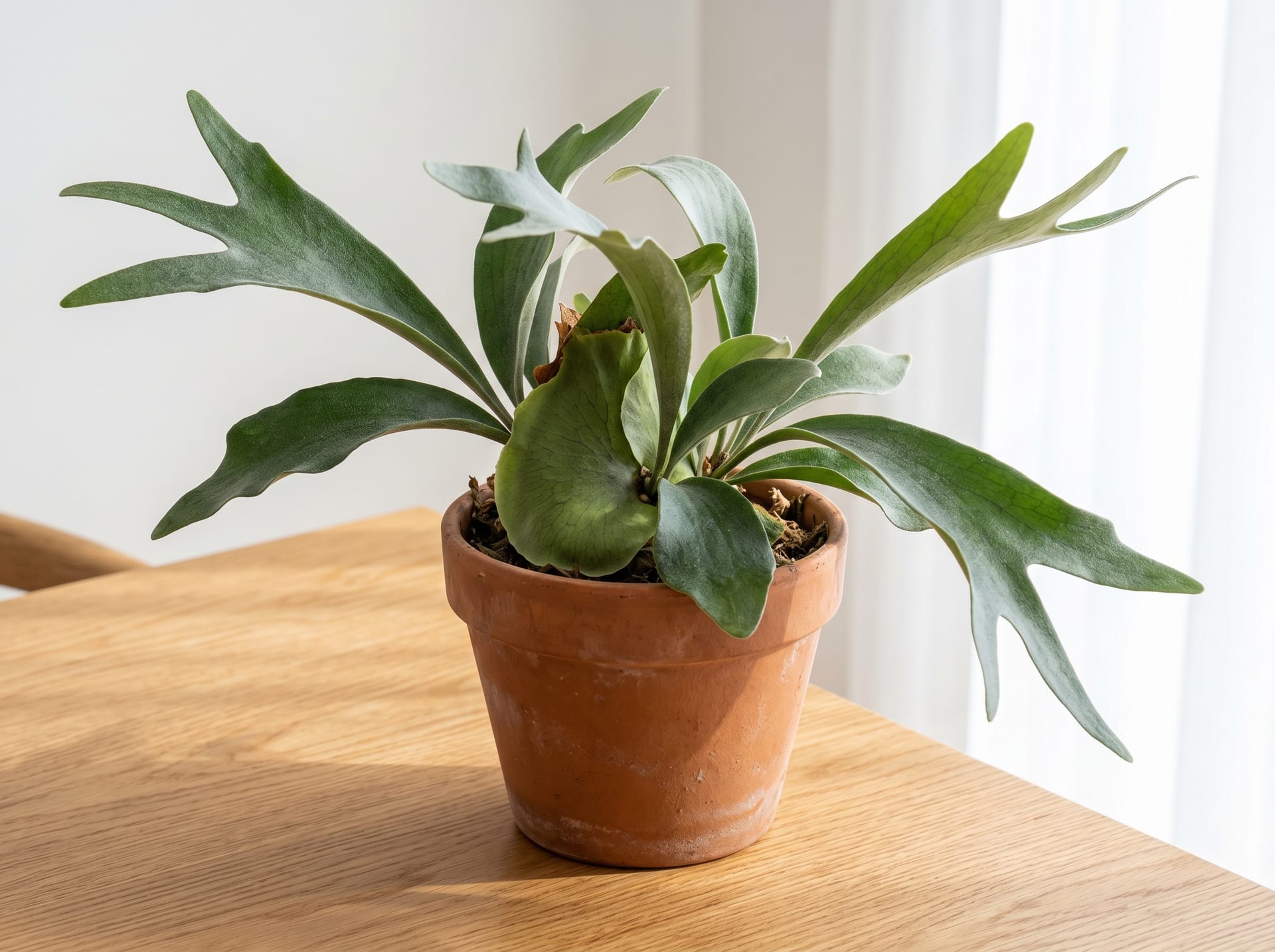
What is Platycerium?
Platycerium (Platycerium) is an epiphytic fern in the Polypodiaceae family, characterized by fertile fronds shaped like deer antlers (sporophylls). Also known as the Bat Wing Fern, it naturally grows as an epiphyte on tree trunks and rocks in its native habitat. The "mounting" technique—designed to mimic this natural form—has become increasingly popular in Japan.
Mounting a platycerium on a board and displaying it on a wall creates unique ornamental value, almost like a work of art.
Why Platycerium Mounting is Popular
- Saves floor space: No need for pot placement on shelves or tables
- Mimics natural epiphytic growth: The plant displays its authentic form by attaching to a board, just as it would to a tree in nature
- High ornamental value: As a wall display, it commands impressive visual presence
- Easy root observation: Roots are more visible on a board than in a traditional potted setup
Varieties Best Suited for Mounting
Platycerium has many varieties, with difficulty levels ranging from beginner-friendly to advanced.
Beginner-Friendly
| Variety | Characteristics | Difficulty |
|---|---|---|
| Bifurcatum (P. bifurcatum) | Most commonly available and hardy; cold-tolerant | ★☆☆ |
| Hillii (P. hillii) | Similar to bifurcatum, very hardy | ★☆☆ |
| Netherlands (P. bifurcatum 'Netherlands') | Cultivated variety of bifurcatum, easy to grow | ★☆☆ |
Intermediate to Advanced
| Variety | Characteristics | Difficulty |
|---|---|---|
| Wandae (P. wandae) | Large species with beautiful fan-shaped storage fronds | ★★★ |
| Elephantotis (P. elephantotis) | Unique large storage fronds | ★★☆ |
| Superbum (P. superbum) | Single-head form with extremely large storage fronds | ★★☆ |
| Grande (P. grande) | Similar to superbum but distinguished by spore structure | ★★☆ |
We strongly recommend that beginners start with mounting bifurcatum.
Materials Needed
Board (Base)
Various materials can be used for mounting.
Cedar Board (Most Common)
- Inexpensive and readily available at home improvement stores
- Absorbs moisture well and provides good air circulation
- May develop cracks over time, but this is not a problem for mounting
- Size: Use approximately 18mm thick, 20×30cm as a standard, adjusting based on plant size
Cork Board
- Attractive natural appearance
- Good balance of air circulation and moisture retention
- More expensive than cedar but longer-lasting
Tree Fern Board
- A natural material used traditionally for mounting
- Provides the highest air circulation
- Roots easily attach to this material
Sphagnum Moss
Sphagnum moss is the most crucial material for platycerium mounting. It maintains the balance between root moisture and air circulation.
Selection Tips
- Quality: AAA–SSS grade (higher quality has longer fibers and is easier to work with)
- Recommended: SSSS–SSS grade New Zealand or Chilean sphagnum
- Soak thoroughly in water before use to rehydrate (30–60 minutes)
Mounting Materials
- Fishing line (nylon thread): 0.3–0.5mm diameter. Clear and inconspicuous
- Jute twine: Natural appearance. Decomposes after a few years (fine once moss adheres to the board)
- Mesh: Stainless steel recommended (rust-resistant)
- Electric drill: For drilling holes in the board
Other Items
- Scissors, S-hooks (for wall hanging), spray bottle
Mounting Procedure
Step 1: Prepare the Board
- Drill holes in the four corners and center of the board (for threading fishing line or wire)
- Drill holes near the top for S-hooks (for wall hanging)
- Pre-soak the board in water to dampen it, which makes later watering easier
Step 2: Prepare the Sphagnum Moss
- Soak sphagnum moss in water for 30–60 minutes until fully hydrated
- Gently squeeze to the right moisture level (when squeezed, water should seep out slightly)
- Gather moss into a rounded ball to form the base
Step 3: Prepare the Plant
- Remove the potted platycerium from its pot and gently break apart the root ball
- Remove old soil as much as possible (being careful not to damage roots)
- Trim away damaged roots (brown, decayed sections) with scissors
- Mist the roots to dampen them
Step 4: Test Placement and Orientation
- Place the moss in a mound shape on the board
- Place the platycerium on top and check its orientation from the front
- The storage fronds should lie flat against the board, with fertile fronds extending forward
- Position slightly above center (plants droop downward as they grow)
Step 5: Secure the Plant
- Thread fishing line through the board holes to secure the moss and plant together
- Tighten firmly enough to secure, but not so tight as to crush the moss
- Wrap multiple times in a cross or lattice pattern for stability
- Run the fishing line outside the storage fronds near the base (to avoid damaging leaves)
- Tie off the fishing line on the back of the board to finish
Securing Tips
- Initial instability is normal; stability improves as roots attach to the board
- Thread the fishing line carefully to avoid damaging storage fronds
- Gently rock the board front-to-back and side-to-side to check for secure attachment
Step 6: Finishing and First Watering
- Thoroughly mist the entire plant with a spray bottle
- Hang on a wall using S-hooks
- Keep in bright indirect light for the first 1–2 weeks, then gradually move to a sunnier location
Post-Mounting Care
Watering Method
The most reliable watering method for mounted platycerium is bucket soaking.
Bucket Soaking
- Fill a bucket with water
- Submerge the entire mounted board in the bucket for 5–10 minutes
- Remove once the moss is thoroughly saturated
- Allow excess water to drain before hanging
Misting Mist the leaves and moss surface between bucket soakings. This is especially helpful during dry summers.
Watering Frequency
| Season | Frequency | Guidelines |
|---|---|---|
| Spring–Fall (Growing season) | Every 3–5 days | 1–2 days after moss dries |
| Summer (Hot period) | Every 2–3 days | Dries faster in heat |
| Winter (Dormant period) | Every 7–10 days | Keep from drying too much |
Checking for Dryness
- Gently press the moss; if it feels dry, it's time to water
- Weight test: If noticeably lighter than when fully saturated, it's time to water
Location and Light
- Spring–Fall: Avoid direct sunlight; bright indirect light is ideal. Outdoors, keep in bright shade
- Winter: Bright indoor windowsill (south-facing preferred)
- Insufficient light causes fertile fronds to become thin and etiolated, and storage fronds fade in color
Fertilizer
During the growing season (spring–fall), apply liquid fertilizer (diluted 1:1000) once a month by mixing it into the bucket water, or place solid slow-release fertilizer on the moss surface. Avoid over-fertilizing.
Common Issues and Solutions
Fertile Fronds Turn Yellow or Drop
Causes: Underwatering, insufficient light, root congestion Solutions: Increase bucket soaking to ensure adequate hydration, and improve the plant's light exposure
Storage Fronds Turn Black
Causes: Overwatering, poor air circulation, disease Solutions: Reduce watering frequency and improve air circulation. If blackening spreads, disease may be present; consider applying fungicide
Moss Develops Mold
Causes: Poor air circulation, overwatering Solutions: Ensure the board is wall-mounted for proper air circulation. Rinse surface mold with a spray bottle, or manage with slightly drier conditions
Plant Detaches from Board
Causes: Loose fishing line, roots haven't attached yet Solutions: Retighten the fishing line. Once roots have firmly attached, slight looseness is acceptable
Summary
Although platycerium mounting may seem difficult at first, beginners can succeed by following the steps carefully.
Key Points for Successful Mounting
- Use plenty of high-quality sphagnum moss
- Orient so storage fronds lie flat against the board
- Secure firmly but not too tightly
- Give thorough initial watering via bucket soaking
- Keep in bright indirect light until established
As platycerium (bat wing fern) grows mounted on a board, it develops character year after year, deepening the joy of cultivation. On GrowerDirect's online catalog, you can purchase platycerium directly from growers—find your favorite specimen and give mounting a try!