Complete Guide to Begonia Types and Care | Tips for Long-Lasting Enjoyment of Foliage Begonias with Beautiful Leaves
Begonias with diverse leaf patterns are appealing. We provide a comprehensive explanation of popular foliage varieties, placement, watering, soil, and division methods for growing them beautifully at home.
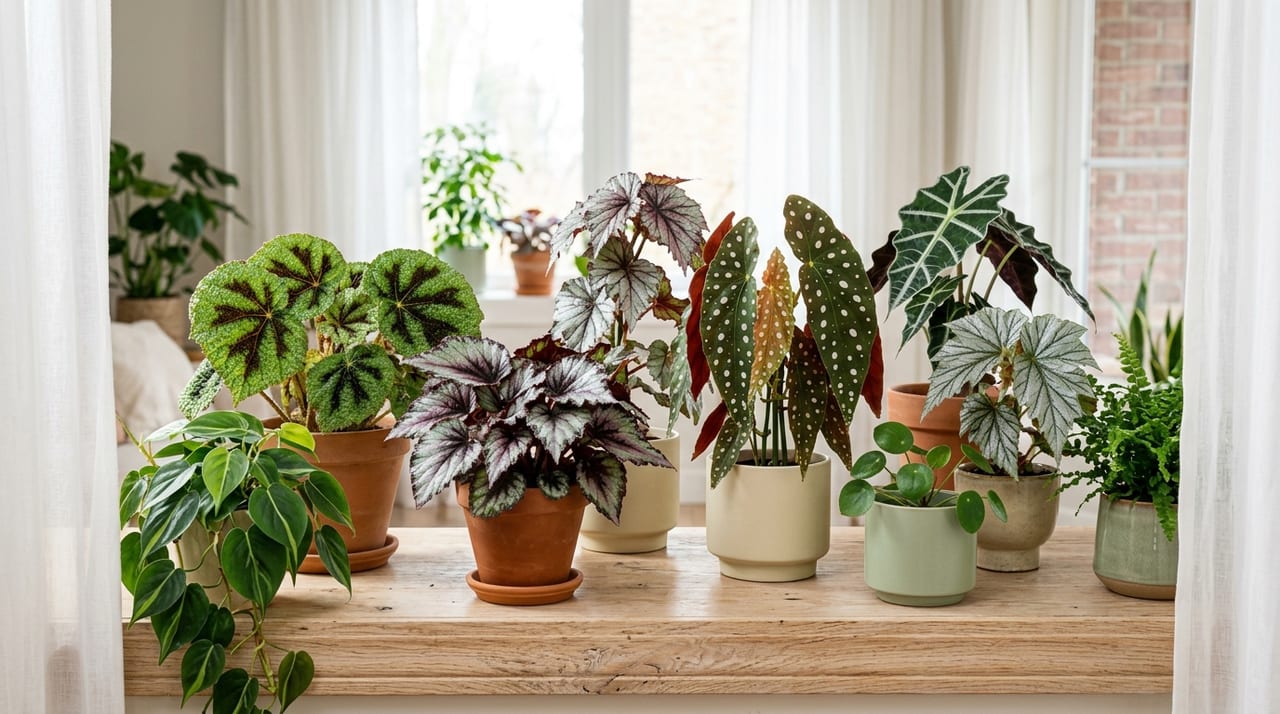
Key Takeaways
Begonias with diverse leaf patterns are appealing. We provide a comprehensive explanation of popular foliage varieties, placement, watering, soil, and division methods for growing them beautifully at home.
Related Species
Begonias are a collective term for plants in the genus Begonia of the family Begoniaceae, with over 2,000 wild species said to exist worldwide, making them one of the most diverse plant groups. While there are many flowering varieties, the ones gaining popularity as foliage plants are the types where the leaf patterns and textures themselves take center stage. Round silver-white spots, geometric vein patterns, velvet-like texture, silvery tones reminiscent of metallic luster—the character of begonias varies dramatically by species. This article provides a detailed explanation of the main types of begonias enjoyed as foliage plants and the key points for daily care.
Foliage Begonia Types and Representative Varieties
Begonias sold as foliage plants are divided into several types based on their stem characteristics. Since each type has different plant form and leaf character, understanding the differences between types is the first step in choosing a variety.
- Rhizomatous: A type that develops leaves from rhizomes that spread horizontally along the base of the plant. Leaves are large and patterns are abundant, making this the mainstream group for foliage begonias. Observing how the rhizomes spread horizontally while volume increases is also one of the pleasures of growing these plants.
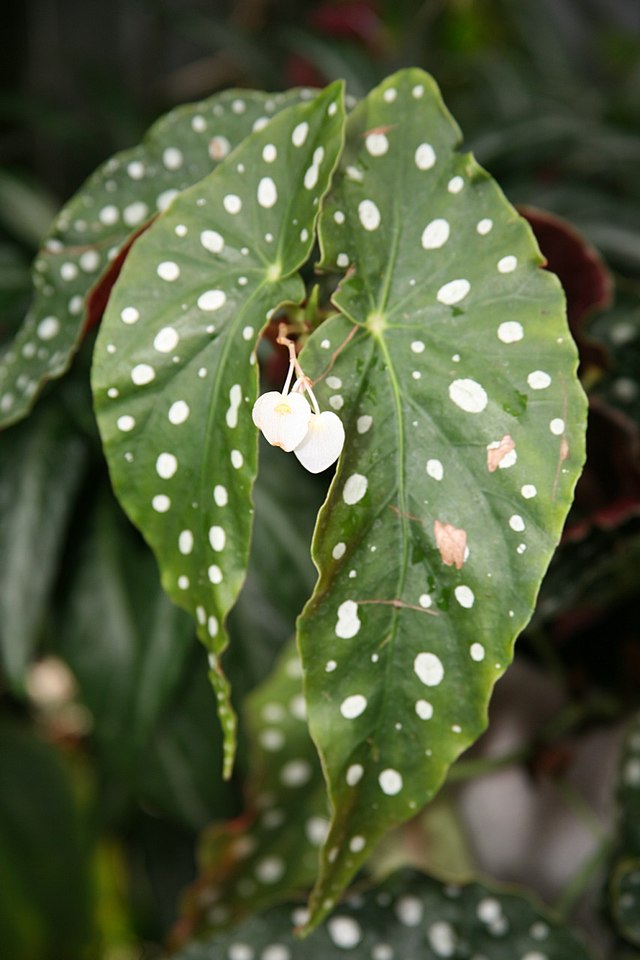
- Cane-like: A type with bamboo-like jointed stems that grow straight upward. These tend to grow taller and are well-suited to interiors that take advantage of vertical space. Begonia maculata, which has round silver-white spots arranged like polka dots, is the representative of this group and is widely known as a variety that combines collector appeal with ease of care for beginners.
- Rex: A type of rhizomatous begonia with especially rich color and patterns in the leaves. These improved varieties are characterized by leaves where purple, silver, and green blend together in complex patterns, and they remain popular among enthusiasts due to their high collectibility.
- Tuberous: A type with bulbs that often has its above-ground parts wither during the dormant period, requiring slightly different management methods than other types.
With all types, the appearance of leaf color changes depending on how light strikes them, making it enjoyable to adjust placement while growing. Even with the same variety, the character of the pattern can change simply by adjusting the angle, so begonias offer a wide range of interior styling possibilities.
Placement and Light Management
Begonias dislike strong direct sunlight and prefer environments with bright shade to semi-shade. Indoors, a windowsill where soft light enters through lace curtains is an ideal placement. Be careful, as prolonged direct sunlight can cause leaves to burn and turn brown or cause leaf patterns and colors to fade.
Conversely, in extremely dimly lit places, leaf patterns may become unclear and stems may become leggy. The trick is to observe the plant and gradually adjust placement to find the optimal brightness. Aim for a state where leaves spread vigorously and patterns are clearly visible.
Additionally, good air circulation is an important factor in preventing diseases like powdery mildew. Even indoors, make an effort to ventilate regularly and keep air moving around the plant so that leaves do not become crowded and humid.
Watering and Soil Selection
Begonias prefer humid environments but dislike roots being submerged in water continuously. The basic principle of watering is to be deliberate about it: "give plenty of water when the soil surface has dried slightly." Water pooling in the saucer continues to cause root rot, so always empty the saucer after watering.
When water gets directly on the leaves, it can lead to powdery mildew or leaf damage. It is recommended to water gently at the base of the plant. Air humidity should be maintained to some degree for better growth; during dry periods, lightly mist the leaves or place a tray of water near the pot to supplement humidity.
Soil should have a balance of drainage and water retention. Using commercial foliage plant potting soil as a base and mixing in perlite or leaf mold to improve aeration makes them easier to grow while reducing the risk of root rot. Repot when roots protrude from the pot or when a large number of roots emerge from the drainage hole, moving to a pot one size larger.
Seasonal Temperature Management and Placement Adjustment
Most begonias are somewhat cold-sensitive, with an ideal growth temperature of around 15–25°C. Here are the key placement points for each season:
- Spring and Autumn: A bright windowsill with lace curtain filtering is optimal. Ensure air circulation to prevent disease.
- Summer: Manage in semi-shade avoiding direct sunlight. Avoid direct, drying wind from air conditioning vents as it can damage leaves.
- Winter: Move to a warm, bright location indoors. Aim to maintain a minimum temperature of at least 10°C. Water sparingly.
In winter, when low temperature and excessive moisture combine, plants tend to weaken, so special attention should be paid to not overwatering. Keep in mind that soil takes longer to dry in winter than in summer, and check the soil condition well before watering. Many varieties also dislike high temperature and humidity in summer, so ensuring adequate space around the plant with attention to air circulation is key to getting through summer.
Propagation by Division and Cuttings
Begonias are easy to propagate, and several methods can be used depending on the type.
Division is the simplest propagation method for rhizomatous begonias, cutting off the rhizomes during the growing season. Cut the rhizomes so that each piece includes both rhizome and leaves, allow the cut surfaces to dry for a few hours, then plant in fresh soil to reduce the risk of rot.
Leaf propagation is possible with many varieties. Cut a healthy leaf at its base, lightly insert the petiole into clean propagation soil, and manage in bright shade; new roots and shoots should appear in several weeks. Rex begonias and similar types can be cut into even smaller pieces to obtain multiple plants, but the ease of rooting varies by variety.
Stem cuttings are the standard method for cane-like begonias, cutting the stem just below a node. Slightly dry the cut end before inserting into clean propagation soil or water, and roots should form relatively smoothly. Managing the propagated plantlets separately from the parent plant in their own pots ensures each gets adequate space and light for healthy growth.
Disease and Pest Prevention and Daily Maintenance
The main disease of concern with begonias is powdery mildew. This appears as a white powdery coating on the leaf surface, and is often triggered by poor air circulation or excessive water on the leaves. Preventing it is possible by ensuring air circulation at the placement site and reconsidering watering methods. Remove affected leaves early to prevent the spread of damage.
Among pests, spider mites may occur in dry environments. Fine insects appear on the underside of leaves, and an early sign is when leaves appear grainy and whitish. Regular observation of the underside of leaves makes early detection easier; if found early, they can be managed by wiping with a damp cloth or misting.
Additionally, if white fluffy clusters are visible at the leaf axils or on the stem, it may be mealybugs. Remove them early if discovered, or treat with a specialized pesticide.
To enjoy beautiful leaves for a long time, daily observation is most important. With each watering, check the color, firmness, and pattern of the leaves, and as you become able to notice signs that differ from usual, you will be able to address problems while they are still small. The basics of growing foliage begonias healthily is to daily mindfully manage the three key factors: placement, watering, and air circulation. Enjoying the individuality and character of the leaves while observing changes in the plant is the very essence of growing begonias.