Complete Guide to Growing Zamioculcas (ZZ Plants) | Management Guide for Unique Foliage Plants Resilient to Drought
A guide to growing Zamioculcas (ZZ Plants). For watering, wait several days after the soil has dried out completely, and space watering out even further in winter. The best light is indoors behind a lace curtain. For propagation, division is the most reliable method with a high success rate, while leaf cuttings can take several months to root.
Key Takeaways
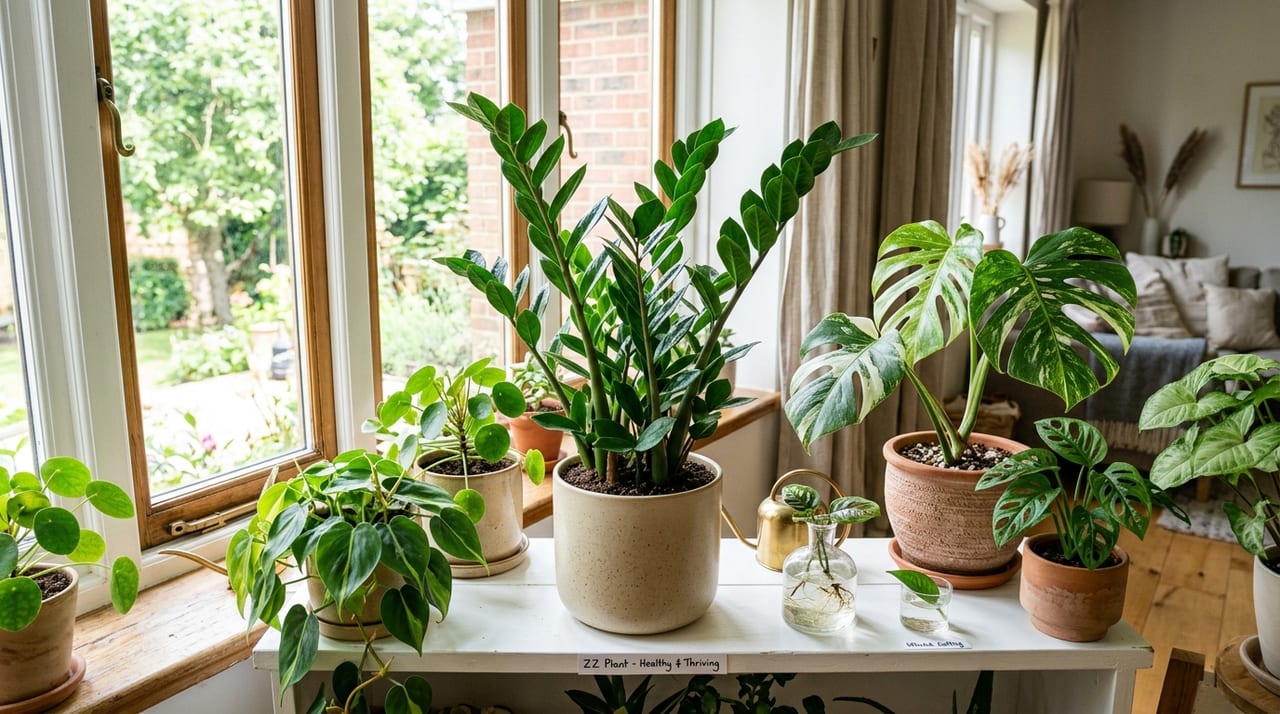
A guide to growing Zamioculcas (ZZ Plants). For watering, wait several days after the soil has dried out completely, and space watering out even further in winter. The best light is indoors behind a lace curtain. For propagation, division is the most reliable method with a high success rate, while leaf cuttings can take several months to root.
Related Species
Introduction
When choosing from the many foliage plants available, if your priority is finding something "simply hardy and easy to manage," Zamioculcas (Zamioculcas zamiifolia, commonly called ZZ Plants) is one of the leading candidates. Its glossy, deep green leaves arranged in feather-like rows create a simple yet modern impression, making it popular as decorative greenery in offices and shops. This article introduces the characteristics of Zamioculcas and key growing tips that even beginners can follow without failure.
Characteristics and Native Habitat of Zamioculcas
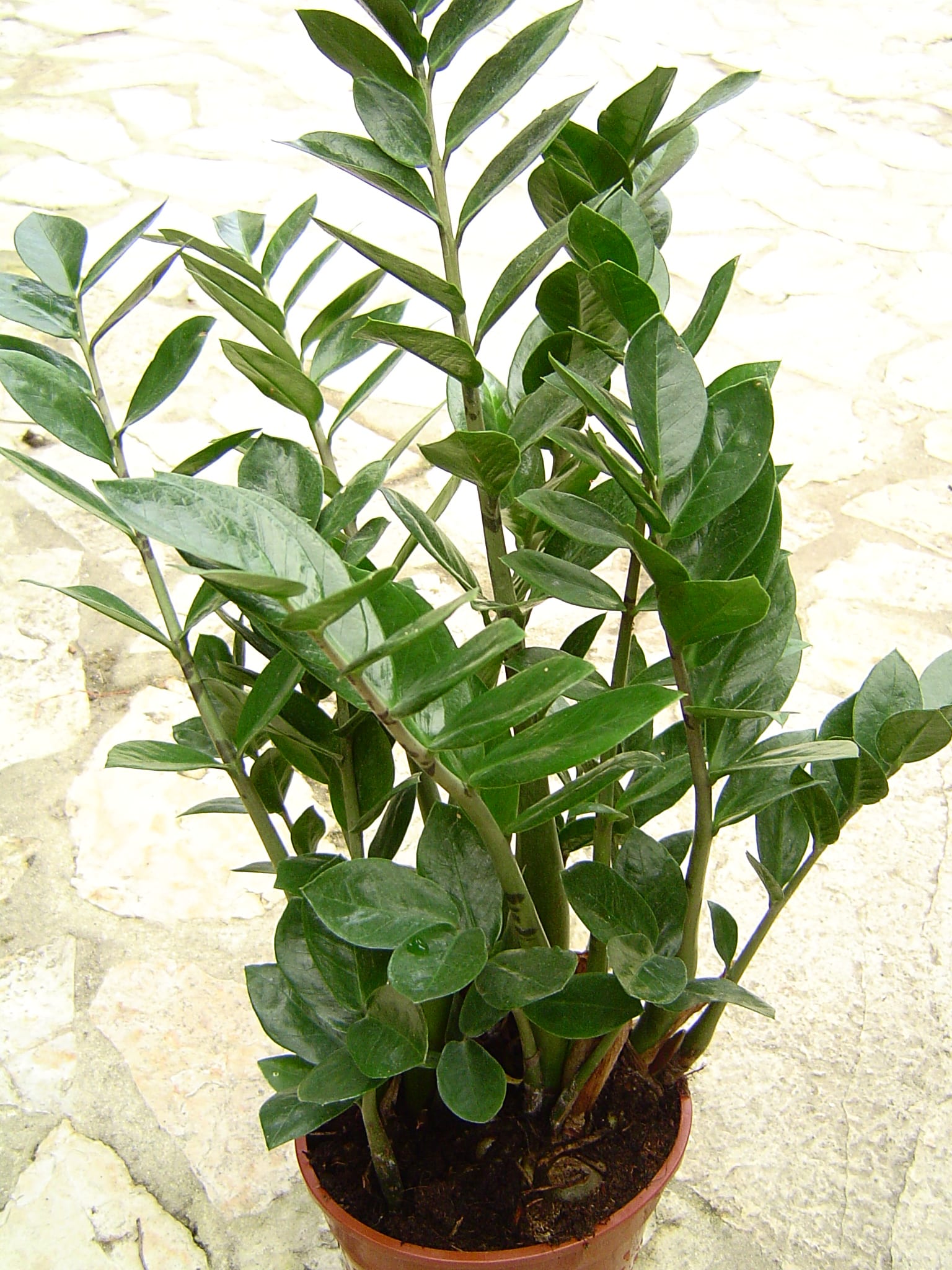
Zamioculcas is a member of the Araceae family native to arid regions of East Africa, such as Tanzania and Kenya. It has an enlarged underground rhizome (tuber) in which it stores water and nutrients, providing it with the adaptability to survive even in dry environments. The presence of this rhizome is the reason for Zamioculcas' high drought tolerance.
The leaves are notably thick and have a glossy surface, which offers the added benefit of resisting dust accumulation and maintaining an attractive appearance. Growth is slow, rarely expanding explosively, making it an easy foliage plant to place in various locations.
Basics of Watering
The most important consideration in caring for Zamioculcas is avoiding excessive watering. Because its underground rhizome stores water, frequent watering is unnecessary and can actually cause root rot. The basic rule is to water only "after the soil dries out completely, then wait a few more days," and because it has considerable drought tolerance, it is well-suited for those who tend to forget watering.
Adjusting watering frequency by season is also important. From spring through autumn when growth is active, water moderately based on soil moisture, but in winter when growth slows, extend the intervals between watering even further. When in doubt, err on the side of "letting it dry more," which better avoids the risk of root rot.
Lighting and Installation Environment
Zamioculcas is known for its exceptionally high shade tolerance. It grows sufficiently in bright indoor spaces without direct sunlight, and can maintain growth even in locations slightly away from windows or under office fluorescent lighting. However, high shade tolerance does not mean it thrives in complete darkness; ensuring some level of brightness is still desirable.
Conversely, it is weak against strong direct summer sunlight and may suffer leaf burn, so if managed outdoors, shading nets or similar measures are necessary to avoid direct sun. In general, a bright indoor space receiving soft light through a sheer curtain is the most suitable environment.
Propagation Methods
Zamioculcas can be propagated by two methods: leaf cuttings and division. The steps and characteristics of each are as follows.
| Method | Steps | Characteristics |
|---|---|---|
| Leaf cuttings | Remove a healthy leaf, allow the cut end to dry, then insert into moist soil | Rooting and sprouting often take several months, requiring patience |
| Division | At repotting time, remove the plant from the pot; if the rhizome separates into multiple clusters, cut them apart and plant each in a separate pot | Higher success rate than leaf cuttings; new growth from independent plants can be observed relatively quickly |
The more reliable propagation method is rhizome division, which separates the underground rhizome to establish new independent plants.
Management Precautions
Zamioculcas is said to have mild toxicity throughout, and contact with its sap can cause skin irritation. When repotting or performing leaf cuttings, wearing gloves or thoroughly washing your hands afterward is advisable. It is also wise to consider placement to ensure small children or pets do not accidentally ingest any part of the plant.
Summary
Zamioculcas is a foliage plant that minimizes management effort with its drought tolerance, high shade tolerance, and slow growth. By keeping watering frequency low and conscious of avoiding root rot, even beginners can cultivate it as a long-term companion plant. It is a variety that can be confidently recommended to those with limited time for plant care.
Varieties and Variegated Types
Zamioculcas is available in the following types in cultivation.
- Standard type: features typical deep green leaves
- Raven (black-leaf): a highly glossy variety
- Variegated type: a variation with irregular patterns on the leaves. Because it has less chlorophyll, growth tends to be even slower, so watering should be kept even more restrained than with the standard type
The basic care method is common to all types.
Because of its flexibility with placement and minimal watering requirements, it can be confidently recommended to those occupied with child-rearing or work who cannot dedicate sufficient time to plant care, as well as to those growing foliage plants for the first time. The fact that it withstands extended periods away and endures some drying periods without significant damage is a major advantage compared to other foliage plants. Since it is not particularly cold-hardy, when winter temperatures drop excessively near windows, moving it to a warm indoor location during the day can help maintain its health. Attention to such care details helps ensure the plant remains in good condition over time.