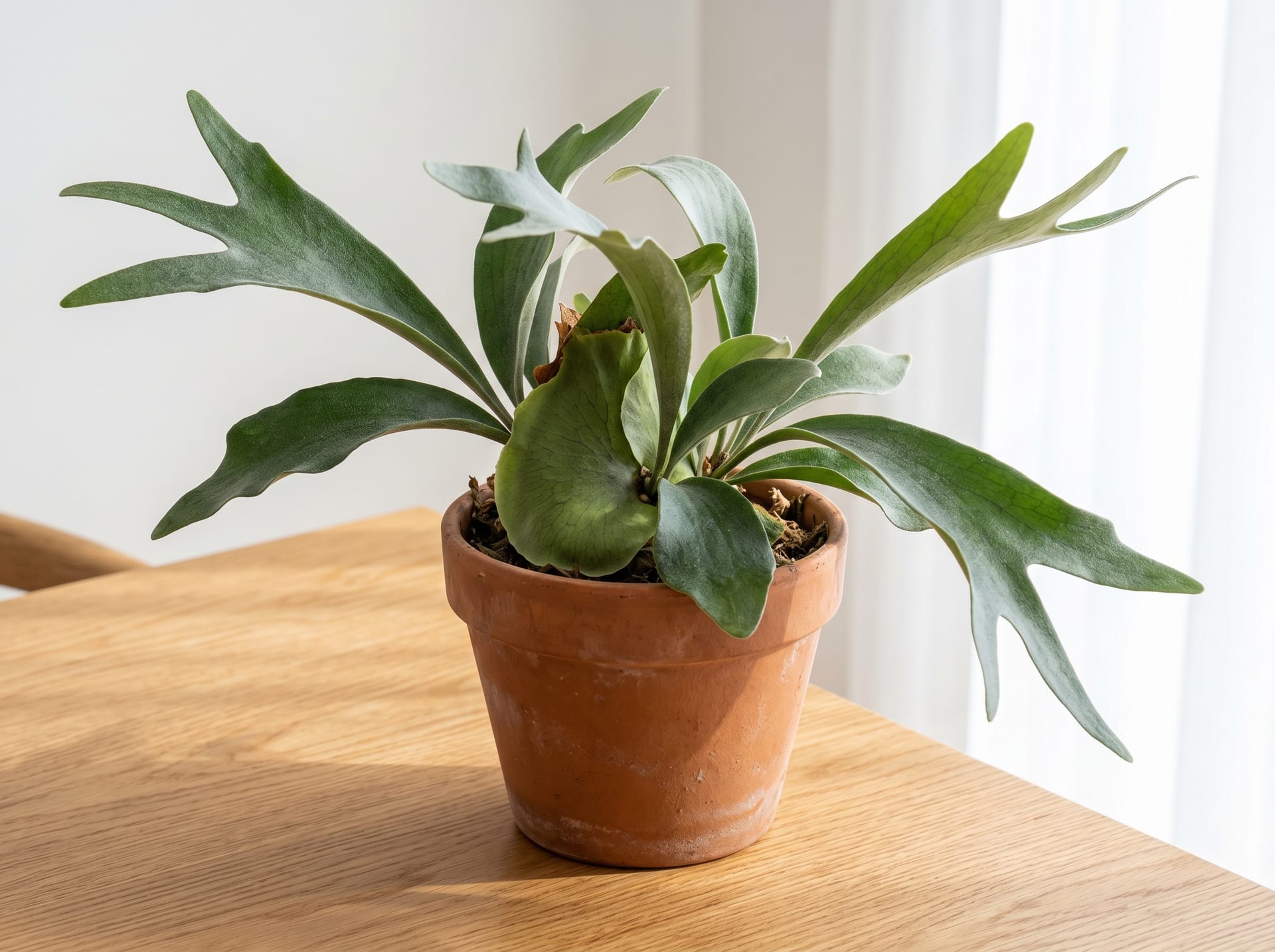
AI-generated image
Staghorn Fern
IntermediatePlatycerium bifurcatum
An epiphytic fern with bat-wing shaped fronds. Popular mounted on boards or driftwood. As it grows, shield fronds spread dramatically.
Overview
Platycerium bifurcatum, the staghorn fern or elkhorn fern, is an epiphytic fern native to eastern Australia and Pacific islands. It is distinguished by two types of fronds: flat, rounded shield fronds (basal fronds) that clasp a substrate and eventually turn brown as they age, and forked, antler-like fertile fronds (staghorn fronds) that bear spores on their undersides and give the plant its dramatic silhouette. In the wild it grows attached to tree trunks and rocks. Increasingly popular as a mounted wall plant — attached to a wooden board — creating a living piece of botanical wall art. Water by immersing the root ball or misting the fronds, allowing the plant to dry between waterings; water must not pool in the shield fronds. Prefers bright indirect light but tolerates moderate shade. High humidity is beneficial; regular misting is recommended. A sculptural, conversation-starting plant that appeals strongly to collectors.
Lifespan of the Staghorn Fern
The Staghorn Fern lives 20+ years.
Size of the Staghorn Fern
The Staghorn Fern grows to 30-100cm.
Temperature & humidity for the Staghorn Fern
The ideal temperature for the Staghorn Fern is 20〜25℃. Ideal humidity is 60〜80%.
Basic Info
Origin
Eastern Australia and Pacific islands
Lifespan
20+ years
Size
30-100cm
Temperature
15〜30℃
Humidity
60〜80%
Watering & Fertilizer
Liquid fertilizer 1-2x monthly in spring-fall. Root nutrition important for epiphyte
Growing Tips
Placement
Bright indirect light. Direct sun causes leaf burn
Watering
For mounted plants, submerge fully in water to hydrate
Humidity
Prefers high humidity. Mist leaves regularly
Temperature & Overwintering
Optimal is 20-25°C, within a 15-30°C range. Bring it into a warm room in winter and aim for 60-80% humidity.
Mounting
Mounting on boards or driftwood is standard style
Pests & Cautions
Do not remove shield fronds even when they turn brown. Water at the base or from behind the fronds so water does not pool in the shield.
Staghorn Fern FAQ
QWhat is the growing difficulty level for Staghorn Fern?
Intermediate. A variety suitable for intermediate growers. Requires some cultivation experience and knowledge of environment management. Pay careful attention to temperature and humidity control.
QWhat is the ideal temperature for Staghorn Fern?
The ideal temperature for Staghorn Fern is 20〜25℃. Recommended humidity is 60〜80%. Avoid sudden temperature changes and maintain a stable environment.
QWhat is the lifespan of Staghorn Fern?
The average lifespan of Staghorn Fern is 20+ years. With proper cultivation environment and nutrient management, you can keep it healthy for a long time.
QHow large does Staghorn Fern get?
The mature size of Staghorn Fern is 30-100cm. This may vary slightly depending on cultivation environment and individual differences.
QHow should I water and fertilize Staghorn Fern?
Staghorn Fern: watering & fertilizer — Liquid fertilizer 1-2x monthly in spring-fall. Root nutrition important for epiphyte. Aim for appropriate frequency and amount.
QWhat is the typical price for Staghorn Fern?
The price of Staghorn Fern varies significantly by variety, characteristics, size, and lineage. Please check GrowerDirect's price guide for the latest market information.
Last updated: October 2, 2026
Growing Specifications
- USDA Zone
- 9–12
Sources: Missouri Botanical Garden Plant Finder - Platycerium bifurcatum
References & Sources
Edited & verified by: GrowerDirect Editorial Team
The classifications, regulations, and growing data on this page are created and verified based on the primary information database below.
Taxonomy & Authority
Regulations & Conservation Status
Not listed in the appendices of CITES (the Washington Convention). Not designated as an invasive alien species either.
Sources: CITES Appendices (official) / Ministry of the Environment List of Specified Invasive Alien Species
Regulations may change. Always verify the latest information with the relevant authorities.
Related Species
Find listings for this species
Related Articles
Complete Platycerium Mounting Guide | Seedling Selection, Sphagnum Moss, Mounting Methods & Detailed Watering Instructions
Complete guide to mounting platycerium. We walk you through seedling selection, board and materials preparation, using sphagnum moss, mounting techniques, and post-mounting watering and care—with detailed steps anyone can follow.
Optimizing Foliage Plant Leaf Shine | Humidity Management to Achieve Gloss and Plant Health
Environmental management techniques to bring out glossy shine on foliage plant leaves. Techniques to achieve healthy and beautiful leaf expression through optimizing light, humidity, and water quality.
Why New Leaves on Foliage Plants Are Smaller — Practical Solutions for Light, Humidity, and Nutrition
We analyze the causes behind stunted growth and smaller new leaves on foliage plants. From light environment and humidity management to fertilization strategy and root health, we explain each factor and introduce methods to restore new leaf size.
Spider Mite and Scale Insect Control: Practical Pest Prevention
Learn to identify spider mites and scale insects on houseplants and recognize damage signs, master practical spider mite control methods, discover effective scale insect elimination techniques, create pest-resistant environments with seasonal management, understand pesticide safety precautions, and discover early detection and prevention strategies.
🩺 Common diseases
Can't find the plant you're looking for?
Post your wishes for free and growers with matching plants will contact you with introductions.