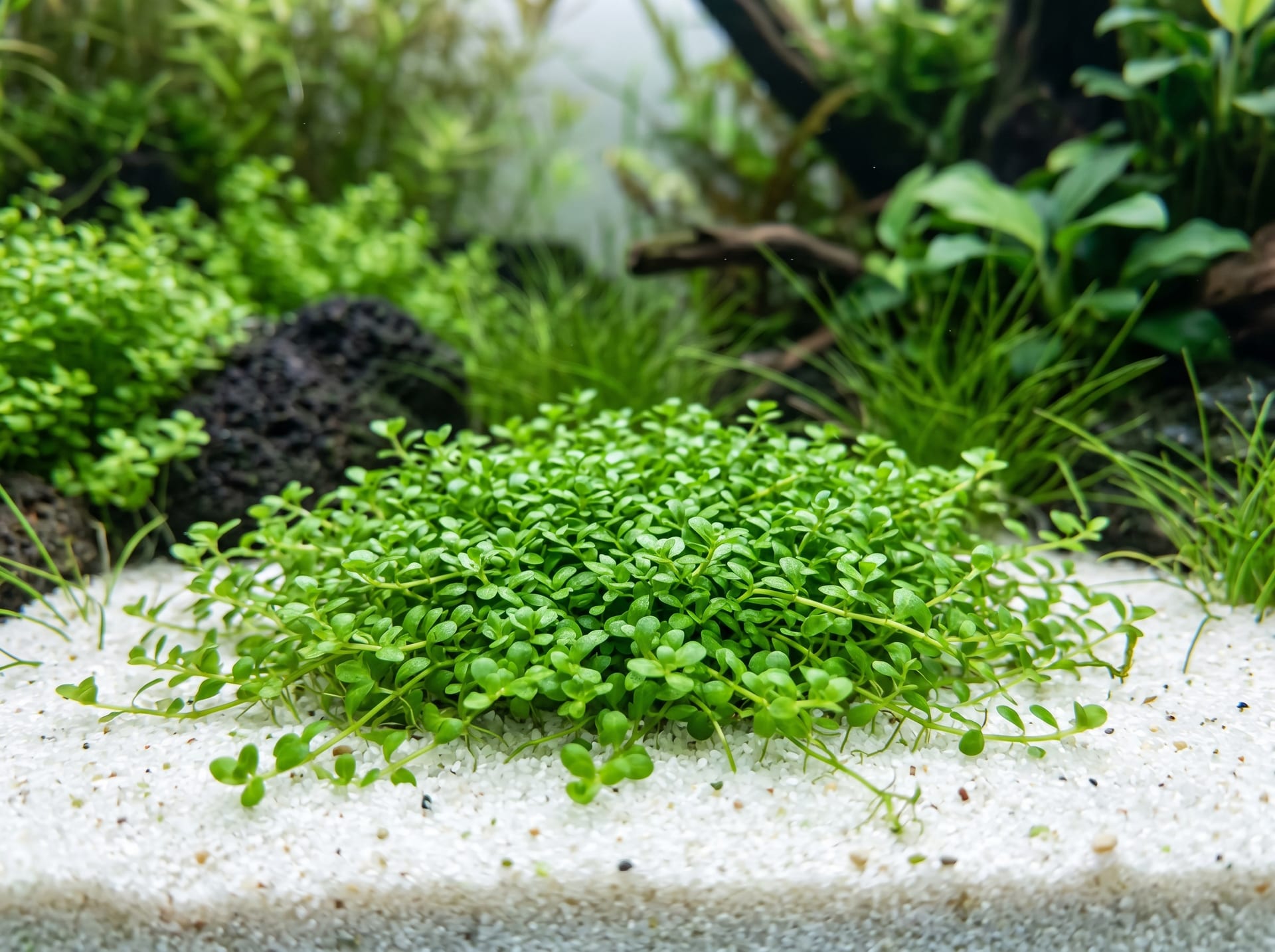
AI 生成图像
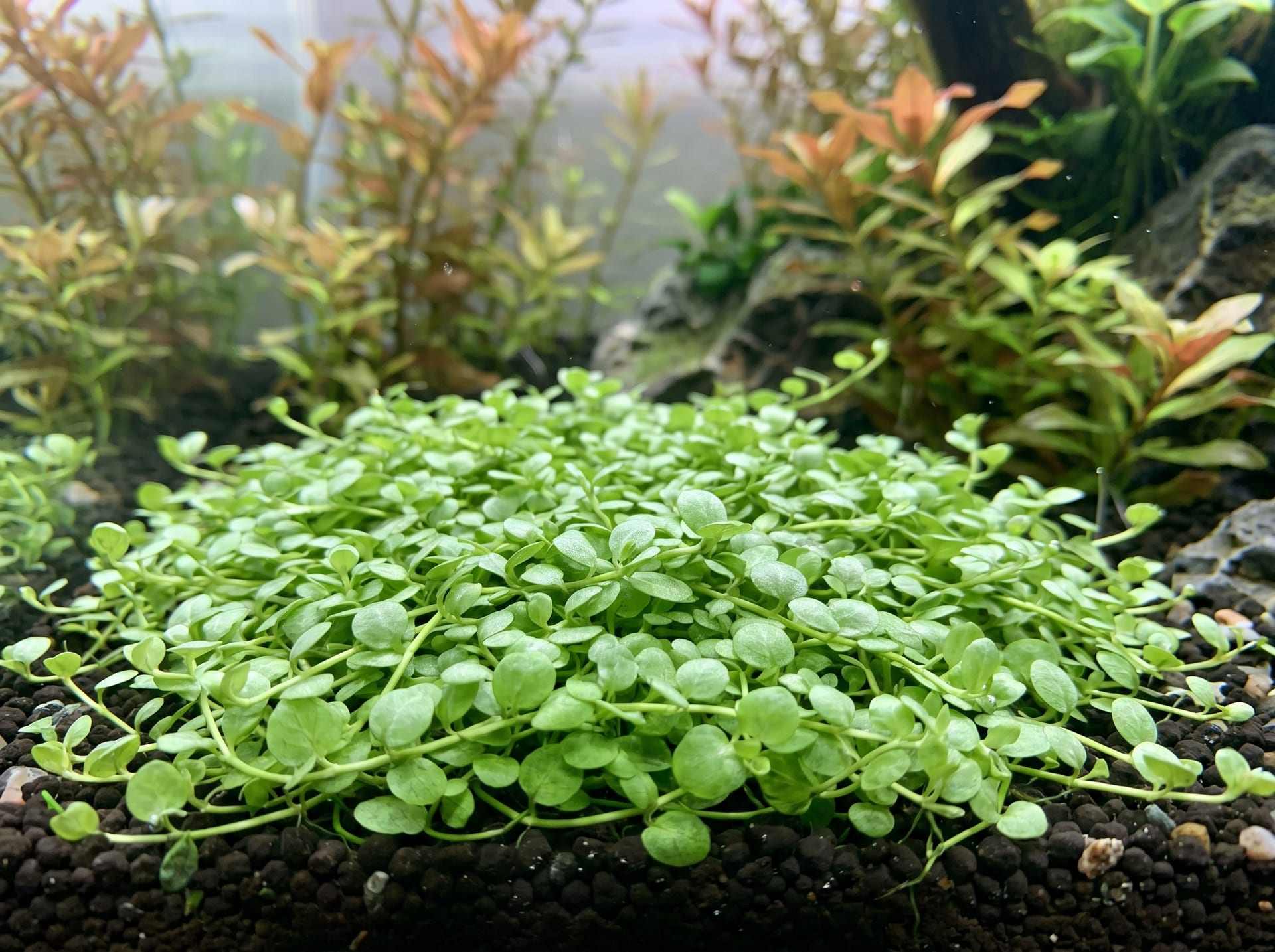
马蹄沟繁缕
适合高级Elatine hydropiper
极小叶片的可爱前景草。比矮珍珠更加细小,能打造精致的绿色地毯。需要高光量和CO2,尽管在小型水槽中格外出众。
概述
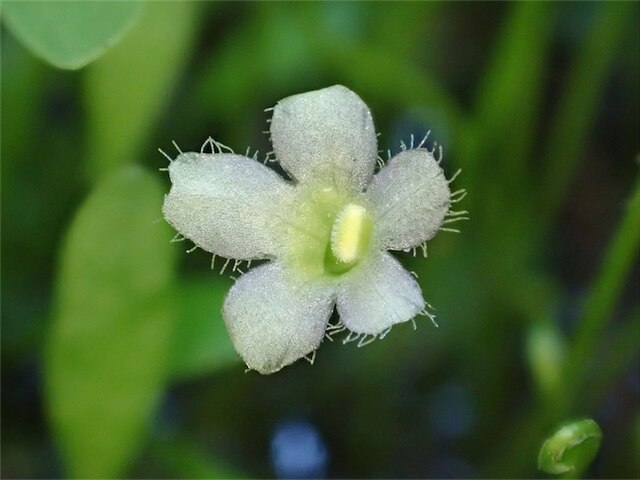
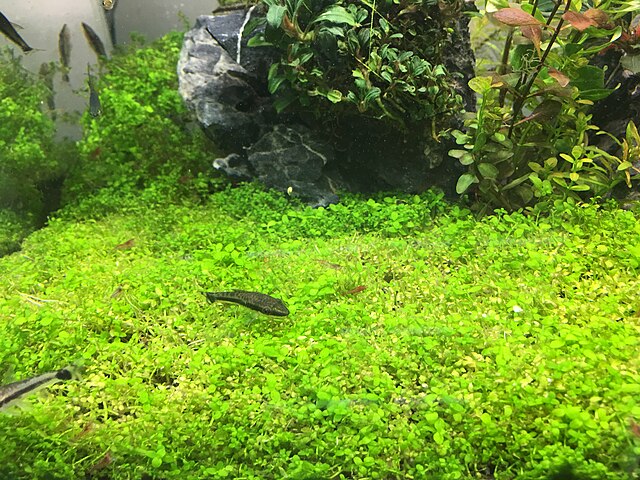
Elatine hydropiper是沟繁缕科的小型水草,广泛分布于欧亚大陆。它具有极小的叶片,在充足的光照和CO2条件下会贴地蔓延生长,形成翠绿地毯,因此被用作前景水草。用途虽然类似于矮珍珠等,但其特点是叶片更细腻、色泽更明亮清爽。要实现健康的匍匐生长,必须提供强力照明、CO2添加和营养丰富的底床。如果条件不足,容易出现徒长或融烂现象。该水草对环境要求高,要稳定养殖需要相当经验,是面向高级爱好者的水草。它通过走茎扩张生长,通过经常修剪可以维持高密度的地毯状外观。它偏好弱酸性至中性的软水环境。
马蹄沟繁缕的体型
马蹄沟繁缕的成体体型为0.5~2厘米。
马蹄沟繁缕的适宜温度与湿度
马蹄沟繁缕的适宜温度为18〜26℃。
基本信息
产地
欧亚大陆(欧洲至亚洲)
尺寸
0.5~2厘米
温度
18〜26℃
浇水与施肥
必须添加CO2 + 液肥 + 底床肥料
栽培指南
照明
高光量必须。光线不足则会徒长
CO2与肥料
必须添加CO2。营养丰富的底床之外还要施液肥,条件不足时会徒长或溶解。
底床与附着
颗粒细的营养型水草泥最合适。极小的叶片贴地蔓延,应在细颗粒底床中扎根。
水温与水质
水温18~26℃,喜欢弱酸性至中性的软水。对环境要求高,应保持水质稳定。
修剪与繁殖
以走茎状蔓延形成地毯。勤于修剪可维持高密度的草坪。
注意事项
生长速度较慢,需要耐心等待
马蹄沟繁缕常见问题
Q栽培马蹄沟繁缕的难度如何?
适合高级。这是一个高级难度的物种。需要专业设备和精确环境控制的高级栽培技能。
Q马蹄沟繁缕的理想温度是多少?
马蹄沟繁缕的理想温度为18〜26℃。避免温度骤变,保持稳定的环境。
Q马蹄沟繁缕能长多大?
马蹄沟繁缕的成株通常可达0.5~2厘米。大小可能因栽培条件和个体遗传而异。
Q马蹄沟繁缕如何浇水施肥?
马蹄沟繁缕的浇水与施肥为:必须添加CO2 + 液肥 + 底床肥料。请注意适当的频率和用量。
Q马蹄沟繁缕的一般价格是多少?
马蹄沟繁缕的价格因品种、大小和系统而有很大差异。请查看我们的市场价格页面获取最新价格信息。
最后更新: 2026年9月17日
参考与来源
编辑与数据核验: GrowerDirect编辑部
本页的分类·法规·栽培数据依据下列权威一手来源编制并核验。
分类与学名依据
法规与保护状况
相关物种
查找此物种的商品
相关文章
水草CO2系统完全指南|从设置到日常维护的实践手册
CO2是水草进行光合作用时不可或缺的要素。本文从CO2添加系统的选择、电磁阀调节器的安装、扩散器的配置到日常维护,完整涵盖了为了培育生长快速的有茎草和红色系水草所需的所有实施方法。
水草鱼缸的使用过的水草泥·底床处理与回收利用方法|正确的处理方法和再利用的诀窍
详细说明水草鱼缸使用过的水草泥的正确处理方法。介绍遵循当地规则的处理步骤,以及使用期间较短时的再利用想法。
无需添加 CO2 也能生长的新手水草|生长条件与水草缸造景运用
没有昂贵的 CO2 设备,也能打造美丽的水草缸。从新手也容易成功的免 CO2 水草的选择,到生长条件、造景运用,都做了实用的讲解。
节节菜(Rotala)的养殖方法与发色诀窍|通过光照、CO2、修剪引出靓丽红色的方法
介绍在水草布景中备受欢迎的节节菜属(Rotala)水草,解说通过光照、CO2、肥料管理引出红色发色,以及维持美丽株型的修剪步骤。