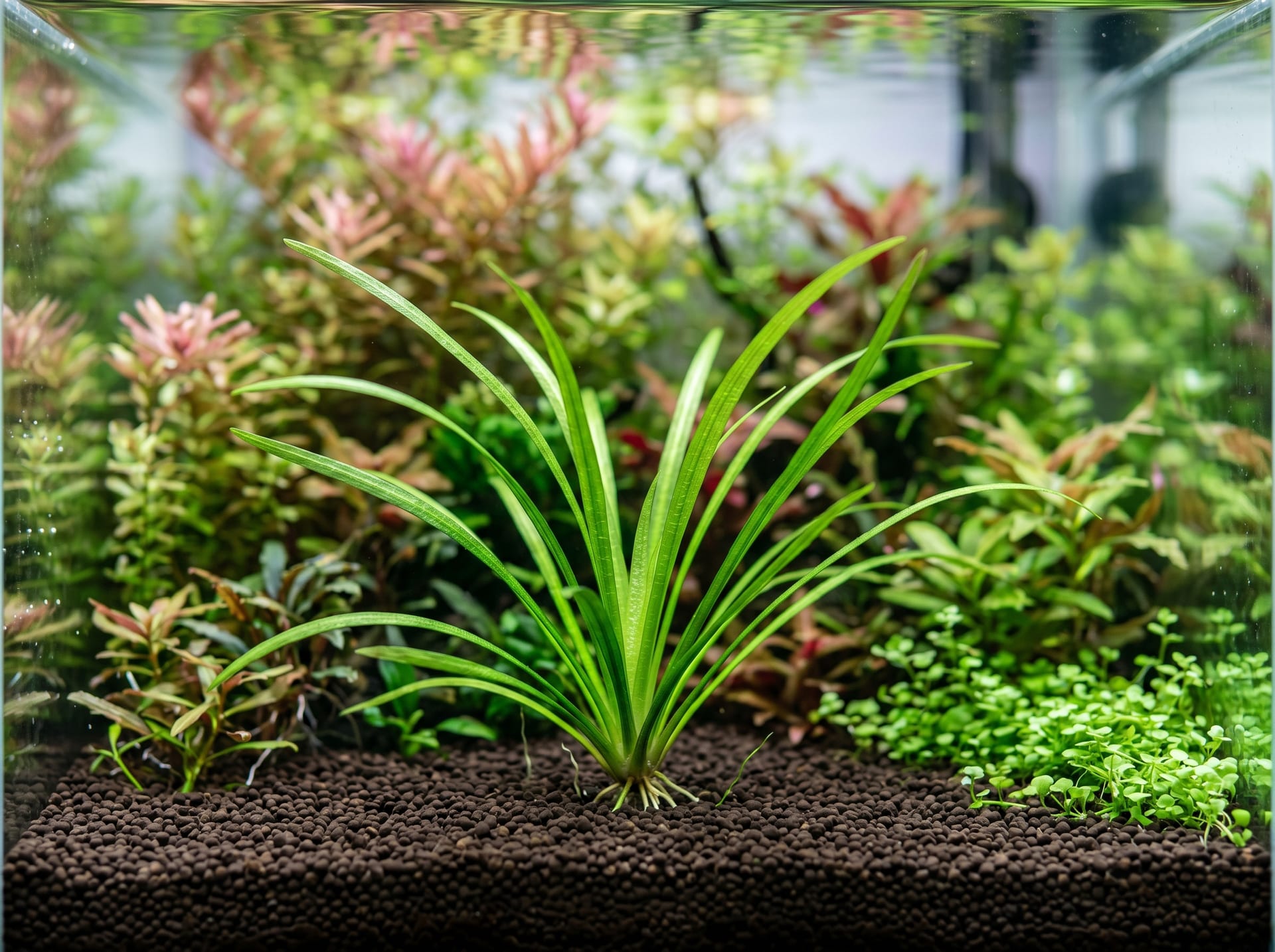
Herbivore Damage / Fish, Shrimp, and Snail Grazing
🔎 按症状查找
关于这种疾病
A condition in which aquatic plants are damaged or killed by fish, shrimp, or snails grazing on leaves and new shoots. The likelihood varies depending on the species of plants and the mix of inhabitants in the tank.
主要症状
- Irregular holes or missing sections are visible on the leaves
- New shoots and tender leaves are selectively consumed and disappear
- Leaf count drops rapidly, leaving only stems and roots
- Damage tends to progress after lights go off or during nighttime hours
主要原因
- Grazing by highly herbivorous species such as Amano shrimp, goldfish, or plecos
- Concentrated damage from overpopulation of snails or other mollusks
- Too many herbivorous inhabitants relative to the amount of aquatic plants present
- Insufficient feeding of tank inhabitants causing plants to become a substitute food source
预防(栽培环境与日常管理)
Avoid combining highly herbivorous species with delicate aquatic plants, and feed tank inhabitants appropriately to reduce grazing pressure on plants. Increasing planting density can also help distribute and minimize the impact of herbivore damage.
相关图鉴
→ 查看该动物的品种图鉴就医建议
建议几天内处理专卖店·园艺可做的处理?
Tropical fish and aquatic plant specialty stores can assess the compatibility of tank inhabitants with plant species and advise on selecting grazing-resistant inhabitants or switching to tougher plant varieties less susceptible to herbivore damage.
相关专栏
- How to Cultivate Rotala and Bring Out Beautiful Red Color | Lighting, CO2, and Trimming Techniques to Achieve Vibrant Red
- Rare Rhizophytic Aquatic Plants Beyond Anubias, Bucephalandra, and Willow Moss | The Appeal of Distinctive Varieties Such as Bolbitis
- Aquarium Water Quality Adjustment and CO2 Supplementation | How Hardness, pH, and CO2 Affect Aquatic Plant Color and Growth Rate
- Tissue-Cultured Aquatic Plants vs. Regular Aquatic Plants: Pesticide Risk Comparison | Choosing Safe Plants for Shrimp Tanks