 © Cooleyray / CC BY-SA 4.0
毛氈苔 (Drosera falconeri)
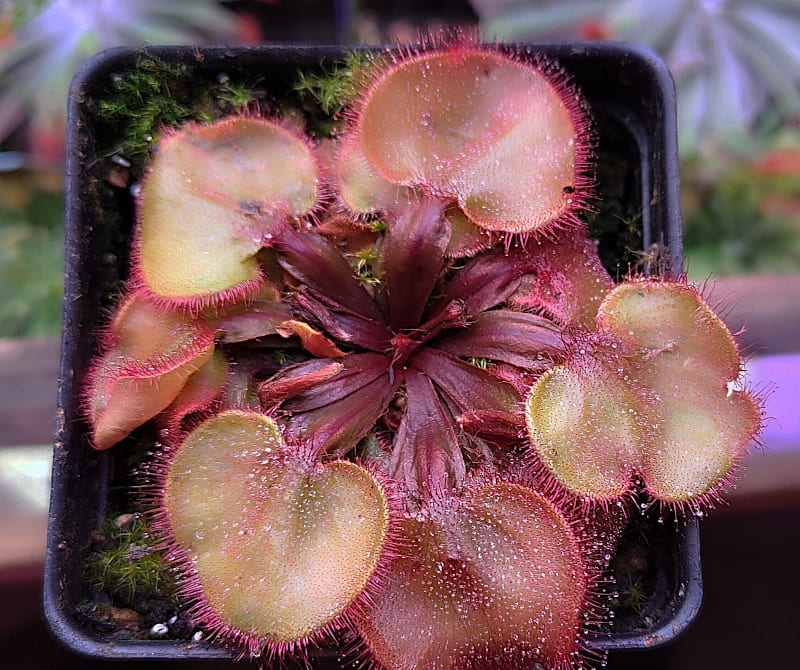
Drosera falconeri is a sundew native to the tropical woodlands of northern Australia, where it presses its round, kidney-shaped leaves flat against the ground in a rosette that brings a Venus flytrap to mind more than a typical sundew. The leaves stay compact, about 1.5 cm long and 2 cm wide, reaching up to 3 cm across on mature plants. Unlike most carnivorous plants, which favor acidic bogs, this species is one of the rare few that grows naturally in alkaline, lime-rich soil. It dies back to a resting bud through the dry season, and its particular needs make it a plant best suited to growers with some carnivorous-plant experience already under their belt.
View 毛氈苔 (Drosera falconeri) encyclopedia →成交手續費 0%!2026年9月30日前註冊,前 2 株免佣金!
生產者 招募中!
在 GrowerDirect 上架,直接銷售給全國的客戶吧!
GrowerDirect承諾的 6 項透明性重點
在食蟲植物出品時,生產者將透明標示以下資訊。保證品種、產地、光照需求、栽培難度的透明度。
- 品種標示
- 實物照片
- 色澤
- 產地標示
- 光照需求
- 難度標示
查看全部145個品種
毛氈苔 (Drosera falconeri)的基本資料
- 栽培難度
- 適合高級者
- 壽命
- 多年生草本(旱季以芽孢狀態休眠)
- 體型
- 葉片長約1.5cm、寬約2cm(老株寬達3cm)
- 澆水
- 不施肥(以捕捉小昆蟲為養分)
- 溫度·越冬
- 小葉毛氈苔複合體的同屬物種喜歡夏季溫度在30℃上下,任何時期都不喜歡溫度低於18℃。日本的冬季需要加溫,許多栽培者使用加熱墊。
- 光照·放置位置
- 喜歡強光。在自生地中葉片呈深紅色,但在栽培條件下,光線不足時容易呈現綠色調。
- 澆水
- 將小花盆放在腰水托盤中。夏季水位保持較高,冬季保持較低,甚至可以讓土壤乾燥數天。使用純水。
- 休眠期管理
- 在栽培條件下,可能全年生長而不進入旱季休眠。如果進入休眠,會在地表附近形成緊密的芽孢,不要誤以為植物已死亡。
- 繁殖方法
- 不易通過分株繁殖,葉插法成功率也很低。已知可以通過將葉片浸入純水中促進萌芽的方法進行繁殖。
關於毛氈苔 (Drosera falconeri)
Drosera falconeri is a rare Australian sundew with flat, kidney-shaped leaves resembling a Venus flytrap. It grows naturally in alkaline soil and goes dormant in the dry season, making it a plant for experienced growers.
開始照料毛氈苔 (Drosera falconeri)前需要了解的7件事
1Light and placement
As a native of tropical northern Australia, this sundew wants strong light and warm temperatures year-round. Because its leaves spread flat rather than growing upright, give it a spot with plenty of open light overhead rather than tall growing space.
2Native to Limestone Soils
While most carnivorous plants grow in acidic soil, this sundew is unusual in growing on limy sand or grey clay of around pH 8 in the wild. In cultivation, though, the biggest challenge is temperature rather than soil: it dislikes dropping below 18°C at any time of year.
3Watering Approach
Stand a small pot in a water tray, keeping the level higher in summer and lower in winter, when letting it dry for a few days is fine. Use purified water.
4Dry-season dormancy
In its natural dry season, the above-ground growth dies back and the plant rests as a small bud at soil level. Cut back on watering during this period, then gradually resume as new growth signals the bud is waking up.
5Keep It Warm in Winter
Its relatives prefer the low 30s °C in summer and dislike falling below 18°C at any time. Japanese winters call for supplemental heat, and many growers use a heat mat. In cultivation it may skip dormancy and grow year-round.
6Choosing a healthy plant
Leaves typically run about 1.5 cm long and 2 cm wide, though older, well-grown plants can reach 3 cm across. Look for good leaf color, active new growth, and leaves that are clearly producing sticky mucilage.
7Suited to Experienced Growers
It is considered difficult, and the biggest challenge is keeping it warm: it dislikes dropping below 18°C at any time, so winter heating is essential. Building basic sundew-care skills with an easier Drosera first is a reasonable way to prepare.
毛氈苔 (Drosera falconeri)的常見問題
- Q.Is this the same plant as a Venus flytrap?
- A.No, they belong to different genera. Drosera falconeri's flat, ground-hugging leaves look similar to a Venus flytrap at a glance, but as a true sundew it catches insects with sticky, mucilage-covered glands rather than snapping leaves.
- Q.What kind of soil does it grow in naturally?
- A.In northern Australia it grows on limy sand or grey clay of around pH 8, unlike the acidic soils most carnivorous plants favor. In cultivation, however, keeping it warm is the biggest challenge.
- Q.If the leaves die back in the dry season, has something gone wrong?
- A.No, that's normal behavior. The above-ground leaves naturally die back to a resting bud at soil level during the dry season. Cut back on watering and let the plant rest until new growth signals it's waking up.
- Q.Can beginners grow this plant?
- A.It is considered difficult and best for experienced growers. It dislikes falling below 18°C at any time, so you need equipment to keep it warm, including winter heating. Gaining experience with an easier Drosera first is a good way to prepare.
- Q.How big does this plant get?
- A.The leaves are compact, typically around 1.5 cm long and 2 cm wide. On older, well-established plants the leaf width can reach about 3 cm.
毛氈苔 (Drosera falconeri)栽培的實用工具
在圖鑑中詳細了解毛氈苔 (Drosera falconeri)
查看毛氈苔 (Drosera falconeri)的圖鑑條目 →
收錄栽培難度、尺寸、原產地、日照等基礎資料。