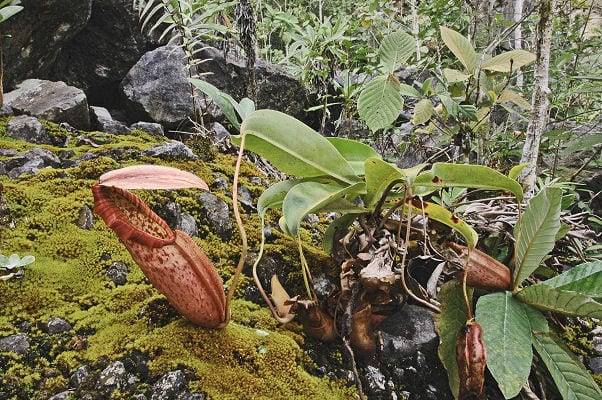
 © The original uploader was XQ fan at English Wikipedia. / Public domain
北氏豬籠草
Nepenthes northiana is a large pitcher plant found only on limestone cliffs around Bau in Sarawak, Borneo. Its red-speckled pitchers can reach up to 40cm tall, with a broad, wavy peristome that curls dramatically along both sides — the plant's signature feature. The vine itself can stretch up to 10 meters as it matures, growing more striking with age. This advanced-level species demands real growing experience, but the reward is a spectacular, larger-than-life pitcher plant, making it a rewarding choice for enthusiasts who want carnivorous plants at their most dramatic.
View 北氏豬籠草 encyclopedia →成交手續費 0%!2026年9月30日前註冊,前 2 株免佣金!
生產者 招募中!
在 GrowerDirect 上架,直接銷售給全國的客戶吧!
GrowerDirect承諾的 6 項透明性重點
在食蟲植物出品時,生產者將透明標示以下資訊。保證品種、產地、光照需求、栽培難度的透明度。
- 品種標示
- 實物照片
- 色澤
- 產地標示
- 光照需求
- 難度標示
查看全部145個品種
北氏豬籠草的基本資料
- 栽培難度
- 適合高級者
- 壽命
- 多年生藤蔓植物
- 體型
- 下部捕蟲袋高達40釐米、寬15釐米以內,藤蔓可達10公尺
- 澆水
- 施肥須極薄且適量(靠捕捉昆蟲維生)
- 溫度·越冬
- 低地性種類,全年喜溫暖環境。冬季需在溫暖室內避寒,並保持較高濕度。
- 光照·放置地點
- 原生地為開放懸崖,喜明亮光線。光線不足時難以形成大型捕蟲袋。
- 澆水
- 使用雨水或礦物質含量少的水,在介質乾涸前澆灌。避免盆碟積水,以排水良好的介質防止根部腐爛。
- 介質·換盆
- 此種僅生長於石灰岩地。栽培時宜選用排水良好的介質,防止根部積水腐爛。
- 肥料
- 使用複合肥料時需極度稀釋。偶爾在捕蟲袋中放入昆蟲即可維持良好生長。
- 病蟲害·注意事項
- 野生種群因過度採集而數量減少。購買時應選擇實生或組織培養繁殖的株株。
關於北氏豬籠草
Nepenthes northiana is a large pitcher plant native to Borneo's limestone cliffs. Its red-spotted pitchers reach 40cm with a distinctive wavy rim, on vines that can grow to 10 meters — a perennial for experienced growers.
開始照料北氏豬籠草前需要了解的7件事
1Needs bright light and humidity
As a species native to open limestone cliffs, it prefers bright light. Direct summer sun outdoors can be too intense, so light shading such as a sheer curtain works well. A greenhouse or terrarium that holds humidity suits it better than a dry indoor room.
2Keep It Watered, Not Waterlogged
Water thoroughly before the mix dries out completely, but don't leave water standing in the saucer; use a free-draining mix so the roots don't stay soggy. Use rainwater or other water low in dissolved salts.
3Use a well-draining, moisture-retentive mix
A mix combining sphagnum moss, perlite, and similar materials that balances drainage with water retention works well. A commercial Nepenthes potting mix is an easy option. Avoid ordinary nutrient-rich potting soil, which can damage the roots.
4Repot as the vine lengthens
Since the vine can eventually reach 10 meters, repot into a larger container once roots fill the pot. The best time is during the warm growing season. Slide the whole root ball out gently with the surrounding medium to avoid damaging the roots.
5Requires warmth even in winter
Because it originates from tropical lowlands, this species is sensitive to cold and needs protection from low winter temperatures. Keep it in a warm indoor spot or greenhouse with stable temperatures year-round, and avoid sudden temperature swings.
6Check the vine and root condition
When choosing a plant, look for firm vines and leaves without much discoloration or damage. Since this is an advanced-level species, starting with a somewhat established plant can make it easier to get a feel for its care.
7Don't worry if pitchers stop forming
There are times, especially with young plants or after a change in environment, when pitchers form less readily. Keeping humidity and light stable and continuing patient care is the best path toward large, well-formed pitchers.
北氏豬籠草的常見問題
- Q.Can it be grown indoors?
- A.Indoor growing is possible as long as humidity stays high, but pitchers tend to form poorly in dry conditions. A terrarium or greenhouse where humidity is easier to manage suits it better.
- Q.Is this suitable for beginners?
- A.This species is considered suitable for experienced growers. It's best approached after gaining some basic experience growing other Nepenthes first.
- Q.How large does it grow?
- A.The lower pitchers reach about 40cm in height and 15cm in width, and the vine can eventually stretch up to 10 meters. It's a species that grows large gradually, over time.
- Q.Where should it be placed?
- A.Since it's native to open limestone cliffs, it prefers bright light and high humidity. Avoid overly intense direct sun and provide light shading instead.
- Q.What should I know about overwintering?
- A.As a plant native to tropical regions, it is sensitive to cold. In winter, keep it in a warm indoor location or greenhouse and maintain stable temperatures throughout the year.
北氏豬籠草栽培的實用工具
在圖鑑中詳細了解北氏豬籠草
查看北氏豬籠草的圖鑑條目 →
收錄栽培難度、尺寸、原產地、日照等基礎資料。