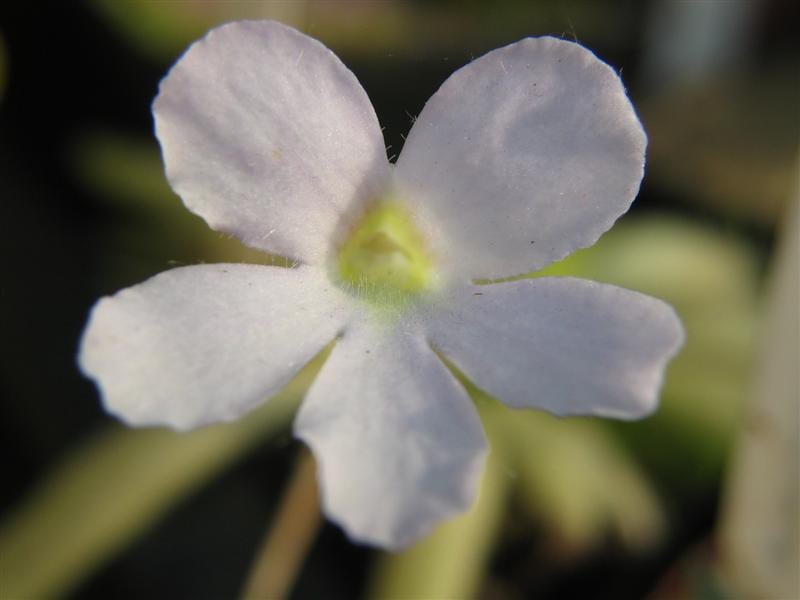
 © fischermans / CC BY-SA 3.0
捕蟲草'阿芙洛狄'
Pinguicula 'Aphrodite' is a butterwort bred in the Czech Republic from a cross between P. agnata and P. moctezumae. Its long, gently arching leaves give it an elegant look, reaching up to 12 cm in length and 2 cm in width during summer. The real highlight is its flower, up to 4 cm across, which opens a deep purple and gradually fades to pink as it matures. Considered an easy plant for beginners, it is a perennial that can be kept going for years through division or leaf cuttings.
View 捕蟲草'阿芙洛狄' encyclopedia →成交手續費 0%!2026年9月30日前註冊,前 2 株免佣金!
生產者 招募中!
在 GrowerDirect 上架,直接銷售給全國的客戶吧!
GrowerDirect承諾的 6 項透明性重點
在食蟲植物出品時,生產者將透明標示以下資訊。保證品種、產地、光照需求、栽培難度的透明度。
- 品種標示
- 實物照片
- 色澤
- 產地標示
- 光照需求
- 難度標示
查看全部145個品種
捕蟲草'阿芙洛狄'的基本資料
- 栽培難度
- 適合新手
- 壽命
- 多年生植物(可通過分株或葉插繁殖長期維持)
- 體型
- 夏季葉片長達12厘米、寬至2厘米,花朵直徑可達4厘米
- 澆水
- 幾乎不需施肥(葉片粘液可捕獲小蟲)
- 溫度·越冬
- 夏季在溫暖潮濕的環境中生長捕蟲葉,冬季需涼爽且偏乾環境以轉換為多肉質冬葉並進入休眠。室內窗邊的環境最為適宜。
- 光照·放置位置
- 在明亮的窗邊或照明下栽培。強光會導致葉邊呈紅色,但應避免仲夏強烈的直射日光。
- 澆水
- 夏季生長捕蟲葉時,可在托盤中蓄水至約2厘米深。冬季轉為多肉質冬葉後,需先乾燥約1週再澆水。
- 基質·換盆
- 本種非濕地植物,宜用等量泥炭、粗砂和珍珠岩混合,加入白雲石粉調至微鹼性。換盆或分株應在冬季休眠期進行。
- 繁殖方式
- 為保持品種特性,應採用葉插或分株等無性繁殖。由種子培育的植株不會是同一品種。
- 病害蟲·注意事項
- 勿使用殺菌劑,否則對捕蟲草有害。需防護菇蚋幼蟲的葉片食害,可在基質表面薄鋪粗砂。
關於捕蟲草'阿芙洛狄'
Pinguicula 'Aphrodite' is a Czech-bred butterwort with arching leaves and striking 4cm flowers that shift from deep purple to pink. An easy, beginner-friendly perennial.
開始照料捕蟲草'阿芙洛狄'前需要了解的7件事
1Light and Placement
Pinguicula 'Aphrodite' likes bright light, but harsh midsummer sun can scorch its leaves. A spot behind a sheer curtain indoors, or light shade under shade cloth outdoors, works well. Good air circulation also helps keep the plant healthy.
2Watering Basics
Keep the soil consistently moist using the tray (bottom-watering) method, standing the pot in a few centimeters of water. Avoid wetting the leaves directly, as it dilutes the sticky mucilage they use to catch insects. Cut back on watering once the plant enters winter dormancy.
3Well-Draining Soil
Unlike many carnivorous plants grown in pure sphagnum moss, Pinguicula 'Aphrodite' prefers a mineral-rich, free-draining mix. A blend of perlite, pumice, and akadama (or similar mineral grit) works well. Good drainage helps prevent root rot from excess moisture.
4Repot During Winter Rest
Repotting and division are best done during the winter rest period. Signs it's time include roots filling the pot or soil that no longer drains well. Handle the roots gently during the process to avoid damage.
5Winter Succulent Form
Aphrodite's parent species, P. agnata and P. moctezumae, both shift from sticky summer leaves into a drought-tolerant, succulent rosette during winter. The plant stops catching insects during this period, so watering should be reduced. Keep it somewhere bright and indoors, away from frost.
6Choosing a Healthy Plant
Look for leaves with good color and plenty of glistening mucilage, a sign of a healthy plant. Avoid specimens with blackened or mushy patches near the center or base. A well-formed rosette with plenty of leaves tends to establish and grow more smoothly.
7Propagation by Leaf and Division
As a perennial, Pinguicula 'Aphrodite' can be propagated repeatedly through leaf cuttings or division, so a single plant can be enjoyed for years. Remove a healthy leaf with its base intact during the growing season and rest it on moist soil to start a new plant. With a little practice, it's a propagation method most home growers can manage.
捕蟲草'阿芙洛狄'的常見問題
- Q.Is it suitable for beginners?
- A.Yes, Pinguicula 'Aphrodite' is considered an easy, beginner-friendly plant. As long as you keep the basics of tray watering and bright placement in mind, it's approachable even for first-time carnivorous plant growers.
- Q.How big are the flowers, and do they change color?
- A.The flowers can reach up to about 4 cm across, making them quite large for the genus. They open a deep purple and gradually fade to pink as they age.
- Q.How large does the plant get?
- A.Its summer leaves grow up to about 12 cm long and 2 cm wide, with a distinctive long, arching shape. It stays compact enough to enjoy in a small pot.
- Q.Do I need to feed it insects?
- A.No special feeding is required — the sticky mucilage on the leaves naturally catches small insects like fungus gnats. It will grow just fine even in an indoor environment with few insects around.
- Q.How is it different from its parent species, P. agnata and P. moctezumae?
- A.Aphrodite is a Czech-bred hybrid between P. agnata and P. moctezumae, combining traits from both. Its arching leaves and especially large flowers are traits that stand out thanks to this crossing.
捕蟲草'阿芙洛狄'栽培的實用工具
在圖鑑中詳細了解捕蟲草'阿芙洛狄'
查看捕蟲草'阿芙洛狄'的圖鑑條目 →
收錄栽培難度、尺寸、原產地、日照等基礎資料。