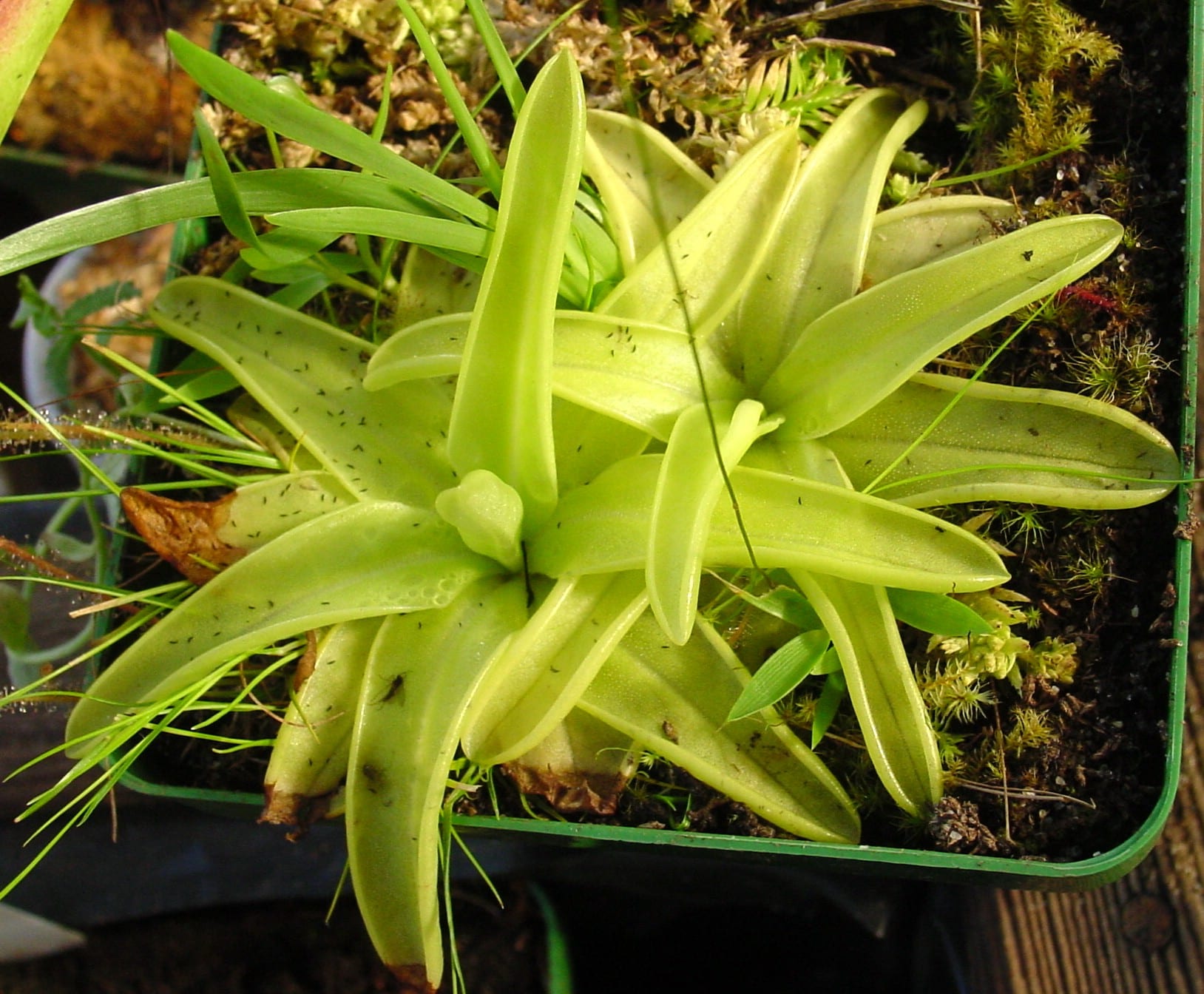
 © Noah Elhardt / CC BY-SA 2.5
黃挖耳草(Pinguicula lutea)
Pinguicula lutea, the yellow butterwort, is a carnivorous plant native to savannas and sandy wetlands of the southeastern United States. Its biggest draw is a vivid yellow flower that blooms in spring, an unusual color within the genus, set above a rosette of yellow-green leaves that grows to about 15 cm across. The sticky leaves trap tiny insects for extra nutrition. It keeps the same kind of leaves all year and has no way to withstand freezing, so in winter it should be kept somewhere frost-free. Because it's a short-lived perennial, the standard approach is to collect seed and renew plants over time.
View 黃挖耳草(Pinguicula lutea) encyclopedia →成交手續費 0%!2026年9月30日前註冊,前 2 株免佣金!
生產者 招募中!
在 GrowerDirect 上架,直接銷售給全國的客戶吧!
GrowerDirect承諾的 6 項透明性重點
在食蟲植物出品時,生產者將透明標示以下資訊。保證品種、產地、光照需求、栽培難度的透明度。
- 品種標示
- 實物照片
- 色澤
- 產地標示
- 光照需求
- 難度標示
查看全部145個品種
黃挖耳草(Pinguicula lutea)的基本資料
- 栽培難度
- 適合高級者
- 壽命
- 壽命短的多年生植物
- 體型
- 蓮座狀葉叢直徑達15釐米,花直徑1~3釐米
- 澆水
- 幾乎不需要肥料(葉上的粘液捕捉小蟲)
- 光照・擺放位置
- 自生地為松林空曠地和草原。在明亮地方栽培,盛夏時半日陰最佳。
- 澆水
- 用土須常保濕潤。因其生長於南方其他挖耳草更乾燥的地方,故勿使過濕。
- 溫度・越冬
- 終年以同樣葉片過活,不具耐凍機制。冬季需移入不結冰處,或在屋外設防霜措施。
- 用土・換盆
- 用泥炭3・矽砂1・珍珠岩1的配比或純泥炭栽培。被苔蘚或藍藻覆蓋時應移植至新用土。
- 繁殖方法
- 為壽命短的多年生植物,欲長期享受需採集種子。因自花授粉困難,應用筆涂抹花粉進行授粉。種子在15℃以上環境下約2~4週內發芽。
關於黃挖耳草(Pinguicula lutea)
A carnivorous butterwort native to the southeastern US, prized for its unusually vivid yellow spring blooms. This short-lived perennial forms a yellow-green rosette up to 15 cm across and suits experienced growers.
開始照料黃挖耳草(Pinguicula lutea)前需要了解的7件事
1Grow It in Bright Light
In the wild it grows in open pine woods and savannas. Give it a bright spot, with light shade during midsummer. Without enough light, the leaves stretch out and flowering suffers.
2Soil: drainage and moisture together
To mimic its sandy wetland habitat, use a fertilizer-free mix of peat moss and sand or perlite. Aim for a blend that drains well yet stays consistently moist. A ready-made carnivorous plant potting mix also works.
3Keep the Mix Moist
Keep the mix consistently moist. This species grows in drier spots than other southern butterworts, though, so don't let it sit waterlogged. Keep it somewhere with good airflow.
4Same Leaves Through Winter
Pinguicula lutea is a warm-temperate species that keeps the same kind of rosette all year and does not form a hibernaculum. It has no way to withstand freezing, so bring it somewhere frost-free for winter or protect it from frost if it stays outdoors.
5Repot When the Mix Deteriorates
When the surface of the mix becomes covered with moss or blue-green algae, repot into fresh mix. A blend of three parts peat, one part silica sand, and one part perlite, or pure peat, is commonly used. Remove the old mix and handle the roots gently.
6Check the Base When Choosing a Plant
When choosing a plant, check that the center of the rosette and the base aren't blackened or mushy. Firm, plump, vividly yellow-green leaves are a sign of healthy growth.
7Skip the fertilizer
As a carnivorous plant, Pinguicula lutea doesn't need fertilizer or supplemental feeding. Added nutrients can actually damage the roots, so a fertilizer-free mix plus whatever small insects it catches naturally is enough, especially when grown outdoors.
黃挖耳草(Pinguicula lutea)的常見問題
- Q.Does it need to be fed insects to survive?
- A.No — if it's kept outdoors or near an open window where small insects can land, it will catch enough on its own. The sticky leaves naturally trap and digest tiny prey for extra nutrients. Even indoors, there's no need to feed it by hand.
- Q.What does it look like in winter?
- A.Pinguicula lutea keeps the same kind of rosette all year and doesn't form a dormant hibernaculum. It can't withstand freezing, though, so bring it somewhere frost-free or protect it from frost in winter.
- Q.Why is this species considered advanced to grow?
- A.It's a short-lived perennial that can weaken from flowering too heavily, so it needs to be renewed from seed. It doesn't self-pollinate easily, which means hand-pollinating with a brush. It also can't tolerate freezing, so its winter location needs care.
- Q.When does it flower, and how big are the blooms?
- A.It flowers in spring, with blooms about 1 to 3 cm across held on a stalk rising above the rosette. The vivid yellow color is unusual for the genus Pinguicula, making it a distinctive sight among butterworts.
- Q.Can it be grown indoors on a windowsill alone?
- A.It can, as long as it gets plenty of light; without enough, growth becomes weak and stretched. Aim for a bright spot with light shade in midsummer, and add a grow light if the windowsill isn't bright enough.
黃挖耳草(Pinguicula lutea)栽培的實用工具
在圖鑑中詳細了解黃挖耳草(Pinguicula lutea)
查看黃挖耳草(Pinguicula lutea)的圖鑑條目 →
收錄栽培難度、尺寸、原產地、日照等基礎資料。