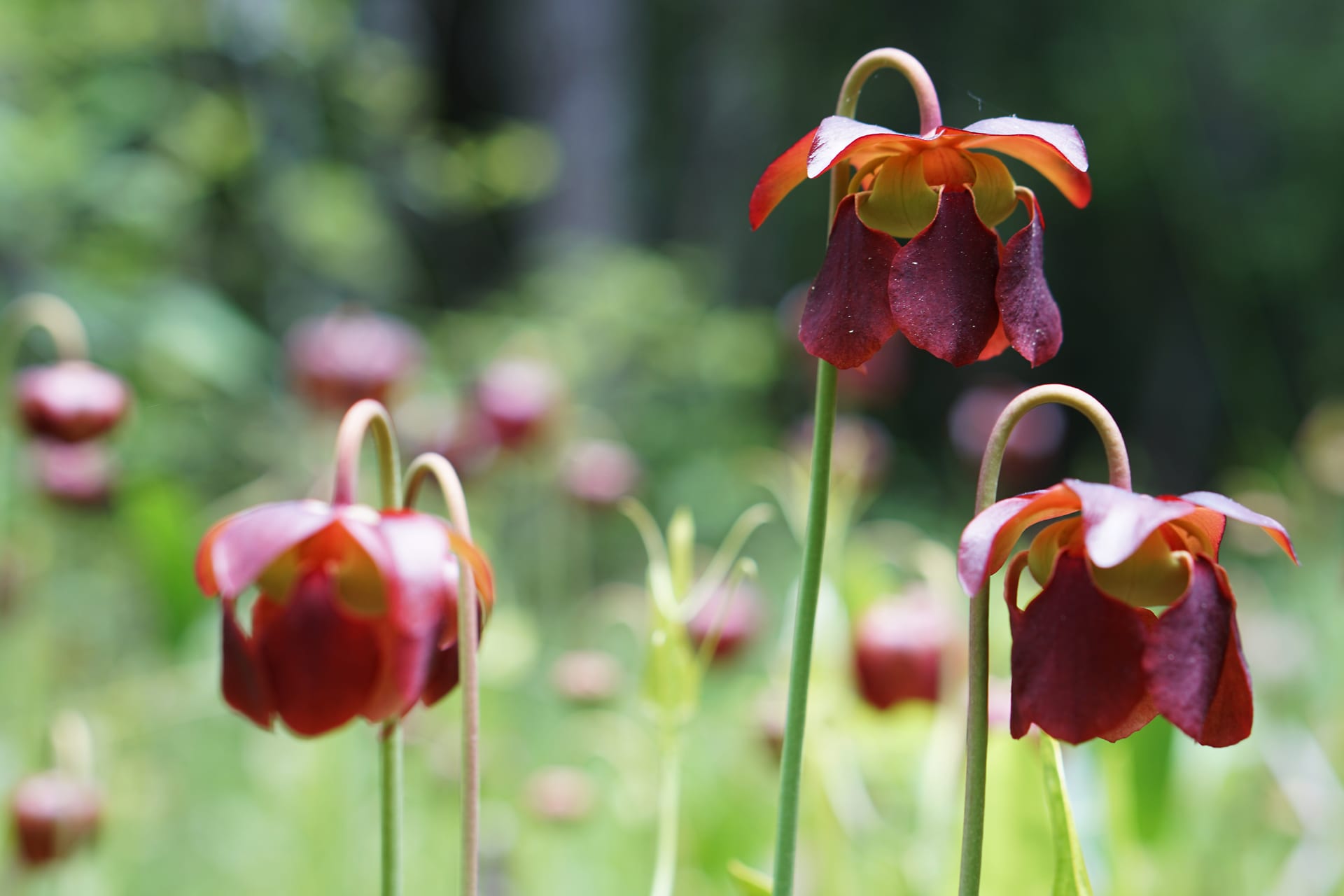
 © U.S. Fish and Wildlife Service Southeast Region / Public domain
紅瓶子草瓊斯亞種
Sarracenia rubra subsp. jonesii is a pitcher plant found only in a handful of Appalachian Mountain wetlands in the United States. It resembles a larger version of Sarracenia rubra, sending up slim, upright green pitchers marked with red veining, and in season it produces fragrant reddish-purple flowers. It is listed in CITES Appendix I, and in Japan any sale or transfer in principle requires a registration certificate under the Act on Conservation of Endangered Species. Plants propagated in Japan are also subject to registration, so always confirm that a registration certificate comes with the plant when buying. It's generally considered a plant for intermediate growers, and as a perennial it can be kept going for years through division.
View 紅瓶子草瓊斯亞種 encyclopedia →成交手續費 0%!2026年9月30日前註冊,前 2 株免佣金!
生產者 招募中!
在 GrowerDirect 上架,直接銷售給全國的客戶吧!
GrowerDirect承諾的 6 項透明性重點
在食蟲植物出品時,生產者將透明標示以下資訊。保證品種、產地、光照需求、栽培難度的透明度。
- 品種標示
- 實物照片
- 色澤
- 產地標示
- 光照需求
- 難度標示
查看全部145個品種
紅瓶子草瓊斯亞種的基本資料
- 栽培難度
- 適合中級者
- 壽命
- 多年生草本(可通過分株長期維持)
- 體型
- 捕蟲袋高度43~61厘米、口部直徑約2.8~4.2厘米
- 澆水
- 不施肥(靠捕食昆蟲獲得養分)
- 光照與放置位置
- 在室外光照充足的地方栽培。光照不足會導致著色不佳,捕蟲袋也會變得虛弱。
- 澆水
- 始終將花盆浸在4~6厘米深的水中,絕不令其乾燥。應使用雨水等低礦物質含量的水。
- 介質與重新種植
- 基本介質為泥炭與沙子以1:1比例混合。生長良好的株株每3~4年進行一次分株與重新種植。
- 溫度與越冬
- 源自山地,抗寒性強,如充分休眠,即使在霜凍導致結冰(-7℃)的嚴寒中也能存活。冬季必須於低溫下進行休眠。
- 肥料
- 成株介質中不施肥。肥料會導致根莖腐爛。在日照充足、昆蟲充分的環境中即可正常生長。
- 病蟲害與注意事項
- 該亞種為《華盛頓公約》附錄I物種,在國內的販售與轉讓需要註冊證。請勿購買無註冊證的植株。
關於紅瓶子草瓊斯亞種
Sarracenia rubra subsp. jonesii is a carnivorous pitcher plant native to Appalachian mountain wetlands, known for slender red-veined pitchers and raspberry-scented red flowers. A perennial suited to intermediate growers.
開始照料紅瓶子草瓊斯亞種前需要了解的7件事
1Give It Full Sun
Like other Sarracenias, this plant thrives with as much direct light as possible, whether grown outdoors or on a bright windowsill. Insufficient light tends to mute the red veining on the pitchers and can cause them to grow thin and leggy.
2Keep It in a Water Tray
Because it grows naturally in wetlands, keep the pot standing in a shallow tray of water so the soil stays consistently moist. Letting it dry out, especially during active growth, can weaken the plant.
3Use a Nutrient-Free Mix
Pot it in a mix of sphagnum moss, peat moss, and perlite that contains no added fertilizer. Standard potting soil or fertilized mixes can damage the roots.
4Repot After Dormancy
The best time to repot is right as the plant is waking from dormancy. Lift the root mass with minimal disturbance and move it into fresh mix, choosing a pot roomy enough for its relatively large pitchers to keep spreading.
5Let It Go Dormant in Winter
Coming from a mountain habitat, it's cold-hardy and can overwinter outdoors, and going through a proper dormancy helps it grow well the following year. Cut back on watering somewhat over winter, but avoid letting it dry out completely.
6Enjoy the Spring Bloom
In spring it produces red flowers with a raspberry-like fragrance. Since flowering overlaps with new pitcher growth, cutting the flower stalk early lets the plant put more energy into its pitchers.
7Propagate by Division
As a perennial, it can be maintained indefinitely through division of the clump. When choosing a plant, look for one with clearly defined red veining, minimal damage, and a firm base, which makes it easier to manage going forward.
紅瓶子草瓊斯亞種的常見問題
- Q.Is this a good plant for beginners?
- A.Sarracenia rubra subsp. jonesii is generally considered better suited to intermediate growers. Once you understand the basics of carnivorous plant care, such as tray watering and winter dormancy, it's manageable to keep long-term.
- Q.Can it be grown indoors?
- A.It can be grown indoors if you can provide strong light and good air circulation, but it's usually easier to give it adequate sun and a proper winter dormancy outdoors. A balcony or similarly open spot tends to work well.
- Q.Does it die back in winter?
- A.The pitchers above ground do deteriorate in winter, but that's part of entering dormancy rather than the plant dying. As a perennial, the plant itself survives and sends up new pitchers again in spring.
- Q.Do I need to feed it insects?
- A.In the wild it catches insects that fall into its pitchers, and plants kept outdoors or near open windows usually catch enough insects on their own. Manual feeding generally isn't necessary.
- Q.How large does it grow?
- A.Based on reference data, the pitchers reach roughly 43-61cm in height with an opening about 2.8-4.2cm across. As it's propagated by division, a mature clump will show multiple pitchers rising together.
紅瓶子草瓊斯亞種栽培的實用工具
在圖鑑中詳細了解紅瓶子草瓊斯亞種
查看紅瓶子草瓊斯亞種的圖鑑條目 →
收錄栽培難度、尺寸、原產地、日照等基礎資料。