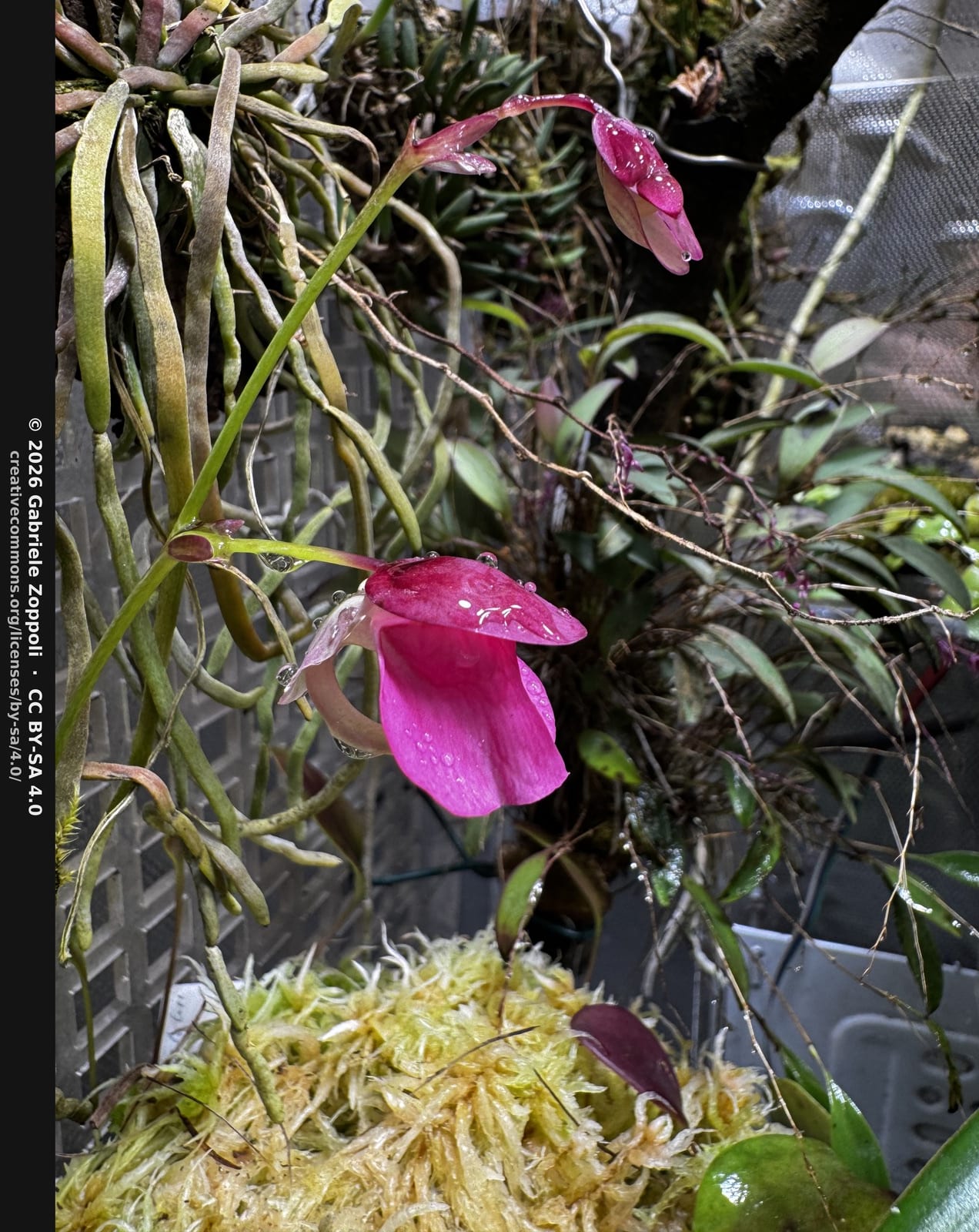
 © Gabriele Zoppoli / CC BY-SA 4.0
克奎基狸尾蒿
Utricularia quelchii is a small bladderwort native to the moss-covered rocks and tree trunks of South America's Guiana Highlands. It has a striking natural habit, sometimes growing in the water that collects at the base of Brocchinia leaves. It is one of the few Utricularia with red flowers, and it's a perennial in the tuber-forming group of the genus. Because it comes from cool, humid cloud-forest conditions, coping with Japan's summer heat is the key challenge, making it a plant for experienced growers; for those with the right setup, it has a truly distinctive presence.
View 克奎基狸尾蒿 encyclopedia →成交手續費 0%!2026年9月30日前註冊,前 2 株免佣金!
生產者 招募中!
在 GrowerDirect 上架,直接銷售給全國的客戶吧!
GrowerDirect承諾的 6 項透明性重點
在食蟲植物出品時,生產者將透明標示以下資訊。保證品種、產地、光照需求、栽培難度的透明度。
- 品種標示
- 實物照片
- 色澤
- 產地標示
- 光照需求
- 難度標示
查看全部145個品種
克奎基狸尾蒿的基本資料
- 栽培難度
- 適合高級者
- 壽命
- 多年草(形成球莖)
- 體型
- 小型(尺寸資料稀少)
- 適宜溫度
- 16〜27℃
- 澆水
- 肥料極少(通過捕蟲囊捕捉微小生物)
- 溫度·越冬
- 來自涼爽雲霧林的植物,應避免高溫環境。著生種建議溫度約16~27℃。夏季高溫對策是最大的課題。
- 光照·擺放位置
- 在明亮且濕度高的地方栽培。適合在涼爽濕潤的溫室或大型玻璃缸中栽培,也可以像懸掛蘭花一樣吊掛花盆栽培。
- 澆水
- 從上方澆水,不應讓托盤中的水長期積累。使用雨水等溶解鹽類含量較低的水。
- 培養土·換盆
- 使用輕質排水良好的培養土。可用長纖維泥炭蘚、珍珠岩、輕石等量混合,如果環境中活泥炭蘚生長良好,也可直接用活泥炭蘚栽培。
- 肥料
- 肥料應極少施用。只需在水中加入少量肥料即可。
- 繁殖方式
- 可通過莖插繁殖。帶小球莖切取的莖段恢復較快。由於易向相鄰花盆蔓延混雜,應保持花盆間距。
關於克奎基狸尾蒿
Utricularia quelchii is a small epiphytic bladderwort from the Guiana Highlands, notable for its rare reddish flowers and tuber-forming perennial habit. Best suited to experienced growers.
開始照料克奎基狸尾蒿前需要了解的7件事
1Bright, Indirect Light
Utricularia quelchii prefers bright, filtered light rather than direct sun, similar to conditions on the misty rock faces of its native tepuis. Maintaining high humidity helps this epiphytic species keep its natural growth habit.
2Water from Above
Water from above, and don't leave the pot sitting in a saucer of water. Use rainwater or other water low in dissolved salts, and grow it somewhere bright and humid.
3Light, Free-Draining Mix
Use a light, free-draining mix. One example is equal parts long-fiber sphagnum, perlite, and pumice; if live sphagnum grows well in your setup, you can plant it in that instead.
4Repot With Care for Tubers
Because this perennial forms underground tubers, handle them gently when repotting to avoid damage. Repotting is best done just after dormancy, once the growing medium has started to break down.
5Beat the Summer Heat
It comes from cool cloud forests, so keep it away from high temperatures. Around 16 to 27°C is recommended for epiphytic species, and managing summer heat is the biggest challenge. A cool, humid greenhouse or large terrarium suits it well.
6Choose It as an Advanced Grower
This species is considered suitable for experienced growers due to its demanding care requirements. When selecting a plant, look for healthy leaves and a firm tuber, which make ongoing care easier.
7Notable for Its Red Flowers
U. quelchii is one of the few Utricularia species that produces reddish flowers, a distinctive trait within the genus. Since blooming requires stable growing conditions, focus first on keeping the plant healthy overall.
克奎基狸尾蒿的常見問題
- Q.Is this species suitable for beginners?
- A.Utricularia quelchii is generally considered a species for experienced growers, since it requires careful humidity and substrate management. It suits those who already have experience with carnivorous or epiphytic plants.
- Q.How large does this plant grow?
- A.It is a small epiphytic bladderwort, and detailed size data for the species is limited. It maintains a compact form throughout its growth.
- Q.When does it bloom?
- A.It produces reddish flowers, a rare trait among Utricularia species, though bloom timing varies with growing conditions. Keeping the plant healthy with stable care is the best way to encourage flowering.
- Q.What kind of placement suits it best?
- A.It prefers bright, indirect light and high humidity, avoiding direct sun. Try to recreate the moss-covered rock habitat of its native range.
- Q.How often should it be watered?
- A.Keep it in a bright, humid environment and water from above as the mix needs it. Don't leave it standing in a saucer of water, and use rainwater or other water low in dissolved salts.
克奎基狸尾蒿栽培的實用工具
在圖鑑中詳細了解克奎基狸尾蒿
查看克奎基狸尾蒿的圖鑑條目 →
收錄栽培難度、尺寸、原產地、日照等基礎資料。