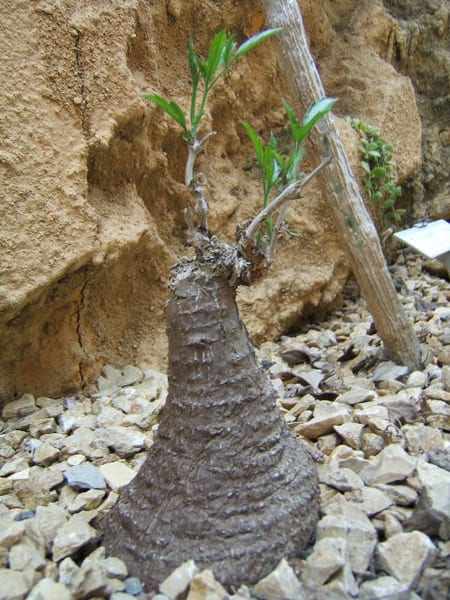
 © User:Qwertzy2 / CC BY-SA 3.0
象腳葡萄
Cyphostemma elephantopus is a caudex-forming succulent from the Vitaceae family, native to southwestern Madagascar. Its defining feature is a stout, swollen brown caudex that resembles an elephant's foot, giving the plant a sculptural, almost architectural presence. Each summer, vining stems emerge from the caudex and unfurl trifoliate, fleshy leaves, while the plant sheds its foliage during dormancy to reveal the caudex's striking form. Growth is slow and steady under cultivation, and the plant's character deepens with age. Considered suited to intermediate growers, it rewards patience with a uniquely rewarding caudiciform specimen.
View 象腳葡萄 encyclopedia →成交手續費 0%!2026年9月30日前註冊,前 2 株免佣金!
生產者 招募中!
在 GrowerDirect 上架,直接銷售給全國的客戶吧!
GrowerDirect承諾的 6 項透明性重點
塊根植物上架時生產者會明確標示以下資訊。確保品種、產地、光照需求、栽培難度的透明度。
- 品種標示
- 實物照片
- 色澤
- 產地標示
- 光照需求
- 難度標示
查看全部146個品種
塊根植物分類正在招募認證生產者
生產者正在陸續註冊,即將上架。設定上架通知,不錯過新商品。
「接收上架通知」需免費註冊會員即可設定。當有符合您儲存條件的新商品上架時,我們會以郵件和站內通知提醒您。
已註冊的生產者(搶先看)
象腳葡萄的基本資料
- 栽培難度
- 適合中級者
- 壽命
- 長壽命的多年生植物(壽命資料很少)
- 體型
- 藤蔓在栽培條件下約2公尺(野生地可達20公尺以上)
- 澆水
- 在生長期定期給予
- 日照和放置位置
- 在日光充足至明亮半蔭條件下栽培。理想情況是葉片接受日光照射,塊莖處於遮陰狀態。避免盛夏過強的直射光。
- 澆水
- 夏季充分澆水,冬季保持乾燥。無葉期過度澆水易導致腐爛,應避免。
- 溫度和越冬
- 冬季保持溫暖,平均12℃以上較為安全。短期內可耐受更低溫度,但避免霜凍,在乾燥狀態下保持2℃以上。
- 介質和換盆
- 使用混合大量輕石、排水良好且稍微肥沃的介質。每2年換盆一次,使用排水孔較大的花盆。
- 修剪和整形
- 換盆後植株穩定後,修剪藤蔓可增加分枝數,易於保持塊莖的形態。
- 病蟲害和注意事項
- 華盛頓條約附錄II列入物種。實生株能形成整齊的塊莖,而扦插株難以形成塊莖,因此實生株具有選擇價值。
關於象腳葡萄
Cyphostemma elephantopus is a Madagascar-native caudiciform plant with a striking elephant-foot-shaped brown caudex, vining summer growth, and trifoliate leaves — a rewarding choice for intermediate growers.
開始照料象腳葡萄前需要了解的7件事
1Light and airflow
During the growing season, keep the plant in a bright, well-ventilated spot. It tolerates strong direct sun fairly well, but shading it from harsh afternoon sun in midsummer helps prevent leaf scorch. When outdoor placement isn't possible, a bright windowsill with good airflow works well.
2When to water
Water thoroughly when the soil surface dries during the growing season, allowing the caudex to store moisture. Once the plant enters dormancy and drops its leaves, cut back watering to near-dry conditions. This clear wet-dry cycle is key to keeping the caudex healthy.
3Well-draining soil
A well-draining mix — either a dedicated caudiciform blend or one based on akadama and pumice — suits this plant well. Excess moisture retention can lead to root rot, so avoid soil that holds standing water in the pot. Keeping organic matter to a minimum also supports healthy roots.
4Best time to repot
Repot at the start of the growing season, just as new growth begins to stir. Loosen the root ball gently, trim away any damaged roots, and move up to a slightly larger pot. This plant is considered suited to intermediate growers partly because judging the right timing for repotting and watering takes some experience.
5Leaf drop in dormancy
As the plant enters dormancy, it sheds its leaves and stands as a bare caudex — this is a normal, healthy cycle rather than a sign of decline. There's no need to worry; simply hold back on watering and let it rest. The key is to wait patiently until new growth resumes after dormancy.
6Choosing by the caudex
When choosing a plant, look for a caudex that feels firm and well-rounded, without damage or excessive wrinkling. Since this is a long-lived perennial, the caudex's condition at the time of purchase can influence how easily it grows afterward. It's also worth checking the condition of the vines and leaves.
7How the vines grow
In the wild this species can climb more than 20 meters, but under cultivation the vines typically stay around 2 meters, making it manageable in a pot. Training the vines onto a stake or trellis helps keep the shape tidy, and overly long growth can be trimmed back as desired.
象腳葡萄的常見問題
- Q.Can beginners grow this plant?
- A.Cyphostemma elephantopus is generally considered suited to intermediate growers. Because watering and dormancy management require some judgment, it tends to be easier to succeed with once you already have some experience growing caudiciform plants.
- Q.The leaves dropped in winter — is it dying?
- A.Leaf drop during dormancy is a normal part of this plant's cycle, not a sign that it's dying. Simply reduce watering during this period and let the bare caudex rest quietly until new growth resumes.
- Q.How large does it grow?
- A.Under cultivation, the vines typically extend to around 2 meters. In its native habitat it can climb over 20 meters, but as a potted plant it stays far more compact and manageable with the help of a stake or trellis.
- Q.When is the best time to repot?
- A.The best time to repot is at the start of the growing season, just as new growth begins. Trim any damaged roots carefully and replant in well-draining soil in a slightly larger pot.
- Q.How long does this plant live?
- A.It's considered a long-lived perennial, though detailed data on its lifespan is limited. With consistent basic care around watering and dormancy, it can be enjoyed as a slow-growing specimen over many years.
象腳葡萄栽培的實用工具
在圖鑑中詳細了解象腳葡萄
查看象腳葡萄的圖鑑條目 →
收錄栽培難度、尺寸、原產地、日照等基礎資料。