來源:Wikimedia Commons
龍舌蘭(尼贊登西斯)
適合中級Agave nizandensis
超小型龍舌蘭,能放在掌心的尺寸。細葉密集呈放射狀展開,品種精緻。
關於我們
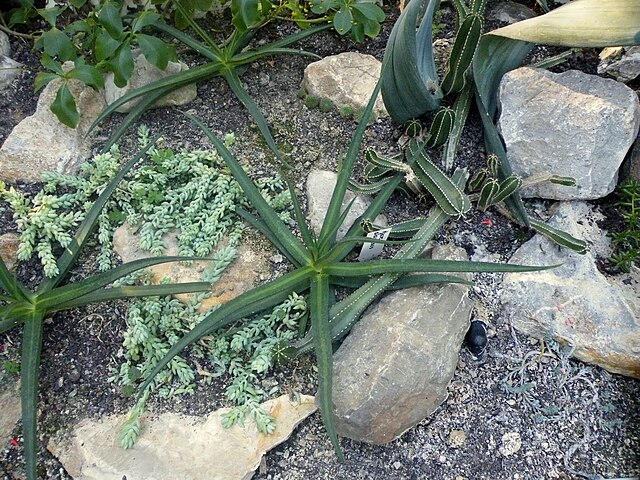
龍舌蘭(尼贊登西斯)原生於墨西哥瓦哈卡州南部、特瓦特佩克地峽附近尼贊達周邊極為有限的地區。成體直徑僅約5~15厘米,是龍舌蘭屬中最小級別的品種之一。細長柔軟的葉片多數密生呈放射狀展開,葉緣帶有微細齒狀刺。因其極小尺寸和精緻姿態,野生個體數量稀少,存在保育方面的顧慮。成長速度極為緩慢,可長期在小盆中欣賞。喜歡直射日光,但柔軟葉片需注意強光引起的葉燒。澆水應保持低濕,使用排水性高的用土。冬季幾乎停止澆水。即使在室內窗邊或微景觀環境中也能生長,因此對空間有限的收藏家亦很受歡迎。非常稀有,通過正規管道取得並不容易,如見到應立即考慮購入的珍品。
龍舌蘭(尼贊登西斯)的壽命
龍舌蘭(尼贊登西斯)的壽命為多年生(10~20年)。
龍舌蘭(尼贊登西斯)的體型
龍舌蘭(尼贊登西斯)的成體體型為5~15厘米。
龍舌蘭(尼贊登西斯)的適溫與濕度
耐寒性約5℃,需避免霜凍。
基本資訊
產地
瓦哈卡州(尼贊達周邊),墨西哥
壽命
多年生(10~20年)
體型
5~15厘米
溫度
5〜40℃
澆水與施肥
幾乎無需
栽培要點
光照與擺放
喜歡直射光,但葉片柔軟、強光下容易灼傷,盛夏應放在明亮的半陰處。室內窗邊也能栽培。
澆水
澆水要節制,土壤乾後再澆。不耐過濕,注意不要讓盆內長期潮濕。
溫度與越冬
耐寒性約為5℃。冬季避免霜害,放在不低於5℃的地方管理。
用土與換盆
使用排水性高的介質。成株也只有5〜15cm且生長緩慢,可以長期用小盆栽培。
休眠期管理
冬季幾乎斷水管理。低溫期澆水容易傷根,保持乾燥等待春天。
龍舌蘭(尼贊登西斯)常見問題
Q龍舌蘭(尼贊登西斯)的栽培難度是多少?
適合中級。中級者用品種。需要一定的栽培經驗和環境管理知識。需要特別注意溫度和濕度的管理。
Q龍舌蘭(尼贊登西斯)的壽命是多長?
龍舌蘭(尼贊登西斯)的平均壽命為多年生(10~20年)。透過適切的栽培環境和養分管理,可以長期健康成長。
Q龍舌蘭(尼贊登西斯)能長多大?
龍舌蘭(尼贊登西斯)的成體大小為5~15厘米。會因栽培環境和個體差異有所變化。
Q龍舌蘭(尼贊登西斯)如何澆水施肥?
龍舌蘭(尼贊登西斯)的澆水與施肥為:幾乎無需。請注意適當的頻率和用量。
Q龍舌蘭(尼贊登西斯)的一般價格是多少?
龍舌蘭(尼贊登西斯)的價格因品種・特徵・大小・系統而異。請查看GrowerDirect的市價頁面以取得最新價格資訊。
最後更新: 2026年8月31日
參考與來源
編輯與資料核驗: GrowerDirect編輯部
本頁的分類、規制和栽培數據基於以下主要信息數據庫進行創建和驗證。
分類與學名依據
法規與保育狀況
來源: CITES公約附錄(CITES附錄II保護物種名單) / 環境省特定外來生物名單(Agave不在指定範圍確認) / IUCN受威脅物種紅色名單
法規可能修訂,請以各主管機關的最新第一手資訊為準。
相關物種
相關文章
龍舌蘭的葉燒防止與光管理|室內育成到戶外環境的過渡策略
在完全防止龍舌蘭葉燒的同時,實現室內到戶外順利過渡的光管理策略。講述階段性光量調整、季節性配置變更、紫外線防護等實踐性手法。
種植白色斑入龍舌蘭的訣竅
種植白色斑入龍舌蘭的訣竅
龍舌蘭歐特羅伊的完整栽培指南|打造美麗大型蓮座的訣竅
解析原產於墨西哥瓦哈卡州的大型龍舌蘭——龍舌蘭歐特羅伊的特徵與栽培方法。從擺放位置、培養土、澆水、越冬要點,為準備開始栽培的人實踐性地整理了相關資訊。
龍舌蘭與龍舌蘭酒的深厚淵源|龍舌蘭蒸餾酒的秘密
龍舌蘭酒的原料在龍舌蘭屬中僅為龍舌蘭(Agave tequilana)。介紹龍舌蘭的生態、哈利斯科州的產地,以及與觀賞龍舌蘭的差異之讀物專欄。