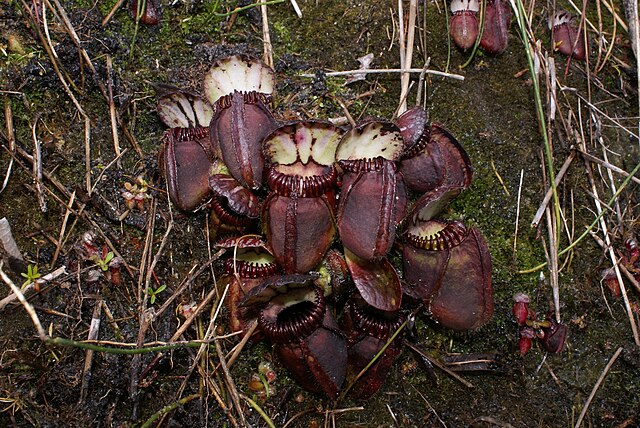
 © Holger Hennern / CC BY-SA 3.0
Cephalotus
Cephalotus follicularis is a rare carnivorous plant endemic to the southwestern wetlands of Australia — the sole species in its family — prized for its distinctive small pitcher-shaped traps. While relatively hardy for an insectivorous plant, it requires careful attention to temperature and humidity. Its unique appearance and collector appeal make it a favorite among carnivorous plant enthusiasts.
View Cephalotus encyclopedia →0% commission on your first sales!Register by September 30, 2026 and your first 2 plants are commission-free!
Grower Wanted!
List your plants on GrowerDirect and sell directly to customers nationwide!
6 Transparency Commitments from GrowerDirect
Every Grower listing discloses variety, origin, light requirements, and difficulty level for Carnivorous Plants. Complete transparency, guaranteed.
- Variety Disclosed
- Real Photos
- Color Information
- Origin Disclosed
- Light Requirements
- Difficulty Level
Light Requirements
Difficulty Level
No listings match your filters
Adjust your filters, or get notified when new listings arrive.
Getting alerts is free with a member account. When new listings match your saved search, we'll notify you by email and in-app.
Browse other categories
Are you growing carnivorous plants?
Register as a grower and connect with buyers directly.
Apply as a growerCephalotus key facts
- Growing Difficulty
- Advanced
- Lifespan
- 10+ years
- Size
- 5-15cm
- Temperature
- 10〜25℃
- Watering
- Insects (auto-capture)
- Uniqueness
- Monotypic genus
- Temperature
- 10-25°C
- Humidity
- High humidity important
- Culture
- Somewhat difficult
About Cephalotus
Cephalotus follicularis is the world's sole member of its own family, found only in the coastal wetlands of a small region in southwestern Australia. Its name derives from the Greek for "head-bearing," a nod to its charming miniature pitcher traps. The pitchers feature a lid, a rim lined with sharp ribbed teeth, and a smooth inner wall bathed in digestive fluid—an elegant mechanism that traps and digests insects with remarkable efficiency. Uniquely, the plant produces both flat photosynthetic leaves and pitchers simultaneously. In the wild it grows in nutrient-poor sandy bogs in mild to cool conditions, making heat sensitivity its most important cultivation consideration. Growth is exceptionally slow, but in a well-suited environment the plant gradually matures into an impressive specimen, with natural variation in pitcher size and coloration fueling collector enthusiasm. Its rarity, distinctive form, and status as a true monotypic curiosity make it a treasured plant for beginners and seasoned enthusiasts alike.
7 things to know before growing Cephalotus
1Heat Sensitivity
High summer temperatures are the biggest challenge for Cephalotus — prolonged heat above 30°C can weaken the plant significantly. From midsummer through September, prioritize shade and airflow; growing indoors under plant lights in a cool spot is also an effective strategy.
2Use Carnivore-Specific Mix
Standard potting mix or any soil containing fertilizer will damage the roots — avoid it entirely. The standard mix is low-nutrient, slightly acidic: peat moss combined with perlite or coarse sand. New Zealand sphagnum peat is particularly well regarded, and purpose-made carnivorous plant mixes are also available.
3Water Quality Matters
Mineral buildup from tap water can gradually damage the roots, so use rainwater, distilled water, or RO water instead. The tray method — keeping the pot in a shallow dish of water — is standard practice, though in winter it is safer to let the medium dry out slightly between waterings.
4Let the Traps Work Naturally
Forcing insects into the traps or handling them unnecessarily stresses the plant. Placed near a window or outdoors, the pitchers will catch small insects naturally — supplemental feeding is rarely needed. Fertilizer should not be applied as a general rule.
5Bright Indirect Light
Prolonged direct sunlight can cause leaf scorch, so bright indirect light — filtered through a sheer curtain or a bright shaded spot — is ideal. Insufficient light causes pale pitchers and leggy growth. A quality LED grow light works well as an alternative.
6Winter Dormancy Helps
In its native habitat, Cephalotus experiences a cool winter period of roughly 5–10°C. Providing similar cool conditions — keeping it frost-free but cool — can strengthen the plant and encourage vigorous growth in spring. Year-round heating is possible but may gradually reduce the plant's vigor.
7Availability and Cost
Cephalotus is not widely available in Japan and is mainly found at specialist carnivorous plant shops or online. Small plants typically range from 2,000 to 5,000 yen, while mature specimens or named clones can easily exceed 10,000 yen. Because it is a rare species with variable pricing, buying from a reputable seller is important.
Frequently asked questions about Cephalotus
- Q.Can beginners grow Cephalotus successfully?
- A.Yes, with careful attention to shading, soft water, and tray watering, beginners can grow Cephalotus successfully. Growth is slow, so patience is key, but a stable environment will yield steady progress.
- Q.Why aren't my pitchers developing?
- A.Insufficient humidity or light is usually the cause. Ensuring 50–80% humidity and providing bright indirect light often resolves the issue. After adjusting conditions, allow several weeks to observe improvement.
- Q.How do I help my plant survive summer?
- A.Keeping temperatures below 30°C is the top priority—move the plant to an air-conditioned room or a naturally cool spot. Block direct sun and ensure consistent moisture throughout the hot season.
- Q.Is tap water safe to use?
- A.Tap water is not recommended because the calcium, magnesium, and other minerals it contains can damage the roots over time. Use purified water, rainwater, or RO (reverse osmosis) water instead.
- Q.Does Cephalotus need special winter care?
- A.Cephalotus can tolerate temperatures down to around 5°C, but hard frost is dangerous. Overwintering indoors near a bright window is ideal. Slowed growth in cool weather is normal dormancy behavior.
Handy Growing Tools for Cephalotus
Learn more about Cephalotus in the encyclopedia
View Cephalotus encyclopedia entry →
Care difficulty, size, origin and light needs — all basics covered.
Cephalotus related articles
Complete Guide to Growing Cephalotus | Cultivating Beautiful Pitcher Traps
Explains the basics of growing Cephalotus (fringed water violet), temperature and humidity management, soil and watering, and tips for cultivating large pitchers.
The World of Rare Carnivorous Plants | The Charm of Cephalotus, Heliamphora, and Byblis
An introduction to rare carnivorous plants popular among collectors. This article provides detailed explanations of the characteristics, acquisition methods, and growing environments of Australian Cephalotus, the highland species Heliamphora from Tepui, and the iridescent Byblis.
How to Create a Carnivorous Plant Terrarium | Tips for Humidity Management and Layout
Learn how to grow carnivorous plants in a terrarium. We explain how to choose between closed and open types, soil mixes of sphagnum moss and kanuma soil, LED lighting selection, and humidity management tips suited for Nepenthes and Cephalotus.
Carnivorous Plants Guide | Popular Species Characteristics and Cultivation Methods
A carefully curated introduction to popular carnivorous plant species including Venus Flytraps, Nepenthes, Sarracenia, Drosera, and Cephalotus. Detailed explanations of each species' insect-trapping mechanisms, cultivation difficulty, and required growing conditions.
More in this category
Can't find the plant you're looking for?
Post your wishes for free and growers with matching plants will contact you with introductions.