Complete Guide to Growing Cephalotus | Cultivating Beautiful Pitcher Traps
Explains the basics of growing Cephalotus (Albany pitcher plant), temperature and humidity management, soil and watering, and tips for cultivating large pitchers.
Key Takeaways
Explains the basics of growing Cephalotus (Albany pitcher plant), temperature and humidity management, soil and watering, and tips for cultivating large pitchers.
Related Species
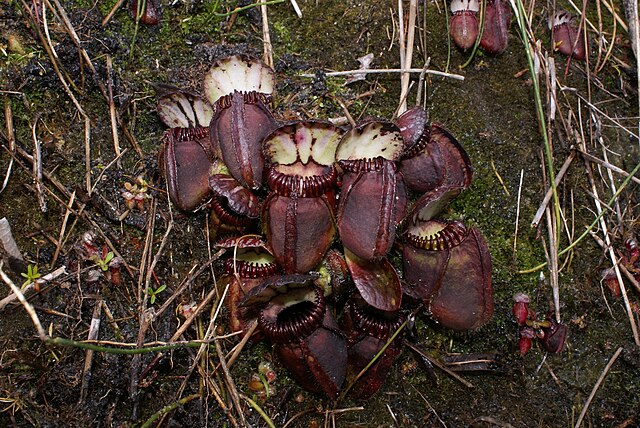
Cephalotus follicularis (common name: Albany pitcher plant) is a carnivorous plant endemic to southwestern Australia—the sole member of its genus. Its small pitcher-shaped prey-capture leaves are as precisely engineered as intricate works of art, making it especially popular among carnivorous plant enthusiasts. Cultivation is said to be somewhat challenging, but with key techniques in place, it thrives well in Japanese conditions.
Characteristics and Appeal of Cephalotus
Cephalotus employs a pitfall-trap (pitcher) mechanism to capture prey. Nectar glands line the rim of its pitcher-shaped traps; lured insects slide down the smooth inner wall and tumble to the bottom, where digestive fluid breaks them down. The pitcher lid features a translucent window-like structure, cleverly designed to prevent insects from finding an escape route.
Growth is extremely slow—it can take years before the plant produces large pitcher leaves. However, this makes watching the pitchers grow larger year after year a rewarding experience. Under good conditions, pitchers grow beyond 5 cm and display striking red coloration.
In addition to pitcher leaves, Cephalotus also produces ordinary leaves (flat leaves) that carry out photosynthesis. The ratio of pitcher leaves to flat leaves varies with season and environment, with more pitchers tending to emerge during periods of strong sunlight and high temperatures.
Temperature and Light Management
Cephalotus is a temperate carnivorous plant sensitive to extreme heat and cold alike. The ideal temperature range is 15–28°C, and it is critical to avoid summer heat above 35°C and winter frost below 0°C.
Japanese summers are the most challenging season for Cephalotus. When temperatures exceed 30°C for extended periods, the plant weakens and may eventually die. During summer, keep it in a cool location—a north-facing windowsill or air-conditioned room—avoiding direct sunlight. While preventing the air-conditioner's draft from blowing directly on the plant, maintaining around 25°C is ideal.
Winter survival requires maintaining at least 5°C. The plant enters light dormancy, so growth slows, but it does not cease activity entirely. Freezing is fatal, so bring the plant indoors early if grown outdoors.
Light preferences are for bright indirect light. Direct sun causes leaf scorch, so light filtered through sheer curtains is appropriate. Sufficient light promotes red coloration of the pitchers, enhancing their ornamental value. LED grow lights also support healthy growth.
Soil and Watering
Cephalotus soil must balance drainage and water retention. A recommended mix is small-grained Kanuma soil (4 parts) : peat moss (2 parts) : perlite (2 parts) : chopped sphagnum moss (2 parts). General peat-moss-based carnivorous plant soil tends toward excess moisture, causing root rot.
Watering is more conservative than with other carnivorous plants. Sitting-water cultivation is possible, but keep water depth to 1 cm or less and prevent the soil surface from becoming sodden. In summer, standing water warms up and damages roots, so either change water frequently or switch from sitting water to surface watering.
Water when the soil surface is slightly dry. Constantly wet soil harms Cephalotus roots. Conversely, allowing it to dry completely is also wrong—maintain a state of "slight moisture." Use rainwater, distilled water, or filtered water for safety.
Humidity and Airflow
Cephalotus prefers high humidity (60–80%), but simultaneous airflow is equally essential. In a sealed enclosure, humidity may be maintained, but stagnant air promotes mold and root rot.
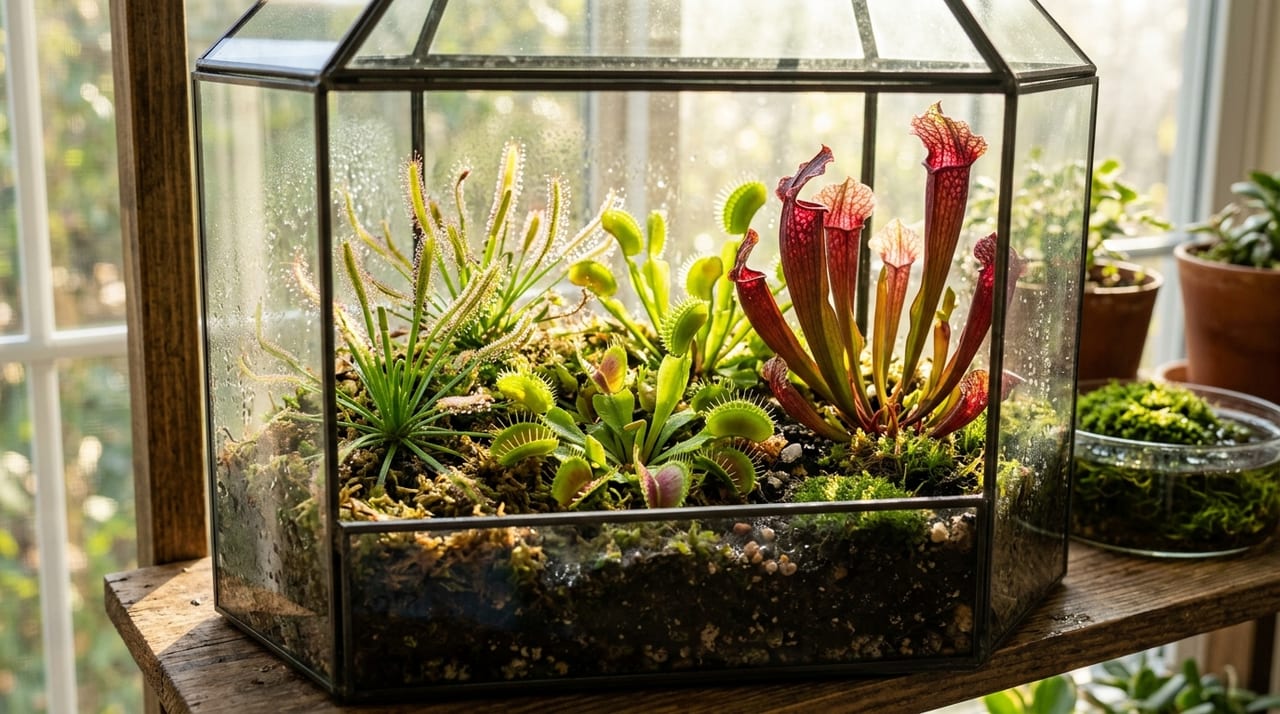
When managing in terrariums or Wardian cases, open the lid several times daily for ventilation, or install a small fan to circulate air. Avoid prolonged cultivation in complete closure.
Acclimation is also important. If a newly purchased Cephalotus has been grown in high-humidity conditions, moving it abruptly to low-humidity air causes wilting. Gradually increase the time you keep the lid open over 2–4 weeks to acclimate it to indoor humidity.
Conversely, acclimating it from the start to typical room humidity (40–60%) makes subsequent care far easier. Cephalotus acclimated to low humidity becomes robust and easy to grow, and special humidifying equipment becomes unnecessary.
Propagation and Long-term Care
Cephalotus can be propagated in several ways. The most reliable is division: carefully separate rooted plantlets that emerge around mature plants and pot them individually. Success is highest when plantlets have developed 2–3 pitcher leaves.
Leaf propagation is also possible. Remove ordinary (not pitcher) leaves cleanly at the base and lay them on moistened sphagnum moss. Small shoots emerge after several weeks to months, but growth is extremely slow, and reaching independent plantlet status can take over a year.
Root cuttings offer another method. Cut thick roots into 2–3 cm segments and half-bury them in moist sphagnum moss; new shoots regenerate from the roots. This is useful for utilizing spare roots during repotting.
Repot every 1–2 years in spring (March–April). Cephalotus dislikes root disturbance, so work gently and avoid breaking up the root system. After repotting, keeping the plant in high humidity for 1–2 weeks speeds recovery.
Evolutionary Background of the Prey-Capture Mechanism
Carnivorous plants evolved to capture insects as an adaptation to nutrient-poor environments. Most carnivorous plants naturally inhabit peatlands and sandy areas extremely low in nitrogen and phosphorus. While ordinary plants absorb nutrients through roots, carnivorous plants capture and digest insects to supplement scarce nitrogen and phosphorus.
Notably, carnivorous plants still photosynthesize normally. Insect capture is an "additional means" of nutrition, not a replacement for photosynthesis as the primary energy source. For this reason, when cultivating carnivorous plants, ensuring sufficient light is more important than relying on insect feeding.
Cultivation Tips by Prey-Capture Type
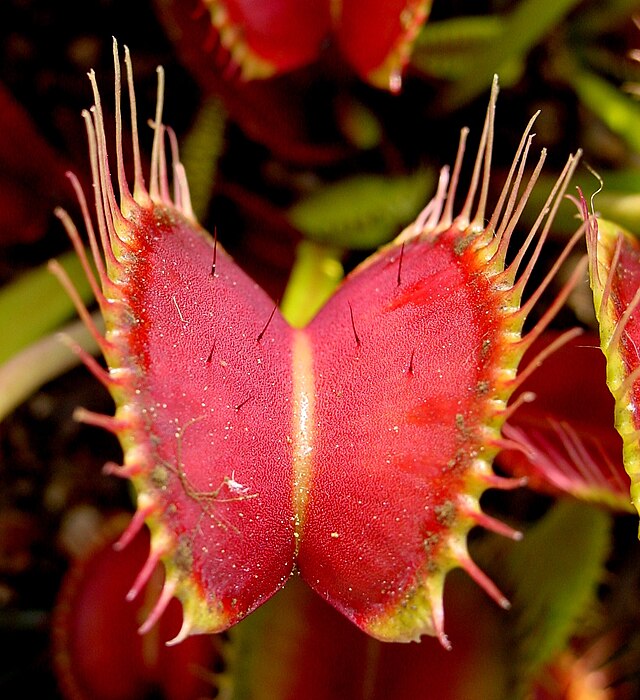
Snap-trap (Venus flytrap): Pitcher leaves have a limited number of open-close cycles, so avoid stimulating them by hand. Each leaf loses function after roughly 3–5 closures.
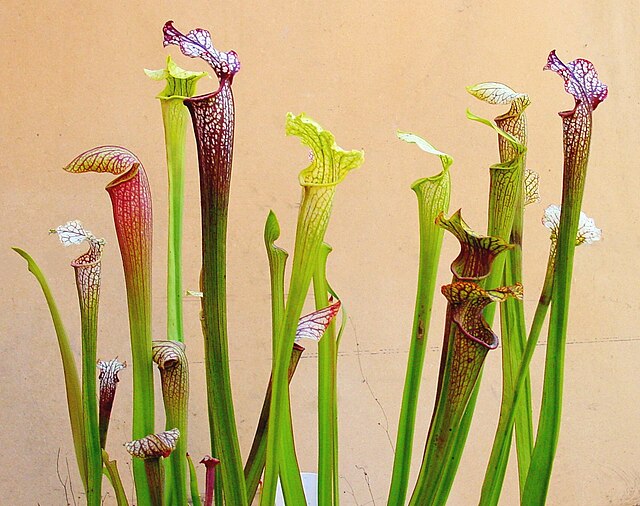
Pitfall-trap (Sarracenia, Nepenthes): Water accumulates inside the pitcher as part of the mechanism, so excess rain can dilute the digestive fluid. For outdoor cultivation, a sheltered location under an eave is best.
Adhesive-trap (sundew): Secreting mucus requires ample sunlight and humidity. Insufficient light reduces mucus production, weakening prey capture.
Suction-trap (waterwheel plant, bladderwort): Captures microscopic organisms underwater. Water quality management is key; water close to mineral-free distilled water is appropriate.
Annual Care Calendar for Cephalotus
| Period | Temperature Target | Watering | Placement & Work |
|---|---|---|---|
| Spring (Mar–May) | Daytime 15–25°C | Resume sitting water (0.5–1 cm depth) | Growth begins. Move to bright indirect light. Ideal time for repotting and division |
| Summer (Jun–Aug) | Watch for 30°C+ | Shallow sitting water to prevent stagnation | Most challenging season. 30–50% shade + ventilation; air-conditioned rooms are safest |
| Autumn (Sep–Nov) | Daytime 15–25°C | Sitting water as in spring | Vigorous growth resumes. Pitchers grow larger more easily this season |
| Winter (Dec–Feb) | 5–10°C dormancy | Stop sitting water; soil slightly dries | Cool temperature promotes dormancy, improving spring vigor |
Once summer heat is overcome, Cephalotus peaks in growth twice yearly—spring and autumn.
Popular Clones and Cultivars
Although Cephalotus is a monotypic species, multiple selected clones with variation in pitcher size and color circulate in cultivation.
- Type (standard individual): The most widely available base form. Strong light and cool temperatures cause the pitcher rim and lid to flush red.
- Hummer's Giant: A large-growing selected clone with larger pitchers. Popular with growers seeking visual impact.
- Eden Black: A clone that develops dark purple coloration across the pitcher under strong light and cool conditions. Offers color-change appeal.
- Vigorous Clumping: A vigorous-growing line that readily produces plantlets and clusters easily; suited to propagation by division.
Different clones display distinct character under identical care, offering the pleasure of displaying multiple individuals side by side.
Get Cephalotus from GrowerDirect
Cephalotus has limited distribution and is rarely found in ordinary garden centers. GrowerDirect connects you directly to specialist growers who cultivate Cephalotus expertly, offering healthy, well-rooted plants. You can also consult growers for advice tailored to your growing environment, boosting your success rate with this challenging carnivorous plant.