Complete Care Guide for Drosera capensis | Representative Beginner-Friendly Carnivorous Plant
Explanation of how to care for Drosera capensis (Cape sundew), ideal for introducing carnivorous plants. We detail its hardy nature requiring no dormancy period, along with watering, soil, propagation methods, and its vigorous self-seeding habit.
Key Takeaways
Explanation of how to care for Drosera capensis (Cape sundew), ideal for introducing carnivorous plants. We detail its hardy nature requiring no dormancy period, along with watering, soil, propagation methods, and its vigorous self-seeding habit.
Related Species
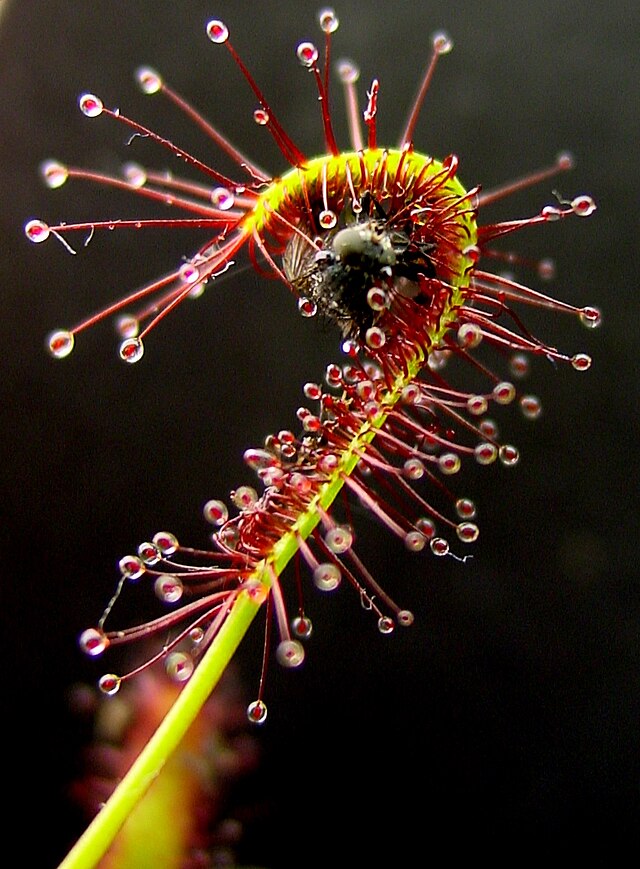
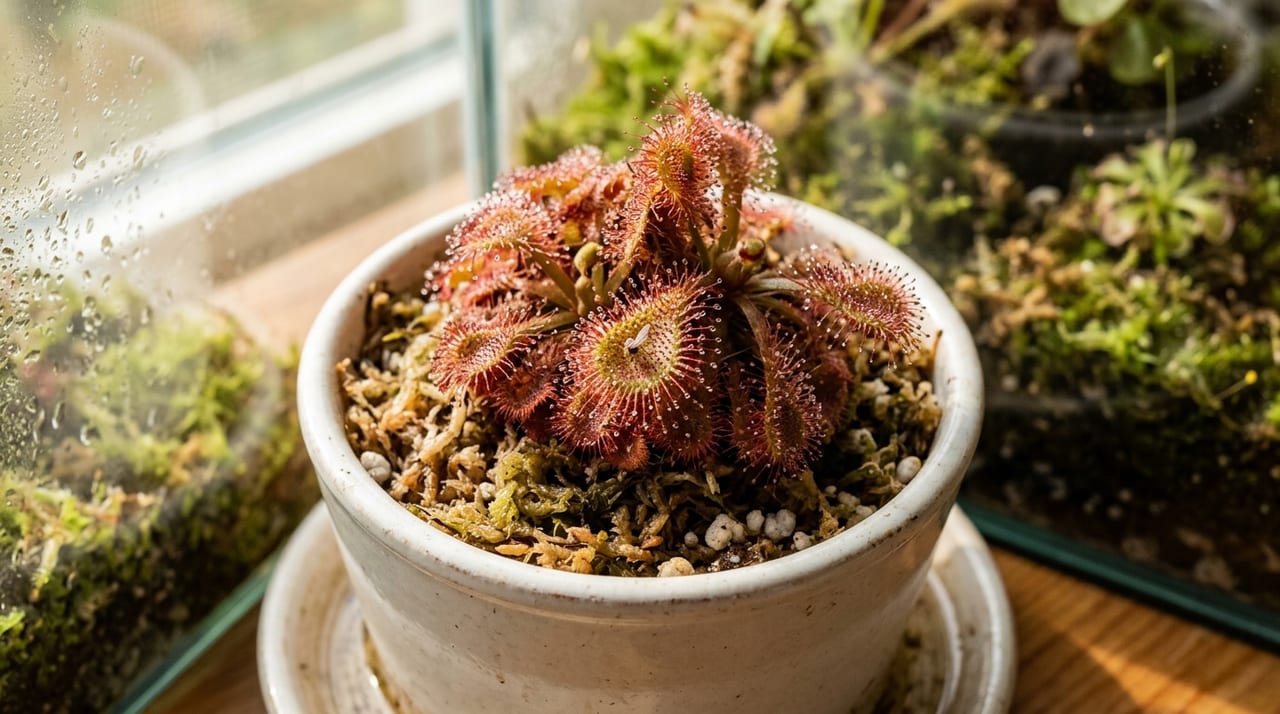
When first becoming interested in carnivorous plants, Drosera capensis is often the species recommended as a first plant. A member of the sundew family native to South Africa, it secretes adhesive mucilage from the glandular hairs that densely cover the leaf margins, trapping and feeding on small insects. It is hardy with a wide range of tolerable growing conditions, and it counters the perception that carnivorous plants are inherently difficult to cultivate.
Differences from Temperate Drosera and No Dormancy Requirement
The Drosera genus includes temperate species that reduce their above-ground growth and enter dormancy in winter (such as the Japanese native sundew), and tropical and subtropical species that grow year-round. Drosera capensis falls into the latter category, and a major reason it is considered beginner-friendly is that it requires no dormancy management and can be cared for year-round with consistent methods.
| Item | Temperate species (such as sundew) | Drosera capensis |
|---|---|---|
| Winter state | Reduces above-ground growth and enters dormancy | Does not enter dormancy and continues growing year-round |
| Winter care | Requires cold-temperature management to induce dormancy, such as exposure to outdoor cold | Can continue growing without withholding water if kept in a bright indoor location |
It does not require the cold-temperature management for dormancy needed for temperate species, making cultivation significantly more accessible.
Choosing Soil and Pots
Select soil and pots according to the following guidelines.
- Soil: Use sphagnum moss alone, or a mixture of peat moss and perlite in roughly a 7:3 ratio (avoid commercial potting soil or fertilizer-amended soil, as these can damage roots)
- Pots: A plastic pot with a tray is sufficient; special drainage is not necessary. In fact, since this plant is sensitive to drying, slightly poor drainage is easier to manage
- Soil replacement: After several years, soil can compact and drainage can deteriorate, so refreshing the soil with new medium at the time of division helps maintain root health
Watering and Passive Watering (Tray Watering) are Essential
Most carnivorous plants, including Drosera capensis, are best grown using passive watering (keeping the pot in a tray of water). Keeping the soil consistently moist prevents the glandular hairs that secrete the adhesive mucilage from drying out and losing function. The water used should ideally be rainwater, distilled water, or reverse osmosis water, as minerals and calcium in tap water can accumulate in the soil and damage roots. In summer, evaporation is rapid, so monitor the water tray to prevent it from drying out; in winter, evaporation slows, so adjust as needed to avoid excessive wetness. If only tap water is available, allowing it to sit to let chlorine dissipate or taking other water quality measures within your means will help stabilize the plant's condition.
Light and Leaf Color
With sufficient light, the glandular hairs on the leaves develop a deep red color, indicating a healthy, high-performing plant. With insufficient light, leaves become pale greenish and leggy, and mucilage production decreases. An ideal setup is a bright windowsill with sheer curtain filtering, or 10–12 hours of grow light daily. If growing outdoors, avoid direct sun during peak summer, aiming for partial shade instead. Leaf color serves as a simple indicator of light levels; if the red coloring fades, it signals that you should reconsider the plant's location.
Vigorous Self-Seeding and Reproduction
One of the notable characteristics of Drosera capensis is its extremely vigorous reproductive capacity. It readily self-pollinates, and seeds that fall after flowering spontaneously germinate in surrounding pots. While it can also be propagated by division or leaf cuttings, new plants often appear without deliberate effort. Thanks to this trait, beginners can experience the joy of propagation early in the learning process, which is another reason it is well-suited for novices. If plants proliferate excessively, thin them as they grow; excess plants can be divided into separate pots to expand your growing space.
A Gateway to Other Carnivorous Plants Like Sarracenia
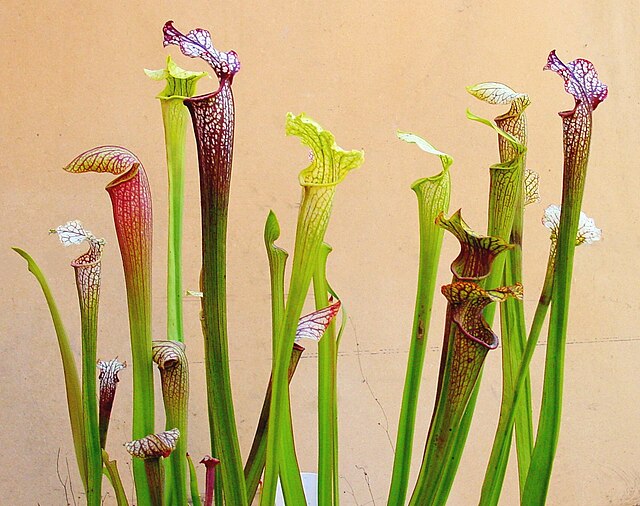
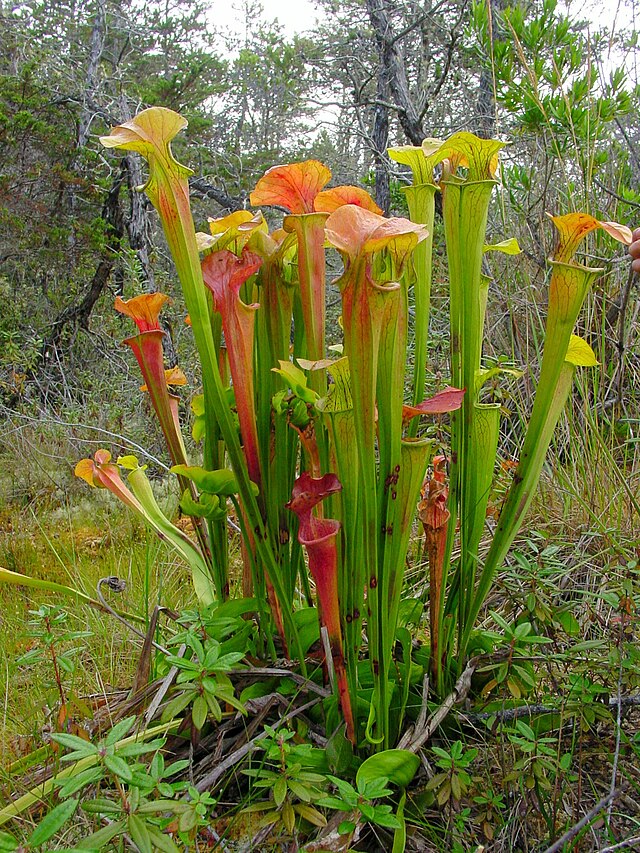
Familiarity with passive watering and soil handling using Drosera capensis makes it easier to transition to growing other carnivorous plants, such as North American pitcher plants like Sarracenia oreophila or Nepenthes species. The opportunity to observe the fascinating ecology of Drosera's adhesive-based trapping mechanism up close makes it an engaging species to grow as you enter the world of carnivorous plants. As you gain experience, you can gradually expand your collection by attempting more challenging alpine or temperate species.
The Pleasure of Observing How Leaves Trap Insects
Drosera capensis is one of the few carnivorous plants where you can observe with the naked eye how the glandular hairs slowly curve inward and the sticky mucilage wraps around prey when an insect touches the leaf. Since feeding takes several hours to half a day to complete, there is the fascination of slowly watching the process unfold. In an indoor environment with few insects, natural prey capture may not occur, but the plant thrives on photosynthesis alone, so there is no need to worry excessively about feeding. If you do observe a small insect accidentally touching and being captured by the leaves, it is a sign that you have provided a sufficiently favorable growing environment. This ease of observation is one reason carnivorous plants are valued as an educational subject. It is also easy to grow as a first carnivorous plant with children and is often chosen as a way to learn about natural processes in the home.