Sarracenia Care Guide | North American Carnivorous Plants with Unique Tubular Traps
Sarracenia are carnivorous plants that trap insects using tubular leaves (pitfall traps). This guide explains how to cultivate them healthily, focusing on strong outdoor light management, water tray watering, and winter dormancy.
Key Takeaways
Sarracenia are carnivorous plants that trap insects using tubular leaves (pitfall traps). This guide explains how to cultivate them healthily, focusing on strong outdoor light management, water tray watering, and winter dormancy.
Related Species
What is Sarracenia? The Appeal of North America's Tubular Carnivorous Plants
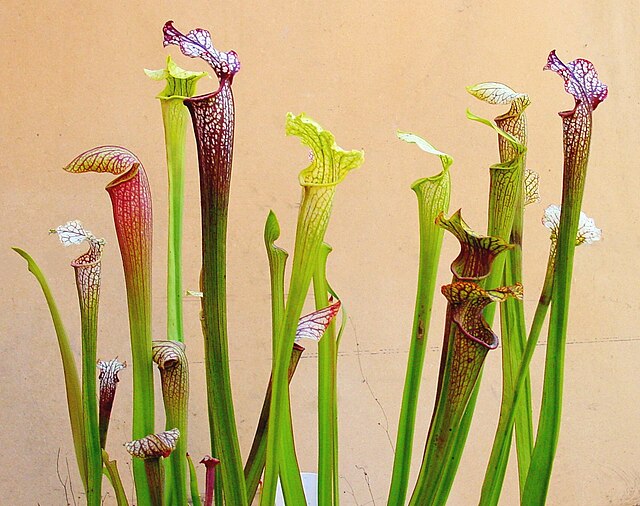
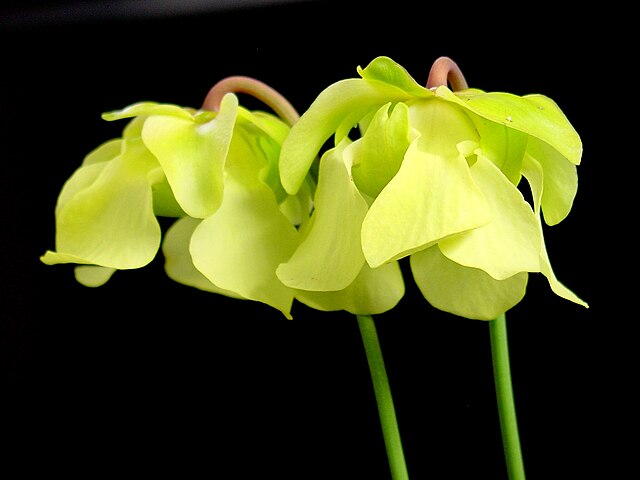
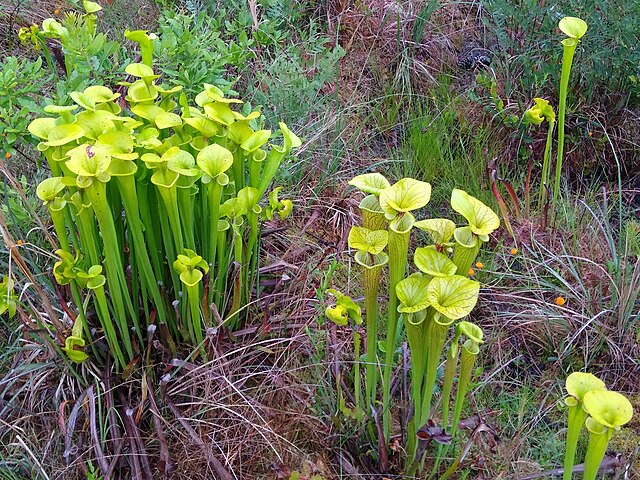
Sarracenia is a genus of carnivorous plants native to wetlands in the eastern and southeastern United States. Its most distinctive feature is the "pitfall trap"—tubular leaves (pitchers) that accumulate digestive fluid inside to break down and absorb trapped insects. Pitcher color and patterns vary by species, and the intricate cross-striping of red, white, yellow, and green is one reason they are popular as ornamental plants.
Compared to Venus flytraps and sundews, Sarracenia forms larger plants, and some mature specimens can produce pitchers exceeding 50–80 cm. The differences from other pitcher-type carnivorous plants such as Nepenthes are detailed in our Complete Pitcher Plant Care Guide (Nepenthes & Sarracenia). They thrive outdoors with strong light and are relatively easy to grow in Japan's climate, making them especially popular with growers who are ready to step beyond carnivorous plant basics.
Major Species and Variety Characteristics
Sarracenia comprises 8–11 recognized species, each with distinct forms and cold tolerance.
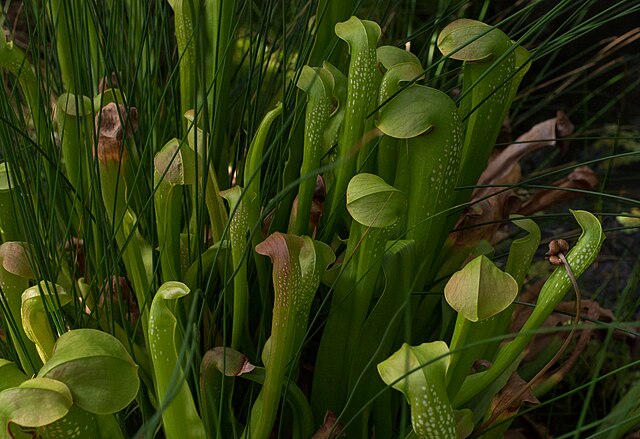
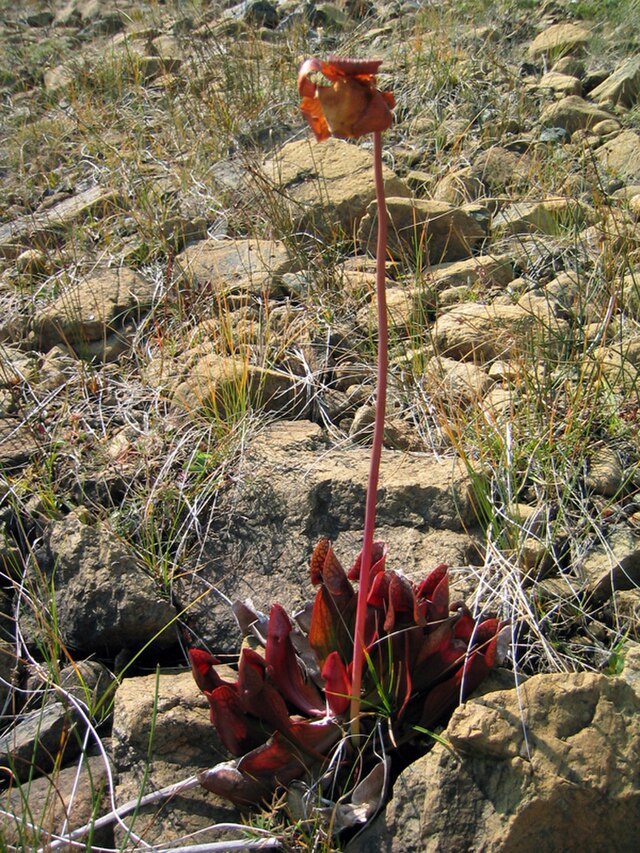
Sarracenia purpurea The most widely available species. Pitchers grow horizontally with an open hood at the top that allows rainwater to enter. It is extremely cold-hardy and grows wild in northern North America and northern Europe. The subspecies ssp. purpurea and ssp. venosa differ in pitcher shape and patterning.
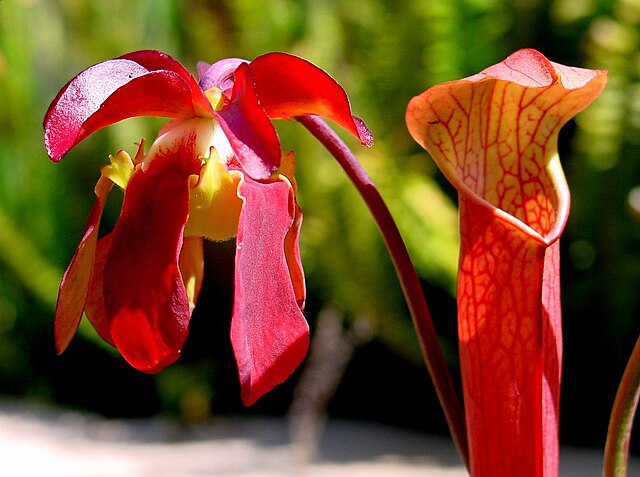
Sarracenia flava A large species reaching 60–80 cm in height with vibrant yellow-green to yellow pitchers. Specimens with red vein-like patterns inside the pitcher throat are especially popular, and numerous varieties are known, including var. rubricorpora (which has an overall reddish tint).
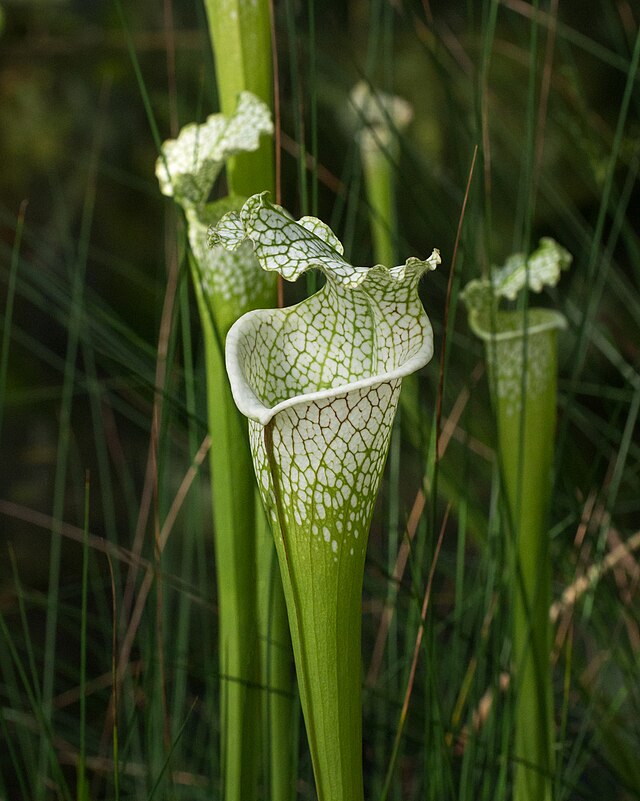
Sarracenia leucophylla A visually striking and popular species with white pitchers marked by red reticulate patterns. Patterning becomes more vivid in autumn. It is somewhat frost-sensitive, so protection is needed in regions with heavy frost.
Sarracenia alata, minor, and rubra each have their own distinctive forms. Additionally, most Sarracenia in the market are interspecific hybrids, with numerous vibrant individuals that combine traits from both parent species.
Setting Up the Growing Environment
Light
Sarracenia especially love strong light among carnivorous plants. An ideal location is a south-facing balcony or garden that receives at least 6 hours of direct sunlight daily. Insufficient light results in thin, weak pitchers with poor coloration. Indoor cultivation is generally not suitable; even with grow lights, a minimum of 10,000–20,000 lux is required.
Water
Water quality is one of the most critical aspects of Sarracenia care. Minerals such as calcium and magnesium in tap water damage roots and can cause long-term plant death. Always use one of the following:
- Rainwater (ideal)
- Distilled water
- Reverse osmosis (RO) purified water
- Commercial pure water (true purified water, not softened water)
For a comprehensive guide to water quality management for carnivorous plants in general, see our Carnivorous Plant Water Quality Management | When to Use Purified Water, Rainwater, and Tap Water. The basic management method is "water tray watering"—place the pot in a shallow dish (3–10 cm deep) kept constantly filled with water. In summer, evaporation is rapid and water may be depleted in 1–2 days, so check daily. During winter dormancy, keep water level to about 1–3 cm to avoid excessive moisture.
Soil Mix
Never use standard potting soil or fertilizer-rich soil. Sarracenia are adapted to nutrient-poor wetlands, and high-nutrient soil damages roots. Appropriate mixes are:
- Peat moss : perlite = 1:1 (most standard mix)
- Sphagnum moss alone (high water retention, beginner-friendly)
- When using long-fiber sphagnum, place lava rock at the pot base for airflow
Seasonal Management Calendar
Spring (March–May) The most critical period after dormancy ends. Once temperatures stabilize after mid-March, move plants outdoors and begin providing full sunlight. When new pitchers start to develop, check plant condition and repot if needed. Repotting during this period minimizes root damage.
Summer (June–September) A period of vigorous growth. Check water tray levels daily and maintain full direct sunlight. However, during extreme heat (above 35°C), shade afternoon sun or move to part shade to reduce water evaporation and stress. Be careful—the plant suffers rapidly if the water tray dries out even in peak summer.
Autumn (October–November) Growth slows as temperatures drop. Old pitchers turn yellow and wither, which is normal senescence. Avoid liquid fertilizer or foliar feeding after October.
Winter (December–February) Many species enter dormancy in cold temperatures. In most of Japan (including Kanto and northward), outdoor overwintering is possible, but in extremely cold regions where rhizomes freeze for extended periods, protect with non-woven fabric or mulch. Continue water tray watering but keep water level minimal. In warm-winter regions like Okinawa and southern Kyushu where natural cold dormancy doesn't occur, managing plants in a refrigerator crisper (3–8°C) for 2–3 months is effective. For a complete overview of dormancy management that differs between temperate and tropical species, see our Carnivorous Plant Dormancy Management Guide | Winter Care for Temperate and Tropical Species.
Repotting and Plant Renewal
Repot every 2–3 years in spring (March–April). When roots fill the pot, growth slows and pitcher size decreases, making periodic renewal essential.
- Gently remove the plant from its old pot and loosen the roots
- Cut away damaged or blackened roots with scissors
- Repot in fresh mix (peat moss + perlite)
- Place in part shade for a time after repotting, then gradually acclimate to full light
Larger plants can be divided by cutting the rhizome. Ensure each division has at least one root and one bud.
Common Problems and Solutions
Pitchers turn black and dissolve Age-related death results in natural blackening from the base. Pathological blackening occurs suddenly in the middle of the pitcher with a putrid smell. This likely indicates gray mold (Botrytis); remove affected areas and improve airflow.
No new growth or extremely slow growth Usually caused by insufficient light, tap water use, or root damage. Review placement, switch to purified water, and observe for one season.
Pitchers are becoming smaller A sign for repotting. Likely root-bound or soil degradation (peat breakdown). Perform spring repotting.
Pests other than insects (scale insects, aphids) These may attach to the outside of pitchers or leaf stalks. Spray with diluted neem oil or remove physically with a soft brush. Avoid pesticides if possible; if needed, choose those with minimal impact on the plant.
Summary
Sarracenia are relatively easy to grow among carnivorous plants if you follow three principles: provide strong direct sunlight outdoors, use purified water for tray watering, and allow winter dormancy. Mature large species command impressive presence, and the sight of new and old pitchers standing side by side from spring through autumn transforms a garden or balcony. By understanding each species' traits and maintaining seasonal care, you can grow larger and more beautiful plants year after year. Experience the joy of carnivorous plant cultivation with Sarracenia.