Guide to Growing Drosophyllum lusitanicum: A Rare Carnivorous Plant Thriving in Mediterranean Dry Regions
A care guide for Drosophyllum lusitanicum, which grows in the dry habitats of the Mediterranean coast. It explains why you should water from above the pot rather than using the tray method, and why to use a coarse mix of sand, perlite, or pumice. It also covers avoiding repotting because the roots are easily damaged, and sowing seeds directly into the final pot.
Key Takeaways
A care guide for Drosophyllum lusitanicum, which grows in the dry habitats of the Mediterranean coast. It explains why you should water from above the pot rather than using the tray method, and why to use a coarse mix of sand, perlite, or pumice. It also covers avoiding repotting because the roots are easily damaged, and sowing seeds directly into the final pot.
Related Species
Introduction
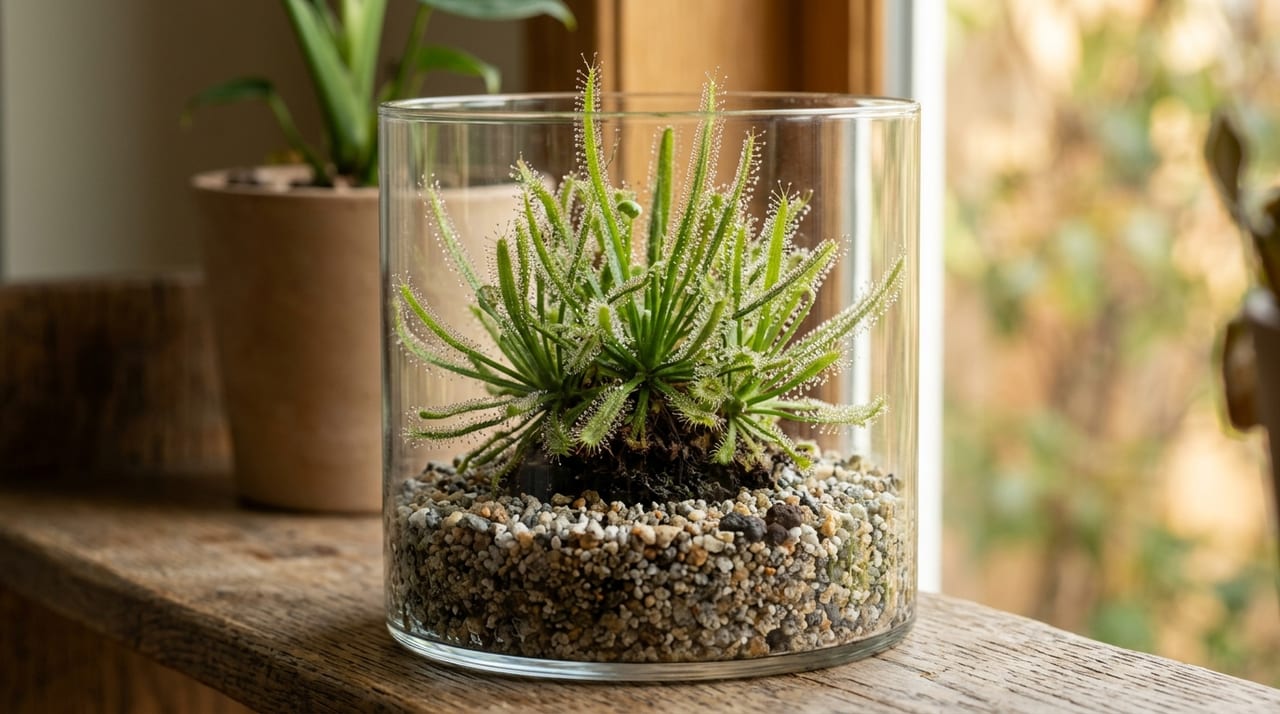
When people hear "carnivorous plants," many imagine them thriving in wetlands or swamps—environments that are constantly moist. But Drosophyllum lusitanicum challenges that perception. Also known in English as the "Portuguese sundew," this unique carnivorous plant grows naturally in arid Mediterranean rocky areas and sandy soils, trapping insects with sticky secretions. This article explores the characteristics and cultivation methods of Drosophyllum, which requires management very different from typical carnivorous plants.
Characteristics and Origin
Drosophyllum lusitanicum has the following characteristics:
- Origin: Arid, hilly regions along the Mediterranean coast, such as Portugal, Spain, and Morocco
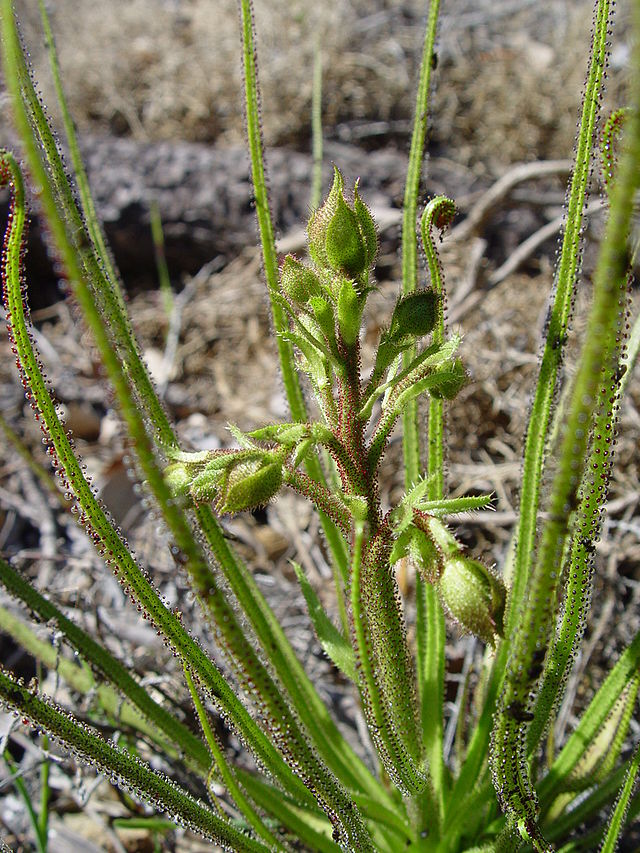
- Appearance and Classification: Features glandular hairs that secrete mucus similar to sundews (Drosera), but taxonomically belongs to a different family
- Feeding Mechanism: Captures insects using countless mucus glands on the surface of its narrow leaves, digests them for nutrition
The most distinctive feature is that while most carnivorous plants prefer wetlands, Drosophyllum thrives in well-drained, arid environments. If the roots remain constantly wet, root rot develops rapidly. Without understanding this ecological uniqueness, cultivators often apply standard wetland carnivorous plant methods, resulting in the plant dying within a short period. It is therefore known as a highly challenging species to cultivate.
Soil and Watering Notes
Drosophyllum care is starkly different from typical carnivorous plant management.
| Item | Typical Carnivorous Plants | Drosophyllum |
|---|---|---|
| Soil | Peat moss-based substrate | Well-draining mineral-based soil (primarily coarse sand, perlite, or pumice). Avoid soil with high organic matter content |
| Watering | Bottom watering (standing the pot in water to absorb moisture from below) | Water from above; water again when soil surface feels dry (similar to typical houseplant care) |
Poor-draining soil damages the roots quickly. Unlike other carnivorous plants, Drosophyllum does not need to be kept constantly moist; rather, it prefers conditions close to dryness. This is the most critical understanding for successfully growing this species.
Why to Avoid Repotting
Drosophyllum is extremely sensitive to root disturbance, and damage from repotting is often fatal. While most plants can be repotted with the root ball gently broken up, even slight injury to Drosophyllum roots frequently leads to decline and death.
For this reason, cultivation requires the following approach:
- When growing from seed: Sow directly into the final pot from the beginning and avoid repotting afterward
- When acquiring a seedling: Avoid repotting as much as possible afterward, and manage it carefully to minimize stress on the roots
Following this approach is key to achieving higher success rates in long-term cultivation.
Light and Growing Environment
Drosophyllum is a plant that thrives in strong light. The Mediterranean coast, its native habitat, receives long hours of sunlight year-round in a dry climate. Therefore, it is important to provide a bright, well-ventilated growing environment. Insufficient light weakens mucus gland secretion, reducing the plant's ability to trap insects and impairing growth overall.
Key points for the growing environment are as follows:
- Light: When growing indoors, select the location with the most light, such as a south-facing window. If necessary, consider supplemental lighting with LED grow lights
- Humidity: Unlike other carnivorous plants, high humidity is not required. Excessive humidity can promote mold growth, so prioritize good air circulation
Summary
Drosophyllum lusitanicum is a remarkable xerophytic plant that shatters the common assumption that all carnivorous plants are wetland species. The key to growing this distinctive plant is understanding that it requires the opposite care approach from typical carnivorous plants: well-draining soil, modest watering, and avoidance of repotting. While cultivation difficulty is relatively high, the satisfaction of successful cultivation is equally rewarding—this is a species that deserves its reputation as a rewarding challenge for experienced growers.
Cultivation Difficulty and How to Approach It
Among experienced carnivorous plant growers, Drosophyllum is often regarded as an advanced-level species. This is because the conventional management principles for carnivorous plants (bottom watering, high humidity, peat moss-based substrate) scarcely apply; in fact, nearly opposite care is required. When attempting to grow this plant for the first time, it is important to reset your existing carnivorous plant cultivation knowledge and approach it as a xerophytic species.
When growing from seed, germination may take somewhat longer, but by patiently maintaining the plant while adhering to the principle of not damaging the roots, you will experience the unique satisfaction this distinctive plant offers. The sight of insects caught by leaves with glistening mucus offers an ornamental value distinctly different from other carnivorous plants. Note that seed availability may be more limited than for other carnivorous plants. When seeds become available, it is wise to sow multiple seeds to account for varying germination rates.