Drosera (Sundew) Care Guide | Diverse Carnivorous Plants That Trap Insects with Sticky Secretions
Explanation of how to grow carnivorous Drosera (Sundew). We introduce the characteristics of beginner-friendly varieties such as Spatulata, Capensis, and Adelae, methods for water tray watering, light conditions, overwintering, and propagation through leaf cuttings.
Key Takeaways
Explanation of how to grow carnivorous Drosera (Sundew). We introduce the characteristics of beginner-friendly varieties such as Spatulata, Capensis, and Adelae, methods for water tray watering, light conditions, overwintering, and propagation through leaf cuttings.
Related Species
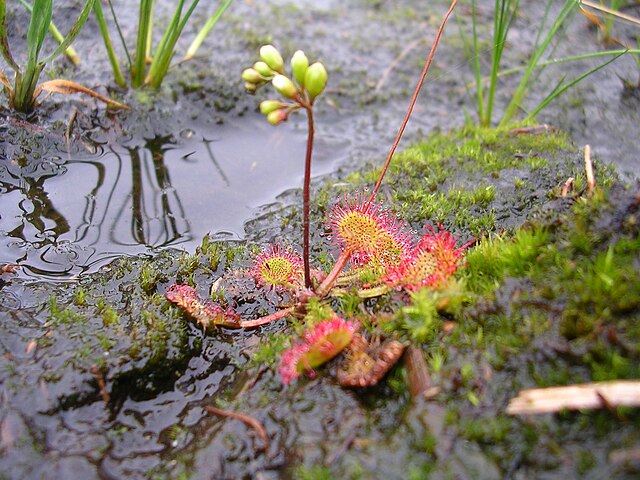
The Charm of Drosera: A Carnivorous Plant with Beautiful Shimmering Mucilage
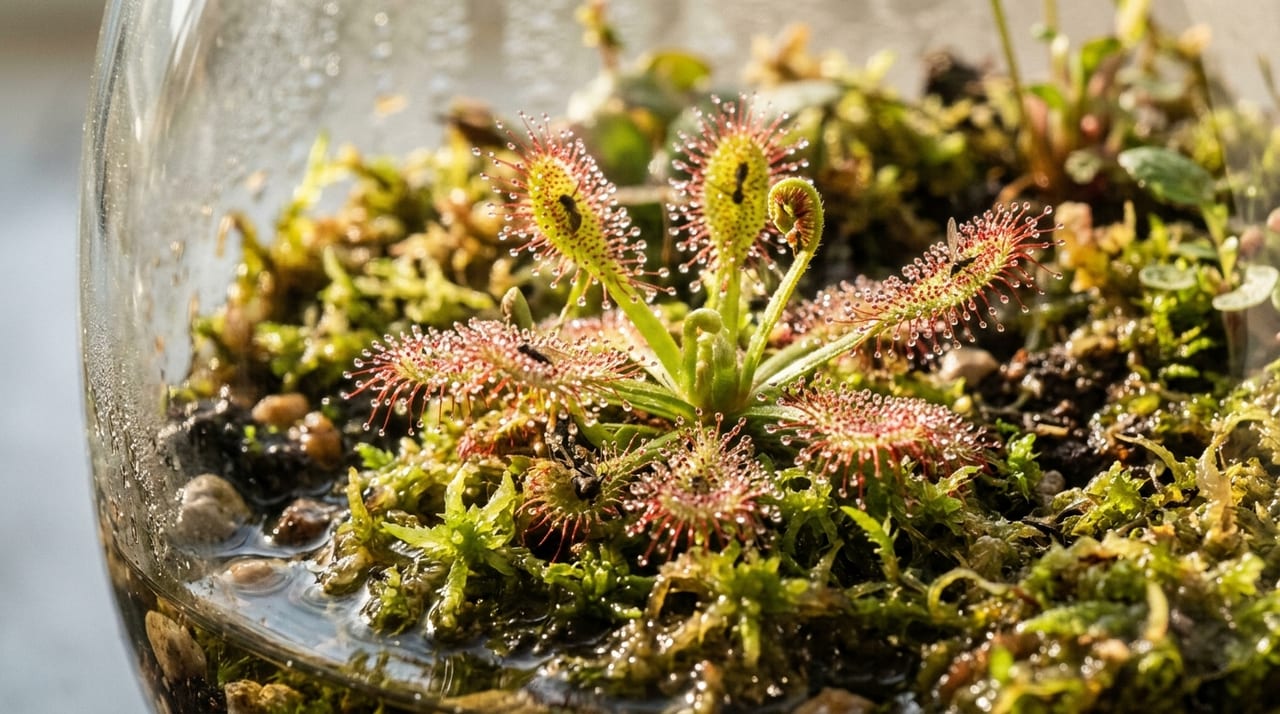
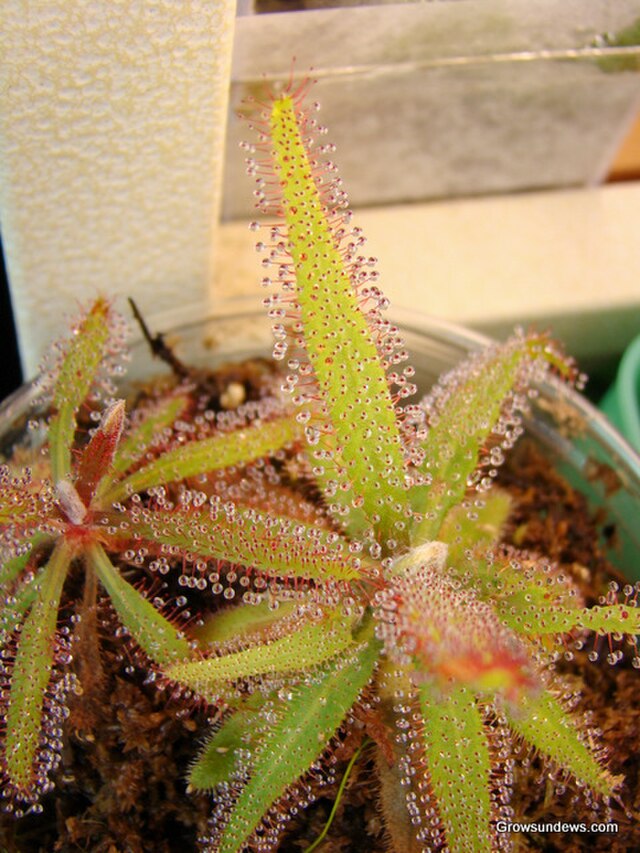
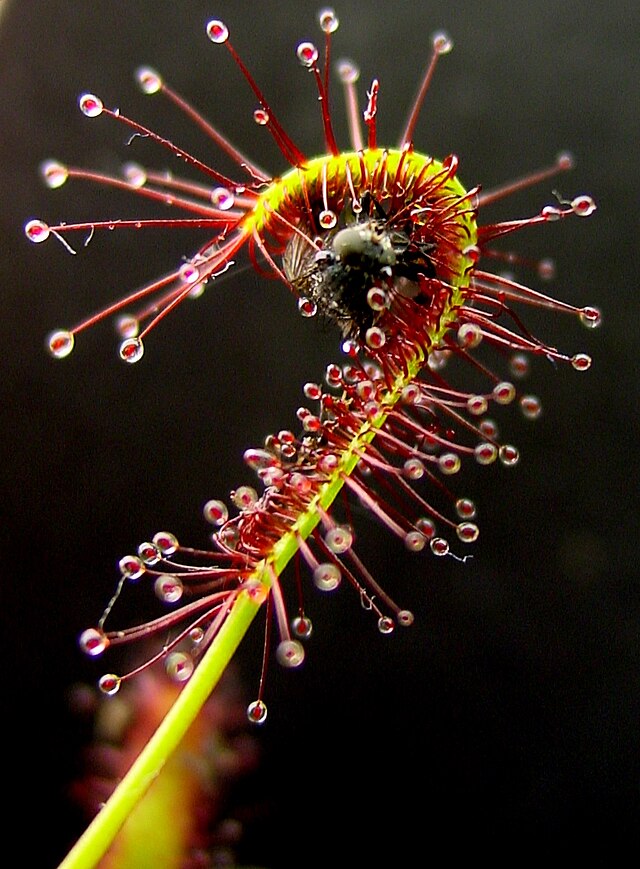
Drosera (Drosera spp., Sundew) is a carnivorous plant that secretes a highly viscous fluid from glandular hairs on the leaf surface, slowly trapping insects that touch it. The shimmer of this mucilage, which reflects light like morning dew, is also called "diamond dew," and among carnivorous plants, it is particularly valued for its ornamental beauty, captivating collectors around the world.
Prey that touches the mucilage becomes entangled in more and more glandular hairs as it struggles to escape, and over several minutes to hours, the entire leaf slowly curls inward. The nutrients broken down by digestive enzymes and acids serve as a substitute for the poorly developed roots in wetland soil, providing nitrogen sources necessary for the plant's survival. This active predation mechanism never tires in observation and gives cultivators great satisfaction.
Over 200 species are recorded worldwide, with extremely diverse ecology: tropical species adapted to warm, humid rainforest environments; temperate species native to regions with four seasons; and bulbous species that survive arid summers as bulbs underground in Australia. Those beginning with carnivorous plants are encouraged to first grasp the overall picture in the beginner's guide to carnivorous plant care before stepping into the world of Drosera for faster understanding.
Popular Varieties and Characteristics
More detailed cultivation techniques for each species are explained in Drosera Species and Cultivation Techniques, so here we will focus on the characteristics of five representative types.
D. capensis (Drosera capensis)
A species native to South Africa with long, slender leaves, and the standard beginner's Drosera. It grows rapidly and secretes mucilage profusely, making it the easiest variety to observe insects being trapped. It grows year-round without dormancy, making it easy to manage, and propagates readily even through leaf cuttings. Multiple forms exist, such as Alba (white flower) and Red.
D. rotundifolia (Drosera rotundifolia)
A temperate Drosera native to wetlands in Japan that forms winter buds (hibernacula) near the water's surface in winter and enters dormancy. It is characterized by small, rounded leaves and naturally adapts to Japan's climate, making outdoor cultivation possible. Conscious selection with consideration for the protection of wild habitats is required.
D. adelae (Drosera adelae)
Native to Australia. The long leaves spread in a rosette form, and it is a hardy species that can grow in relatively low light among Drosera species. It propagates easily through leaf cuttings with good offshoot production. It becomes beautiful with reddish coloration and has high ornamental value.
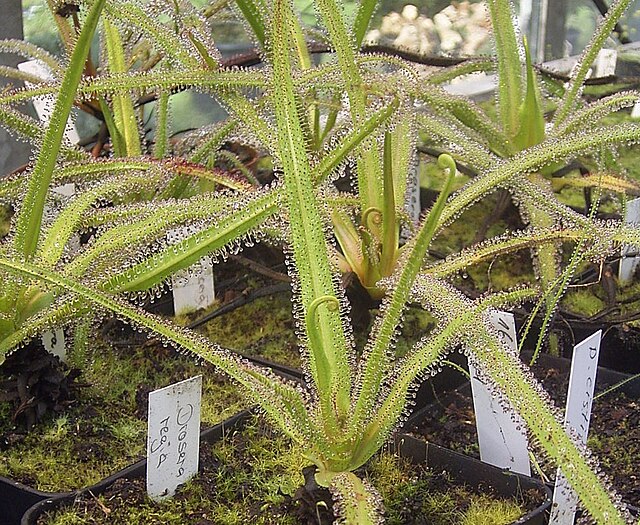
D. regia (Drosera regia)
A large species with leaves reaching over 60 cm, and its massive mucilage trap is impressive. Growth is slow and difficulty is relatively high, but it is popular with advanced cultivators for its unique presence.
Bulbous Drosera
A group of bulbous species native to Australia, such as D. eroosa and D. macranthus. They grow from winter through spring, and in summer, the above-ground parts completely die back and the plant rests as a bulb. Summer water cessation management is essential, and the management rhythm differs significantly from typical species.
Basic Care Methods
Water Management (Most Important)
The most important aspect of Drosera cultivation is water quality management. Chlorine and various minerals contained in tap water damage the roots, leading to reduced mucilage secretion and plant death. Always use rainwater, distilled water, RO water, or purified water. General considerations on water quality are discussed in detail in Complete Guide to Carnivorous Plant Water Quality Management.
Watering through a water tray method is the standard. Fill a saucer to a depth of 2–3 cm with pure water, keeping the soil constantly moist. If water runs out, the mucilage quickly disappears and the plant weakens, so water shortage is absolutely forbidden. When the tray water decreases, replenish with fresh pure water, and if not changing the water for long periods, replace it about once a week to maintain water quality.
Light Management
Strong light is essential to maximize the shimmer of the mucilage. If light is insufficient, the glandular hair mucilage decreases and trapping ability is significantly reduced.
Ideally, cultivate outdoors in sunlight, but direct summer sun can cause leaf burn, so manage with shade cloth (30–50%) or partial shade. Indoors, select a south-facing windowsill, and if sunlight is insufficient, LED grow lights can be used as a substitute, providing 12–14 hours of illumination daily. When the mucilage begins to shine transparently, it is a sign that light is sufficient.
Growing Medium and Repotting
The growing medium must be fertilizer-free. General flower and vegetable potting soil or fertilized soil is prohibited.
The simplest and easiest to manage is 100% sphagnum moss. It is clean, has high water retention, and works for many species. A mixture of peat moss and perlite at a 3:1 to 4:1 ratio is also widely used and increases aeration. Repot once every 1–2 years in spring during the growing season.
Temperature Management
Optimal temperatures vary greatly by species.
- Tropical species (such as D. capensis) require a minimum temperature of 15°C and need indoor management in winter.
- Temperate species (such as D. rotundifolia) can adapt to Japan's four seasons, but avoid exposure to direct frost.
- Bulbous species require light shade and water cessation in summer so the bulbs do not dry out excessively.
Seasonal Care Points
| Season | Care Points |
|---|---|
| Spring (March–May) | Many species resume active growth. Begin or increase water tray watering, and gradually increase light exposure. This is the optimal time for repotting and division. |
| Summer (June–August) | Peak season for tropical species, but strong direct summer sun and high temperatures require caution. If tray water temperature rises too much, it can cause root rot; using a white saucer or placing the saucer in shade is effective. Bulbous species enter water cessation and complete dormancy during this period. |
| Autumn (September–November) | Temperate species begin preparation for dormancy. Species such as Drosera rotundifolia begin forming winter buds. |
| Winter (December–February) | Temperate species can be managed outdoors or in unheated locations as winter buds. Tropical species continue care in a bright spot indoors. |
Propagation and Precautions
Leaf cuttings are an effective propagation method for many species including D. capensis. Carefully remove a healthy leaf at the base, place it horizontally on moist sphagnum moss, and maintain high humidity in a sealed container. Small shoots appear in 2–4 weeks. For more detailed instructions, refer to Sundew Propagation Methods | Practical Techniques for Leaf Cuttings, Division, and Seed Sowing.
Seed sowing is done immediately after collection by sowing on the sphagnum moss surface and waiting for germination under water tray management. Germination rates are higher with fresh seed and take several weeks to months.
As a precaution, watch for stem rot (gray mold disease) from overwatering. Ensure good air circulation and remove dead leaves frequently. Aphids may occur on new growth; remove by hand or rinse with water when found. Pesticides may damage the plant, so confirm ingredients before use.
Summary
If you follow the three principles of "pure water, strong light, and water tray watering," Drosera is a relatively easy-to-grow carnivorous plant. The beauty of watching the mucilage shimmer and the joy of observing the mysterious scenes of insects being trapped daily are attractions unlike any other plant. Start with the easy-to-grow Drosera capensis, and as you become accustomed to cultivation, expand your world to temperate species and bulbous species. Those wanting to know more about the differences with other carnivorous plants can also view the Carnivorous Plant Encyclopedia | Characteristics and Care of Popular Species.