Carnivorous Plants Guide | Popular Species Characteristics and Cultivation Methods
A carefully curated introduction to popular carnivorous plant species including Venus Flytraps, Nepenthes, Sarracenia, Drosera, and Cephalotus. Detailed explanations of each species' insect-trapping mechanisms, cultivation difficulty, and required growing conditions.
Key Takeaways
A carefully curated introduction to popular carnivorous plant species including Venus Flytraps, Nepenthes, Sarracenia, Drosera, and Cephalotus. Detailed explanations of each species' insect-trapping mechanisms, cultivation difficulty, and required growing conditions.
Related Species
Carnivorous plants possess a unique ecology in which they capture insects and use them as a nutritional source. Unlike ordinary plants that absorb nutrients through their roots, these plants have evolved the ability to "eat" insects as an adaptation to nutrient-poor environments such as wetlands and rocky areas with minimal nitrogen. The mechanisms for capturing insects vary greatly depending on the species, with diverse approaches including "snap-trap," "pitcher trap," and "sticky-trap" methods. Their mysterious appearance and dynamic predatory behavior captivate audiences ranging from children to plant enthusiasts.
This article provides detailed explanations of popular carnivorous plants, from beginner-friendly species to rare varieties that collectors are passionate about.
Venus Flytraps and Sundews | Beginner Species with Striking Movement and Brilliance
Venus Flytrap (Dionaea muscipula)
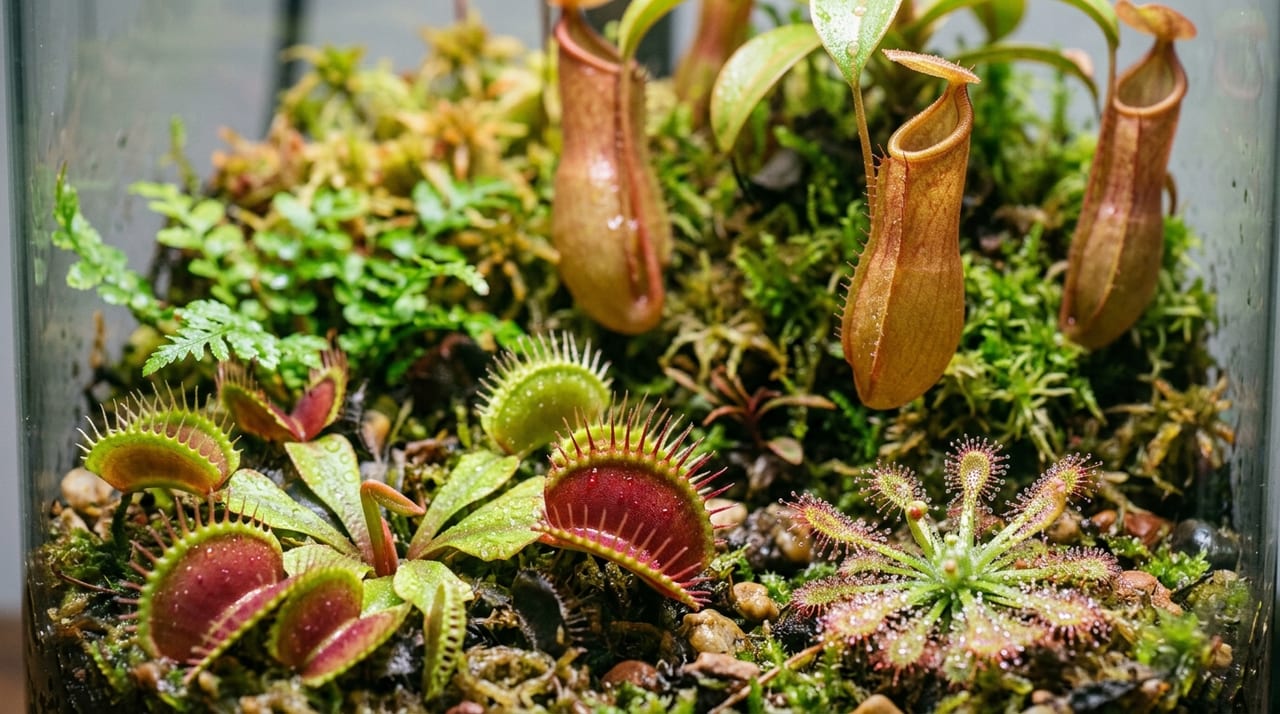
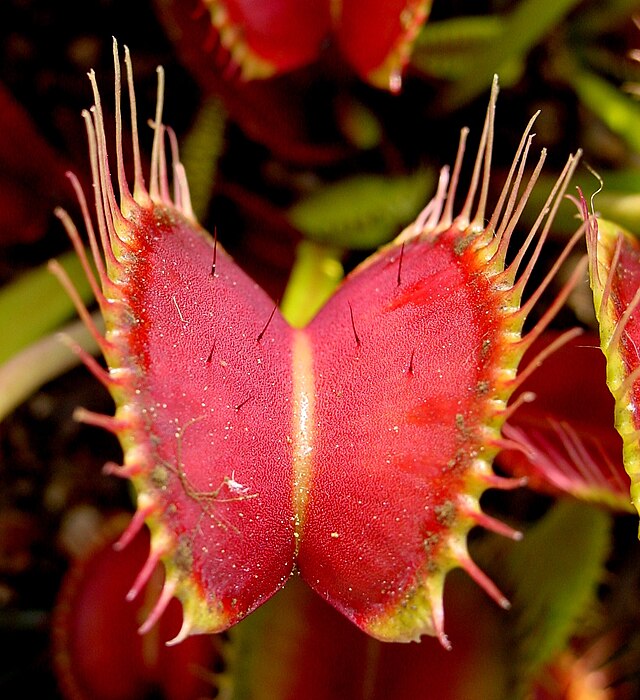
A plant synonymous with carnivorous plants themselves. Its snap-trap mechanism, where two leaves rapidly close to capture insects, is among the most dynamic in the plant kingdom. When insects touch the sensory hairs inside the leaf twice, the leaf closes within 0.1 seconds—a sight that amazes first-time observers.
- Cultivation Difficulty: Low to Medium
- Location: Outdoors in direct sunlight or on a sunny windowsill
- Watering: Bog-watering method (keep water constantly in the saucer)
- Winter Dormancy: Outdoor dormancy promotes vigorous growth the following year
Cultivated varieties deserve special attention. Large cultivars such as "B52" and "Giant" feature trap leaves nearly twice the size of typical plants, making them popular among collectors.
Sundew (Drosera / Pinguicula mocinensis)
A sticky-trap carnivorous plant that secretes viscous liquid from countless glandular hairs covering the leaf surface, gradually ensnaring insects that touch it. When illuminated by sunlight, the shimmering droplets resemble scattered jewels—a sight of outstanding ornamental beauty.
- Cultivation Difficulty: Varies by species (Cape Sundew is beginner-friendly)
- Location: Bright, well-lit areas
- Watering: Bog-watering method
- Recommended Species: Cape Sundew (hardy and easy to grow), Obovata (large with striking presence)
The Cape Sundew is so prolific that it can self-seed and multiply naturally—making it the perfect starter carnivorous plant for beginners.
Nepenthes and Cephalotus | Pitcher-Trap Types with Urn-Shaped Capture Pitchers
Nepenthes (Tropical Pitcher Plant / Monkey Cups)
A climbing carnivorous plant distributed primarily throughout tropical Asia, characterized by urn-shaped "pitchers" that hang from the leaf tips. The interior of the pitcher is smooth and contains digestive liquid; insects lured inside cannot escape and are gradually dissolved. The shape, color, and size of the pitcher vary dramatically by species, and this remarkable diversity is a key attraction for collectors.
- Cultivation Difficulty: Varies by species (Alata is easy; Rajah is challenging)
- Location: Bright indirect light (avoid direct sunlight)
- Humidity Management: Prefers high humidity; supplement with misting during dry seasons
- Winter Care: Being tropical, maintain a minimum winter temperature of 15°C (59°F)
For beginners, "Alata" and "Ventricosa" are recommended. They're relatively drought-tolerant and thrive with indoor management. Advanced growers often enjoy the challenge of rare high-altitude species like Borneo's "Rajah" or "Bicalcarata."
Cephalotus (Cephalotus follicularis)
An extremely rare carnivorous plant found only in southwestern Australia—the sole species and genus of its family. Its small urn-shaped pitchers resemble those of Nepenthes but belong to a completely different botanical family. Its unique form and rarity make it a particularly prized specimen among collectors.
- Cultivation Difficulty: Medium to High
- Location: Bright indirect light
- Watering: Bog-watering method; avoid high heat and humidity as they are poorly tolerated in summer
- Growth Rate: Extremely slow, but becomes stable once acclimated
While difficult to obtain and expensive, the sense of accomplishment when successfully cultivating one is unparalleled.
Sarracenia and Butterworts | Individual Character Species Best Suited to Outdoor Cultivation
Sarracenia
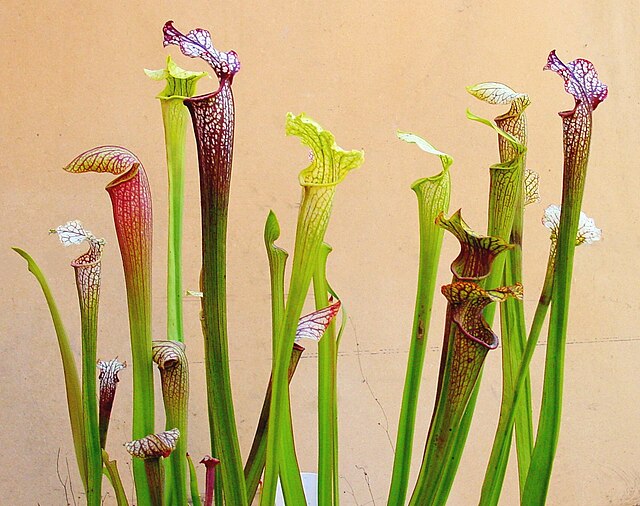
A carnivorous plant native to North American wetlands, with tubular leaves that themselves serve as insect-trapping organs. Insects that fall into the tube cannot escape and are dissolved by digestive fluids. The foliage displays extraordinarily vibrant colors, with striking patterns in red, green, white, and yellow.
- Cultivation Difficulty: Low to Medium
- Location: Outdoors in direct sunlight
- Watering: Bog-watering method
- Winter Dormancy: Hardy and can overwinter outdoors without protection
- Popular Species: Flava (beautiful yellow flowers), Purpurea (compact and hardy)
Sarracenia can be enjoyed with a gardening sensibility, adding distinctive character to patios and balconies. Being able to overwinter outdoors makes cultivation exceptionally easy.
Butterwort (Pinguicula / Flypaper Flower)
A sticky-trap carnivorous plant with flat rosette-shaped leaves covered in sticky secretions that capture tiny insects and mites. Named "Flypaper Flower" for the small, violet-like flowers it produces. Mexican species exhibit an interesting characteristic where leaf shape changes during the dry season, taking on a succulent-like appearance.
- Cultivation Difficulty: Low to Medium
- Location: Bright indirect light (avoid direct sunlight)
- Watering: Bog-watering method; manage Mexican species with drier conditions
- Popular Species: Esseriana and Moranensis (both easy to grow with beautiful flowers)
Its compact size suits indoor cultivation, allowing you to enjoy it like an ornamental houseplant. During the flowering period, delicate flowers bloom, adding an elegance uncommon among carnivorous plants.
Carnivorous Plant Cultivation | Essential Shared Fundamentals
While cultivation methods vary by species, there are essential basics common to all carnivorous plants.
Water
Most carnivorous plants dislike minerals such as calcium and magnesium found in tap water. Rainwater, distilled water, or RO water (reverse osmosis water) is ideal. When using the bog-watering method, regularly change the water in the saucer to keep it clean.
Soil
Commercial potting soil contains fertilizer, which is counterproductive for carnivorous plants. Use nutrient-poor substrates such as sphagnum moss, peat moss, pumice, and perlite.
Fertilizer
Fertilizer is fundamentally unnecessary for carnivorous plants. With adequate light and water, they obtain nutrients from the insects they capture. Applying fertilizer often damages roots and weakens plants—exercise caution.
Feeding Insects
Insects naturally enter plants grown outdoors, but for indoor specimens, feeding dried fruit flies or freeze-dried crickets promotes growth. Avoid insects larger than one-third the size of the trap.
Safety and Reliability with GrowerDirect
Carnivorous plants have limited distribution through standard garden centers, and obtaining rare or cultivated varieties is particularly challenging. That's where GrowerDirect—purchasing directly from growers—comes in handy.
- Obtaining Healthy Plants: You receive vigorous plants carefully cultivated in proper environments. With minimal stress from distribution, plants remain stable after purchase
- Accurate Species Information: Scientific names, cultivar names, and origin details are clear, providing peace of mind for collectors and researchers
- Rare and Cultivated Varieties Available: Difficult-to-find high-altitude Nepenthes species and large Venus Flytrap cultivars are available for discovery
- Direct Grower Consultation: Ask cultivation and management questions directly to the person who grew your plants. Beginners can start with confidence
- Reliable Transaction Protection: GrowerDirect implements a grower screening and evaluation system supporting safe, reliable transactions
The world of carnivorous plants is endlessly fascinating—once you begin, you'll find yourself wanting to grow new species. Find a trusted grower on GrowerDirect and start your own collection today.