Does the Venus Flytrap's Opening and Closing Shorten Its Lifespan? | Opening/Closing Frequency and Plant Stress
Venus flytrap opening and closing movements place stress on the plant. Based on data on lifespan reduction through opening and closing, management strategies for long-term cultivation, and appropriate opening/closing frequency, this article explains the balance for enjoying cultivation.
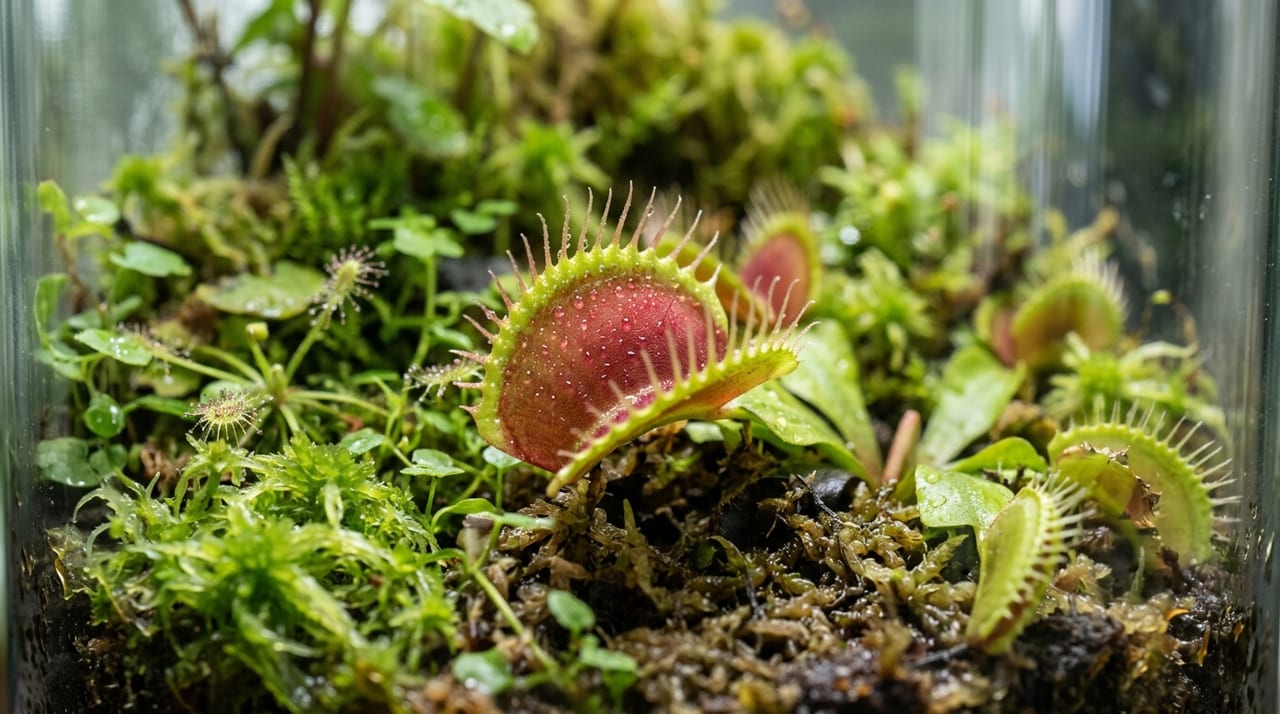
Key Takeaways
Venus flytrap opening and closing movements place stress on the plant. Based on data on lifespan reduction through opening and closing, management strategies for long-term cultivation, and appropriate opening/closing frequency, this article explains the balance for enjoying cultivation.
Related Species
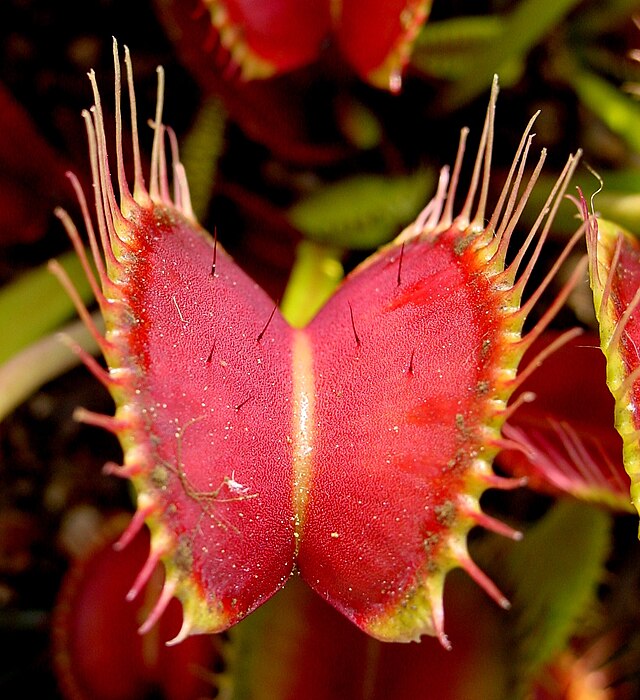
The moment when a Venus flytrap (Dionaea muscipula) leaf closes in an instant has an appeal that makes even non-plant enthusiasts want to touch it. However, if you continue to act on that impulse without restraint, you may unknowingly deplete the plant. Does opening and closing really shorten its lifespan? Let us clarify the mechanism and appropriate management methods.
Venus Flytrap's Prey Capture Mechanism: The Instantaneous Reaction Triggered by Trigger Hairs
On the inner surface of a Venus flytrap leaf, there are typically three thin hairs called "trigger hairs" (sensory hairs). When these hairs are stimulated two or more times within approximately 20 seconds, an electrical signal travels throughout the leaf, causing it to close at the remarkable speed of around 0.1 seconds.
The core of this mechanism is "the rapid change in turgor pressure (turgidity)." When stimulated, cells on the outer surface of the leaf rapidly lose water and contract, creating a pressure difference with the inner cells, causing the leaf to bend. For a plant without any muscle tissue to achieve animal-like movement through only the water movement of cells is extremely unique from an evolutionary perspective.
After closing, if stimulation from what appears to be prey continues inside the leaf, the secretory glands become further activated, releasing digestive enzymes and mucus, digesting and absorbing the prey over 1–2 weeks. Once digestion is complete, the leaf opens again in preparation for the next capture. This sequence of cycles is the "correct" opening and closing that the plant is designed to perform.
The Energy Load and Tissue Damage Caused by Opening and Closing
A single opening and closing is by no means a "light movement" for the plant.
For the leaf to close, a large amount of potassium ions flow out of cells, causing a sudden change in osmotic pressure. Subsequently, for the leaf to open, the ions that flowed out must be actively taken back into the cells, where a large amount of ATP (cellular energy currency) is consumed. If prey capture is successful and nutrients are obtained, this cost can be recovered. However, opening and closing without prey simply results in one-way energy depletion.
Repeated opening and closing also inflict physical damage on the tissue. Cells at the leaf margin are subtly damaged, and with each repetition, strain accumulates in the cell walls. As this progresses, the leaf margin gradually discolors brown and begins to die; once a leaf is damaged, it does not regenerate. A single Venus flytrap plant typically has only 7–15 leaves, each with limited capacity. If these are consumed prematurely through frequent stimulation, new leaf development cannot keep pace, leading to overall weakening.
Why "False Triggers" Are Particularly Problematic
Opening and closing without obtaining nutrients is sometimes called a "false trigger," but the reason this is problematic goes beyond simple energy loss.
- Calcium depletion: Calcium ions are involved in transmitting the opening/closing signal, and repeated stimulation can deplete intracellular calcium, potentially dulling subsequent capture responses.
- Wasting digestive enzymes: If stimulation continues after the leaf closes, the plant begins secreting digestive fluid. Any enzymes or mucus secreted without prey present are completely wasted, incurring the cost of resynthesis.
- Reduced immunity: Continuous energy shortage reduces resistance to pests and diseases, making the plant susceptible to secondary disorders such as root rot and gray mold.
In actual prey capture, because the prey continues to move inside the leaf, the plant judges the signal as "successful" and proceeds consistently with digestion and absorption. Artificial stimulation imparts stress without this positive feedback, and is qualitatively very different from natural prey capture.
Opening/Closing Frequency and Plant Health: Guidelines to Know
Research and long-term cultivation records from enthusiasts have revealed the following trends.
Plants that received frequent artificial stimulation tend to show reduced new leaf emergence rates and paler leaf color within several months. Conversely, plants left to natural prey capture with virtually no artificial stimulation have been documented to survive for over 5 years when combined with appropriate dormancy management.
What requires caution is that damage is cumulative. Touching the plant once does not cause it to wither immediately, but stress accumulated over weeks or months gradually depletes the plant's vitality. In many cases, by the time you notice the plant is declining, considerable depletion has already occurred.
If you must attempt opening and closing for observation purposes, it is recommended to limit it to approximately once or twice per month per leaf. Additionally, rather than repeatedly stimulating the same leaf, using multiple leaves in succession can distribute the stress on any single leaf. Since metabolism is lowered during the dormant period (late autumn to winter), artificial stimulation during this time should especially be avoided.
Fundamentals of Environmental Management to Extend Lifespan in Long-Term Cultivation
In addition to managing opening and closing, optimizing the cultivation environment is a major pillar in extending lifespan.
Do not skip winter dormancy: It is essential to allow Venus flytraps to undergo dormancy at low temperatures (around 5–10°C) during winter. By experiencing this dormant period, the plant can develop vigorous new growth the following spring. If kept in a warm indoor environment year-round, the plant cannot enter dormancy and often weakens within a few years.
Soaking culture and water quality: The basic method is soaking the pot base, but ideally the water used should be distilled or rainwater. Accumulation of calcium and chlorine from tap water can damage roots. The soaking depth should be approximately 1–2 cm, and excessive standing water can cause root rot, so care is necessary.
Soil selection: Low-nutrient, acidic substrates such as peat moss or sphagnum moss are suitable. General potting soil and organic fertilizers must be avoided as they damage roots.
Ensuring sufficient light: They prefer environments with direct sunlight (4–6 or more hours per day). Insufficient light results in thin, yellowing leaves and reduced capture ability.
By establishing these conditions and minimizing artificial opening and closing, long-term health maintenance can be achieved.
Getting Along Well with the Urge to Touch
If you are cultivating Venus flytraps, it is natural to want to trigger the opening and closing. Rather than completely suppressing the impulse, it is more practical to be mindful of "how to engage with it."
The fundamental approach to enjoying plants for a long time is to make natural prey capture the main attraction and limit artificial stimulation to special occasions. Allow opening and closing only in cases such as showing visitors, explaining the mechanism to children, or when truly necessary for photography, and afterward provide the plant time to recover gradually.
Being able to watch a Venus flytrap you have cultivated for years flower and set seed is possible only through disciplined, restrained daily management. Adopting a long-term, observational mindset yields greater insight into the plant's true appeal than accumulating short-term "experiments." When you happen to witness the moment of natural prey capture, that sense of wonder will be all the more profound. The first step in long-term cultivation is to reframe the Venus flytrap's opening and closing not as "something to touch and enjoy," but as "something to observe and be moved by."