Venus Flytrap Trigger Management | How to Protect Your Plant by Avoiding Unnecessary Stimulation
Venus flytrap trap leaves have a limited number of open-close cycles. This article provides practical guidance on management methods to prevent trap depletion from unnecessary stimulation, proper feeding techniques, and the causes and countermeasures for trap blackening.
Key Takeaways
Venus flytrap trap leaves have a limited number of open-close cycles. This article provides practical guidance on management methods to prevent trap depletion from unnecessary stimulation, proper feeding techniques, and the causes and countermeasures for trap blackening.
Related Species
Understanding Venus Flytrap Triggers Correctly
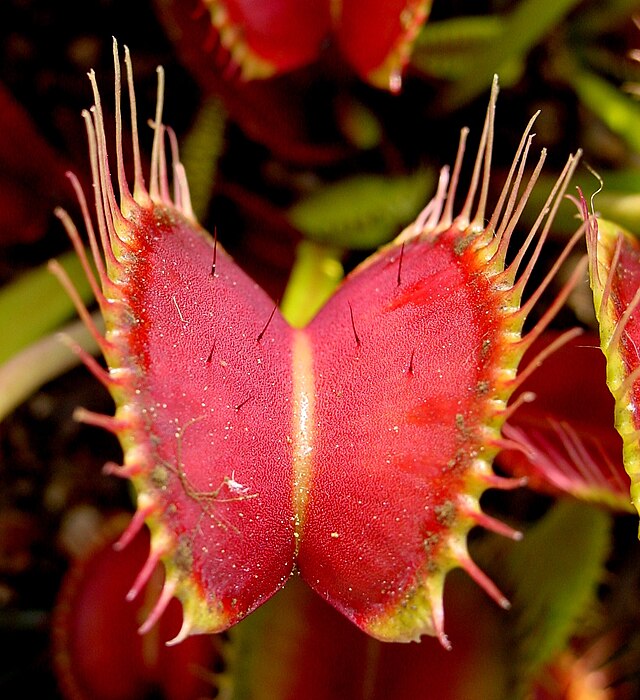
Venus flytraps (Dionaea muscipula) have three sensory hairs (trigger hairs) on the inside of their trap leaves. When these trigger hairs are stimulated two or more times within 0.5–30 seconds, electrical signals travel through the leaf and the trap closes instantly. This "two-trigger" mechanism is an evolutionarily refined defense system that prevents wasted energy from accidental stimulation like raindrops or fallen leaves.
Here is an important fact that many keepers often overlook: each trap has a limited number of open-close cycles before it loses functionality. Generally, a single trap gradually loses function after approximately 7–10 closures, eventually darkening and falling off. Furthermore, it takes 5–12 days for a trap to secrete digestive fluid and completely digest its prey. This digestive process is extremely costly for the plant, and even repeated opening and closing without prey will surely deplete the overall vigor of the plant.
Unnecessary Stimulation to Avoid in Daily Management
It is true that the movement of "closing when touched" is the greatest appeal of the Venus flytrap. However, repeatedly pressing traps with your finger out of curiosity and causing them to open and close inflicts meaningless stress on the plant. Even for observation or photography purposes, avoid unnecessary touching.
Daily management often overlooks the following sources of stimulation:
- Water droplets during watering: Overhead watering methods carry a high risk of direct stimulation to trigger hairs
- Strong wind and raindrops: Difficult to avoid with outdoor management, but preventable with indoor or greenhouse management
- Pot movement and vibration: Avoid jostling leaves when repotting or changing location
- Pests and soil insects: Insects like cutworms moving inside the pot can stimulate triggers from the leaf underside
The basic watering method is bottom watering (tray method). By placing pure water (distilled water, rainwater, or RO water) in a dedicated tray and allowing the pot to absorb from the bottom, you can provide stable moisture while avoiding direct leaf stimulation. Minerals in tap water like calcium and sodium damage the roots, so always use pure water. The basics of tray watering are explained in detail in Carnivorous Plant Soil and Tray Cultivation Tips, so please refer to it as well.
Proper Feeding Methods and Timing
Venus flytraps in indoor management don't receive insects naturally, so sometimes we need to feed them artificially. Proper feeding helps maintain plant health, but incorrect methods only waste the traps.
Selecting the right prey size is most important. Ideally, the insect should be 1/3 or less of the trap's internal area. Prey that's too large won't allow the trap to close completely, causing digestive fluid to leak and digestion to fail. In this case, the trap will try to open again without blackening, but the plant will be in a severely energy-depleted state.
- Live insects (recommended): Small crickets, fruit flies, small moths, etc. The insect's thrashing repeatedly stimulates internal triggers and promotes digestive enzyme secretion
- Dead insects and freeze-dried insects: After placing in the trap, gently shake the trap from outside with your finger to make it sense "prey is moving." One or two shakes are sufficient
- Liquid fertilizer and commercial insect paste: While some products are sold, excessive nutrients aren't absorbed by roots and cause decay, so they're not recommended
Consider feeding once or twice per month as the maximum. With sufficient light and pure water, photosynthesis alone provides enough energy. The idea that "more feeding leads to faster growth" is misguided—overfeeding weakens the plant through digestive strain. With outdoor management, insects enter naturally, so additional feeding is rarely necessary.
Trap Blackening: Normal Aging vs. Problem Signs
Traps darkening and falling is, to some extent, a normal aging process. There's no need to rush to intervene. However, it's important to distinguish the cause based on the blackening pattern.
Normal aging (no problem)
- After several digestion cycles, the trap darkens at the base and falls off
- The overall plant remains vigorous, with new traps continuously emerging
Abnormal blackening (requires action)
- New traps darkening repeatedly → Suspect insufficient light (minimum 4+ hours direct sun daily), water quality issues (mineral accumulation), or cold damage
- Petiole (stem portion) blackening → Suspect root rot. Check for overwatering, poor drainage, or rising tray water temperature
- Trap turning completely black without digestive secretion → Decay from oversized prey or fungal infection
Remove darkened traps promptly with clean scissors to prevent fungal spread and allow the plant to concentrate energy on new leaf development.
Seasonal Trigger Management and Dormancy Considerations
Venus flytraps are perennials native to North Carolina and require winter dormancy at cool temperatures (5–10°C, 3–4 months) as the key to long-term healthy management. During dormancy, growth nearly stops and trap responsiveness significantly decreases. Feeding during dormancy cannot be digested, so avoid stimulation especially during this period.
When spring arrives and temperatures rise, the plant rapidly expands new traps. This expansion phase is when the plant concentrates energy, making it the worst time to apply unnecessary stimulation. Begin feeding and observation only after new leaves are sufficiently hardened and mature.
During the growing season (May–September), vigorous photosynthesis allows energy accumulation, so proper feeding and adequate light management during this period ensures a robust plant for the next year.
Long-Term Care Summary for Plant Health
Venus flytraps are extremely hardy and long-lived carnivorous plants if given the right conditions. Here are the key points for keeping your plant healthy long-term:
- Use only pure water (distilled water, rainwater, or RO water); mineral-containing water is strictly forbidden
- Provide at least 4–6 hours of direct sunlight; insufficient light is the primary cause of plant weakening
- Use bottom watering to eliminate water contact with leaves
- Feed once or twice monthly, with prey at 1/3 trap size or smaller
- Avoid opening and closing for observation, and minimize unnecessary contact
- Ensure 3–4 months of dormancy at 5–10°C during winter
Aware management of the trap's "finite resource" of open-close cycles supports the plant's long-term health and beauty. To maximize the Venus flytrap's true potential, the most important thing is to avoid unnecessary stimulation and create an environment where the plant can live at its natural rhythm. If you're uncertain about water quality management, refer to Carnivorous Plant Water Quality Guide and maintain optimal conditions for your plant long-term.