Venus Flytrap Annual Growing Cycle | Spring-Summer-Fall-Winter Management and Feeding Frequency Adjustment
From the Venus flytrap's spring growing season through summer peak vigor, autumn dormancy preparation, to winter low-temperature dormancy. Explains the annual growing cycle and seasonal management methods, and proper adjustment of feeding frequency.
Key Takeaways
From the Venus flytrap's spring growing season through summer peak vigor, autumn dormancy preparation, to winter low-temperature dormancy. Explains the annual growing cycle and seasonal management methods, and proper adjustment of feeding frequency.
Related Species
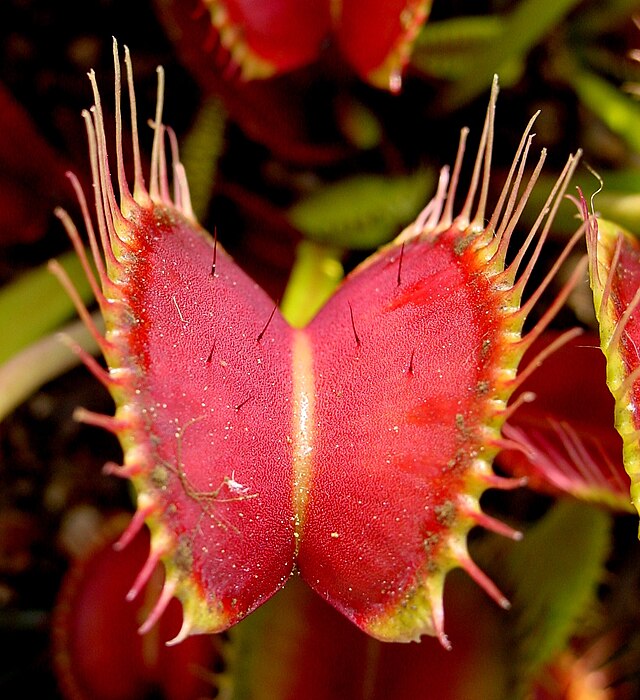
The Venus flytrap (Dionaea muscipula) is a carnivorous plant that traps ants and small insects with leaves resembling bivalve shells. As a temperate plant, it has a distinct growing rhythm throughout the year. Understanding and properly managing this cycle is the key to keeping it thriving over the long term. This article explains the growing state and management methods for each season from spring to winter.
A summary of seasonal guidelines follows.
| Season | Temperature guideline | Watering method | Feeding activity |
|---|---|---|---|
| Spring (Mar.–May) | Over 10°C | Maintain 1–2 cm bottom watering | Trap leaves open and close multiple times daily; increased chance of natural capture |
| Summer (Jun.–Aug.) | 25–30°C | Maintain bottom watering; provide 30–50% shade if temperature exceeds 35°C | In natural conditions about once every 2–3 weeks; indoors 1–2 times per month |
| Fall (Sep.–Nov.) | Below 15°C | From October, reduce bottom-watering depth; discontinue in November | Trap opening and closing speed gradually slows |
| Winter (Dec.–Feb.) | 5–10°C for 2–3 months | Minimal watering 1–2 times per month; no bottom watering | Nearly dormant |
Spring (Mar.–May): Beginning of the Growing Season
As temperatures begin to exceed 10°C following winter dormancy, the Venus flytrap awakens from dormancy. Spring leaves are often larger and more vigorous than winter leaves.
It is not uncommon for trap leaves to open and close multiple times in a single day in spring. When an insect touches the leaf's trigger hairs, the leaf closes in less than 0.1 seconds. Since insects are also active in spring, opportunities for natural capture increase.
Watering is primarily bottom-watering management. From April to May, maintain bottom-watering depth of 1–2 cm and keep the base moist. Acidic soil mixed with peat moss and Kanuma soil is ideal. Use soft water (rainwater, distilled water, or RO water); avoid tap water as minerals damage the roots.
Summer (Jun.–Aug.): Vigorous Growth and Peak Feeding Period
Summer at 25–30°C is when the Venus flytrap grows most vigorously. Large trap leaves unfold in succession, and the plant gains volume overall.
Regarding feeding frequency, once every 2–3 weeks is sufficient in natural conditions. For indoor cultivation, feeding 1–2 times per month with small ants or live prey is adequate. Overfeeding exhausts the leaves, causing them to blacken and drop.
Since the soil dries easily, be sure to maintain consistent bottom watering. On sweltering days when temperature exceeds 35°C, provide shade (30–50%) to prevent leaf scorch.
Fall (Sep.–Nov.): Slowing Growth and Dormancy Preparation
As fall begins with temperatures dropping below 15°C, the Venus flytrap begins preparing for dormancy. Leaf growth slows and new leaves become smaller. Additionally, trap opening and closing speed gradually decreases.
From October onward, gradually reduce bottom-watering depth; from November, discontinue bottom watering and switch to watering when the soil surface begins to dry slightly. There is no need to apply fertilizer at this time.
Old leaves may blacken and die at the end of fall, but this is natural leaf turnover. Remove blackened leaves at the base to maintain airflow.
Winter (Dec.–Feb.): Dormancy Period
Since the Venus flytrap is a temperate plant, a "winter dormancy period" at sustained low temperatures is essential. Exposure to low temperatures around 5–10°C for 2–3 months resets the growing rhythm for the following spring.
Without providing this dormancy period, the plant gradually weakens and often dies within a few years. Ideally, place the plant outdoors in a frost-free location or in a garage where 5–10°C can be maintained.
Trap activity is nearly dormant during this period. Keep watering to a minimum of 1–2 times per month, maintaining soil moisture to prevent complete drying. Bottom watering is generally not performed during dormancy.
Feeding Frequency and Plant Vigor
Trapping insects consumes large amounts of ATP energy. Each leaf can function fully only a limited number of times.
Excessive feeding accelerates leaf exhaustion and reduces overall plant vigor. Artificial food is strictly forbidden, as it cannot be digested. The recommended feeding frequency is about 1–2 times per month during the growing season of spring and summer.
While leaves blackening is natural, a pattern of leaves disappearing due to overfeeding is a sign that management needs adjustment.
Summary
Year-round seasonal management is essential for healthy Venus flytrap growth.
- Spring: Provide bottom watering and ample light
- Summer: Support vigorous growth
- Fall: Gradually reduce watering and transition to dormancy
- Winter: Ensure 2–3 months of dormancy
Following this cycle is the most important condition for long-term, healthy growth. Keep feeding frequency to about 1–2 times per month and remember to conserve the plant's vigor.