Carnivorous Plant Pest Management and Common Causes of Decline: A Complete Guide
Explains the causes of carnivorous plant death from the perspectives of water quality, light exposure, and dormancy management. Also introduces methods for dealing with aphids and slugs, as well as prevention and treatment strategies for mold and botrytis (gray mold disease).
Key Takeaways
Explains the causes of carnivorous plant death from the perspectives of water quality, light exposure, and dormancy management. Also introduces methods for dealing with aphids and slugs, as well as prevention and treatment strategies for mold and botrytis (gray mold disease).
Carnivorous plants have evolved a unique ability to trap and digest insects as an adaptation to the harsh environments of nutrient-poor wetlands and rocky outcrops. Due to this unusual ecology, conventional gardening practices often don't apply, and beginners frequently encounter unexpected problems. It's common to hear comments like "My plant died even though I watered it well" or "The plant weakened after I fertilized it." These outcomes reflect the special needs of these remarkable plants.
This article explains in detail the causes and solutions for the most common problems encountered when cultivating carnivorous plants. With the right knowledge, most troubles can be prevented.
Root Rot | The Most Common Fatal Problem
Root rot is one of the most frequent failures in carnivorous plant cultivation. It's particularly prone to occur during hot summer months, and by the time symptoms appear, it's often too late to save the plant.
Main symptoms
- Roots and crown are blackened
- Healthy leaves progressively yellow and die
- When pulled up, roots are mushy and decomposed
Causes Tray watering (keeping water in a saucer beneath the pot) is fundamental to carnivorous plant care, but water temperatures rise during summer, promoting bacterial growth. Additionally, poorly draining soil or sealed environments starve roots of oxygen, accelerating decay.
Solutions Remove rotted roots and leaves with clean scissors and repot in fresh, well-draining substrate such as dried sphagnum moss or akadama soil. During summer, change the tray water daily or every other day to prevent temperature rise. Moving the plant to a bright, partially shaded location away from direct sunlight is also effective.
Mineral Excess (Tap Water Damage) | An Invisible Enemy That Gradually Weakens Your Plant
Along with root rot, mineral damage from tap water is a common problem. Because symptoms develop slowly, many growers notice their plant is "just not doing well" without identifying the cause.
Main symptoms
- Leaf tips gradually brown and die
- New pitcher leaves fail to open, or open only very small
- Gradual overall decline of the entire plant
Causes Minerals in tap water—calcium, magnesium, chlorine, and fluorine—are excessive irritants to the roots of carnivorous plants, which have adapted to nutrient-poor environments. As these minerals accumulate, roots gradually sustain damage and lose the ability to absorb water and nutrients effectively.
Solutions The fundamental solution is to switch to rainwater, distilled water, or RO (reverse osmosis) water. Rainwater is the most cost-effective option and is widely used by carnivorous plant enthusiasts. Store-bought mineral water typically contains high mineral levels and should be avoided. Similarly, chemical fertilizers cause salt damage, so fertilization is generally unnecessary.
Insufficient Light | An Unexpected Impact That Even Affects Prey-Catching Ability
Carnivorous plants rely on photosynthesis to survive; nutrients obtained from trapped insects are merely supplementary. Insufficient light weakens the entire plant and even impacts its ability to trap prey.
Main symptoms
- Pitcher leaves are small and malformed
- Leaf color fades (losing red or green vibrancy)
- Stems become thin and elongated (etiolation)
- Sundew's sticky secretions decrease
Causes Even at a sunny window indoors, light intensity is just a fraction of what's available outdoors. In north-facing rooms or during winter's low-light conditions, it's difficult to provide the light level carnivorous plants need.
Solutions Place your plant on a south or east-facing windowsill with as much direct sunlight as possible. For indoor cultivation, grow lights provide effective results when used for 12–14 hours daily. Tropical species like pitcher plants prefer bright, partial shade over direct sunlight, so adjust light levels according to your plant's specific needs.
Mold and Fungal Disease | Environmental Problems Caused by Poor Air Circulation
Mold doesn't just cause cosmetic issues; it can damage the plant itself. It's a particularly common problem during winter indoor management.
Main symptoms
- White, gray, or black mold on soil surface or crown
- Tissues covered by mold soften
- Dark spots or brown patches spreading on leaves (botrytis and other fungal infections)
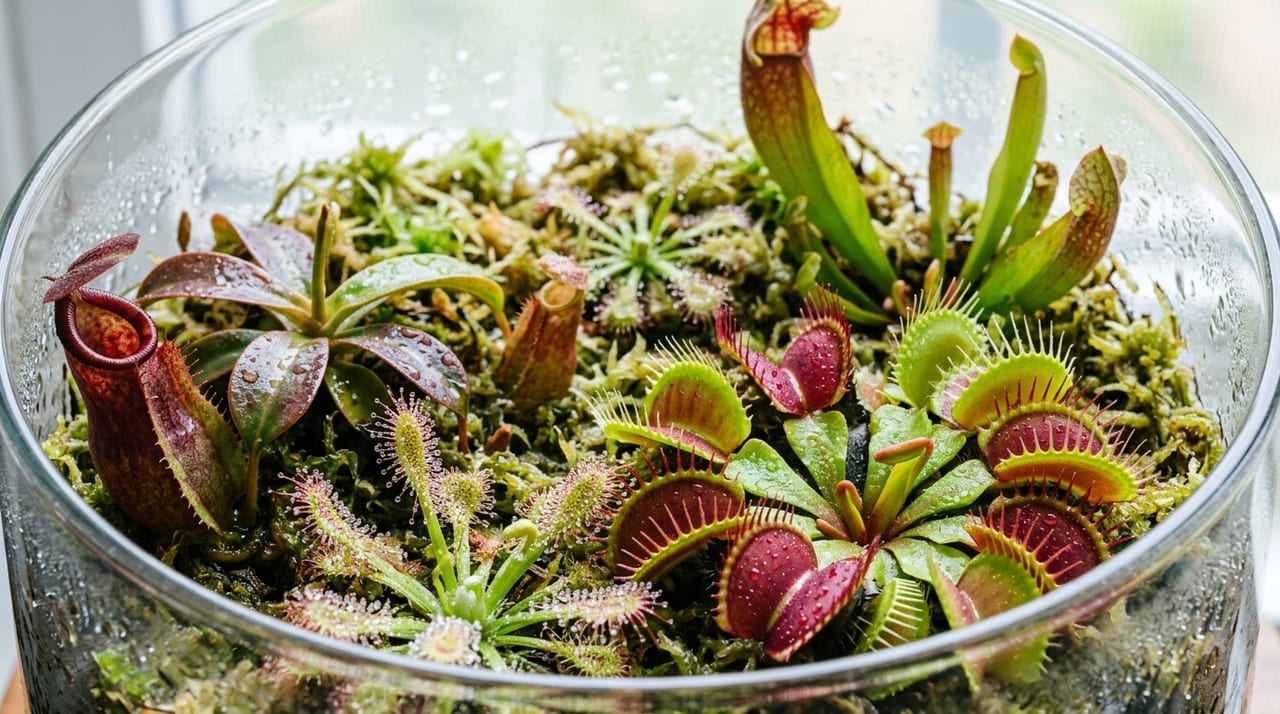
Causes Mold thrives in poorly ventilated, cool, humid environments. Sealed glass containers and terrariums require particular attention.
Solutions Remove mold promptly and spray with a diluted plant fungicide such as benomyl. Creating airflow with a small fan or by opening windows is the foundation of prevention. For terrarium cultivation, simply leaving the lid partially open rather than sealed dramatically reduces mold growth.
Aphids and Spider Mites | Pests to Watch Out for During Outdoor Management
Although carnivorous plants eat insects, they're defenseless against small pests. Special care is needed when managing plants outdoors or indoors with open windows during spring through fall.
Main symptoms
- Aphids cluster on new shoots and flower stems
- Fine spider mites appear on leaf undersides, causing a whitish, mottled appearance
- Sudden halt in plant growth
Solutions Spray aphids with water or treat with a natural insecticide spray such as neem oil. Strong pesticides can damage the plant itself, so pay attention to dilution rates if using them. Spider mites prefer dry conditions, so maintaining humidity through regular misting (leaf spraying) serves as prevention.
Summary | Get Healthy, Reliable Plants from GrowerDirect
Most carnivorous plant problems stem from four factors: water quality, excess moisture, insufficient light, and poor air circulation. Simply being mindful of these elements when setting up your growing environment prevents most failures.
- Use rainwater, distilled water, or RO water
- Keep tray water clean; change it daily during summer
- Fertilizer is generally unnecessary
- Provide as much light as possible
- Ensure good air circulation to prevent mold and disease
Starting with a healthy plant is equally important for long-term success. GrowerDirect connects you directly with growers who specialize in carnivorous plants, offering domestic and rare species. You can ask growers questions before purchase about water type, growing conditions, and beginner-friendly varieties, making it easy to start with confidence. Get a healthy, well-cared-for plant and enjoy your carnivorous plant growing journey.