Outdoor Hardy Carnivorous Plant Guide | Growing Sarracenia and Venus Flytraps in the Garden
Sarracenia tolerates temperatures around −10°C, and Venus flytraps endure down to roughly −5°C, making year-round outdoor management possible in lowland areas west of the Kanto region. This guide covers pot-growing basics, creating a bog garden in your yard, protecting pots from freezing, and overwintering strategies.
Key Takeaways
Sarracenia tolerates temperatures around −10°C, and Venus flytraps endure down to roughly −5°C, making year-round outdoor management possible in lowland areas west of the Kanto region. This guide covers pot-growing basics, creating a bog garden in your yard, protecting pots from freezing, and overwintering strategies.
Related Species
Can Carnivorous Plants Be Grown Outdoors? Basic Knowledge of Hardy Species
Do you think that carnivorous plants need a greenhouse to survive? In reality, the world of carnivorous plants extends far beyond tropical species. Temperate species native to wetlands in North America and Europe have evolved to survive winter by entering dormancy, making them fully capable of thriving in outdoor Japanese environments.
The defining characteristic of temperate carnivorous plants is that they require winter cold. If kept warm indoors year-round, they actually weaken. The key to healthy growth lies in a proper cycle: deep winter dormancy followed by spring awakening. Once you understand this rhythm, creating impressive colonies of carnivorous plants in gardens and on balconies is entirely within reach.
This article provides a detailed guide to the most suitable species for outdoor cultivation, methods for growing in pots and ground beds (bog gardens), and essential overwintering tips.
Hardy Carnivorous Plant Species Best Suited to Outdoor Growing
While many types of temperate carnivorous plants exist, we'll focus on those especially well-suited to outdoor cultivation in Japan.
Sarracenia (Pitcher Plant)
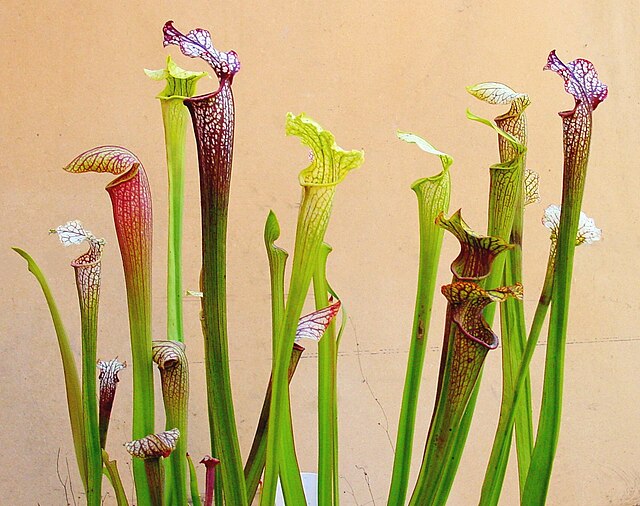
A carnivorous plant widely native to the wetlands of eastern North America, Sarracenia is distinguished by its tubular trap leaves. With exceptional cold hardiness down to around −10°C, it can be grown in the ground throughout most of Japan. From spring through summer, it produces brilliantly colored trap leaves, and in autumn you can enjoy its foliage turning shades of red and yellow. Different varieties display varied trap-leaf patterns and heights, making this a highly collectible plant.
Venus Flytrap (Dionaea muscipula)
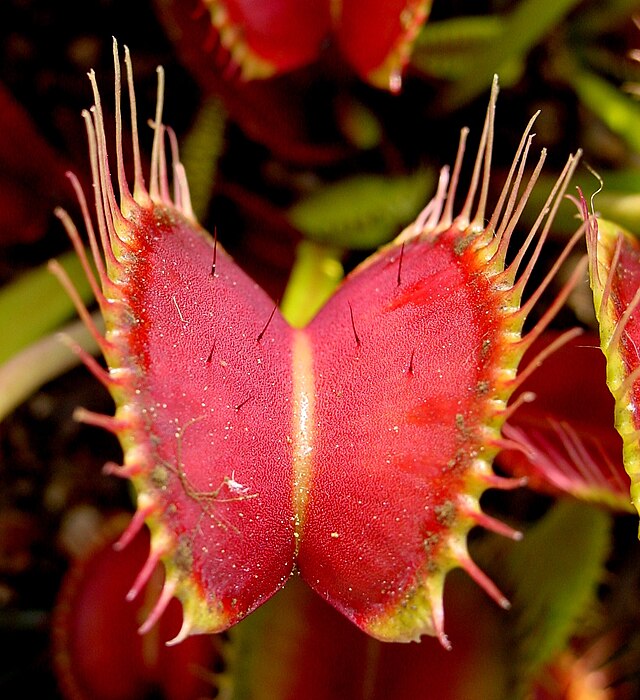
Often called the "poster child" of carnivorous plants, the Venus flytrap is famous for its clam-like leaves that snap shut swiftly when an insect touches them. It is native only to a small, restricted wetland area in North Carolina and is endangered in the wild. Tolerating temperatures around −5°C, it can be managed outdoors nearly year-round in lowland areas west of the Kanto region.
The Venus flytrap's outdoor cultivation often stumbles not on cold, but on sunlight and soil.
- Prevent leggy growth — Indoors on windowsills or in shade, the leaf stalks grow elongated and weak, with small, pale trap leaves; this "etiolation" results in poor-quality plants. Providing 4–6+ hours of direct sunlight outdoors daily is the fastest path to sturdy growth and deeply colored trap leaves
- Do not plant directly in garden soil — Even when creating a ground bed, you cannot simply plant into regular garden soil. Soil containing lime or fertilizer damages the roots. Instead, prepare the planting area with an acidic medium centered on peat moss, as described in the bog garden section below
- Watch water temperature in summer — The problem is not heat itself, but standing water becoming too warm and fouling. In summer, maintain shallow water levels, change water frequently, and avoid leaving the saucer in direct sun all day
Sundew (Temperate Varieties)
A small carnivorous plant that captures insects using sticky secretions on its leaf surface. Temperate species include the European Sundew (Drosera rotundifolia), the North American Sundew (Drosera filiformis), and Japanese native Sundew species. With high cold hardiness and relative ease of care, sundews are ideal for those new to carnivorous plants.
Darlingtonia (Cobra Lily)
Distinguished by its unique trap leaves resembling a cobra poised to strike, this plant grows wild in the cool, spring-fed wetlands of the US West Coast mountains. Though highly cold-hardy, it struggles with hot, humid summers. In Japan, careful management through the post-rainy season and mid-August heat is needed; in cooler regions, it can be grown without special environmental setup.
Starting Outdoor Cultivation in Pots: The Basics
For beginners, pot-based outdoor management is the most approachable method. It offers flexibility in care and makes monitoring and moving plants straightforward.
Choosing Soil and Containers
Carnivorous plants prefer nutrient-poor, acidic soil and cannot tolerate standard potting mix. A standard medium consists of peat moss and Kanuma soil mixed roughly 1:1, or sphagnum moss alone. Any soil containing fertilizer will damage the roots, so base dressing and fertilizer feeding are both unnecessary.
Avoid black pots. In summer, soil temperature inside black pots can rise excessively and damage roots. White pots or terracotta pots manage root temperature more effectively.
Water Management and Placement
Carnivorous plants thrive when roots are kept consistently moist. The standard approach is "immersion watering"—keeping pots submerged in 2–5 cm of water in a tray.
Prioritize rainwater or distilled water. In pot culture, standing water is small in volume, so tap water chlorine and minerals concentrate in the soil with each evaporation cycle. Venus flytraps especially can develop blackened leaf tips from tap water fluoride, making it wise to avoid routine tap water in pot growing. Pots left outdoors in the rain will meet much of their water needs through rainfall alone. For detailed guidance on water management, see Carnivorous Plant Water Management Guide.
That said, in bog gardens where water volume is large and rainfall continuously dilutes it, supplementing with tap water produces no appreciable harm. A useful rule: "Pots use rainwater or distilled water; large bog gardens may supplement with tap water." In summer, water heats quickly, so in either case, change water frequently to keep it clean.
The ideal location is a sunny outdoor spot. Sarracenia and Venus flytraps favor direct sunlight; insufficient light causes weak, leggy growth. Choose a site with at least 4–6 hours of daily sunlight.
Creating a "Bog Garden": Bringing Wetland to Your Yard
If your garden has adequate space, consider building a "bog garden"—an artificial recreation of a wetland habitat. While labor-intensive to establish, once built it can support magnificent Sarracenia colonies for years.
How to Build a Bog Garden
- Dig out a space 30–40 cm deep and any width you prefer in a sunny location
- Line the inside of the hole with a waterproof sheet (pond liner or heavy-duty vinyl) to prevent water from seeping into the soil
- Puncture several 1–2 cm drainage holes in the bottom of the sheet to allow excess water to escape and prevent root rot
- Fill with a soil mix centered on peat moss and Kanuma soil (or river sand), and saturate thoroughly with water
- Plant specimens and maintain constantly moist soil
When rainfall alone cannot meet moisture needs, supplement with tap water as needed. A completed bog garden will continually produce new trap leaves from spring through summer, and display striking autumn foliage. Combining multiple species—Sarracenia, Venus flytrap, and Sundew—creates a landscape that mimics a natural wetland.
Essential Points for Successful Overwintering
Even cold-hardy species have roots that freeze more readily in pots than in ground beds, making preventive measures effective.
- Freezing protection: When pots freeze solid, roots can sustain damage. Placing pots in a Styrofoam box or burying the entire pot in soil provides insulation
- Prevent excessive drying: Watch for winter's dry north winds; soil can dry out excessively. You may lower watering levels in winter, but avoid letting soil dry completely
- Snow is welcome: Snow acts as natural insulation. Leaving it in place protects plants from sudden temperature drops. There's no need to actively remove it
- In extreme climates: In Hokkaido and northern Tohoku with heavy snow and extreme cold, consider mulching with leaf mold or straw, or protect plants with simple vinyl frames
- Above-ground browning is normal: In winter, the above-ground portions may turn brown and look dead—but roots remain alive. Wait patiently until spring
The moment new shoots emerge in spring is a special joy unique to outdoor cultivation. Plants that survived the cold winter burst with vitality and reward you with larger, more beautiful growth than before.
GrowerDirect's Trustworthy Framework
GrowerDirect is a platform where you can purchase hardy carnivorous plants—Sarracenia, Venus flytraps, and more—directly from specialist growers. By cutting out distribution intermediaries, GrowerDirect makes it easy to source healthy plants at reasonable prices.
Before purchasing, you can message growers directly to ask questions like "Which varieties suit my region's climate?" or "What species would be easiest for a beginner?" The practical expertise of experienced long-term growers offers knowledge you cannot find in books or online articles alone.
GrowerDirect also prioritizes transaction transparency and buyer protection, making your first carnivorous plant purchase safe and worry-free. When seeking distinctive varieties and hybrid crosses, give GrowerDirect a try. A life graced with carnivorous plants in your garden or on your balcony will surely bring new discovery and joy.