Carnivorous Plants in Bottle Gardens & Closed Cultivation Guide | Leveraging Sarracenia in High-Humidity Environments
A complete guide to cultivating North American carnivorous plants such as Sarracenia and Darlingtonia indoors using bottle gardens and Wardian cases. Covers humidity management in closed environments, water quality control, seasonal environmental adjustments, and troubleshooting.
Key Takeaways
A complete guide to cultivating North American carnivorous plants such as Sarracenia and Darlingtonia indoors using bottle gardens and Wardian cases. Covers humidity management in closed environments, water quality control, seasonal environmental adjustments, and troubleshooting.
Related Species
Cultivating carnivorous plants requires an approach different from typical gardening. North American carnivorous plants such as Sarracenia (pitcher plants) and Darlingtonia are naturally grown outdoors in full sun and kept dormant in the cold of winter. This guide introduces the concept and cautions of closed cultivation (bottle gardens and Wardian cases), which keep humidity up indoors.
What Are Bottle Gardens and Closed Cultivation?
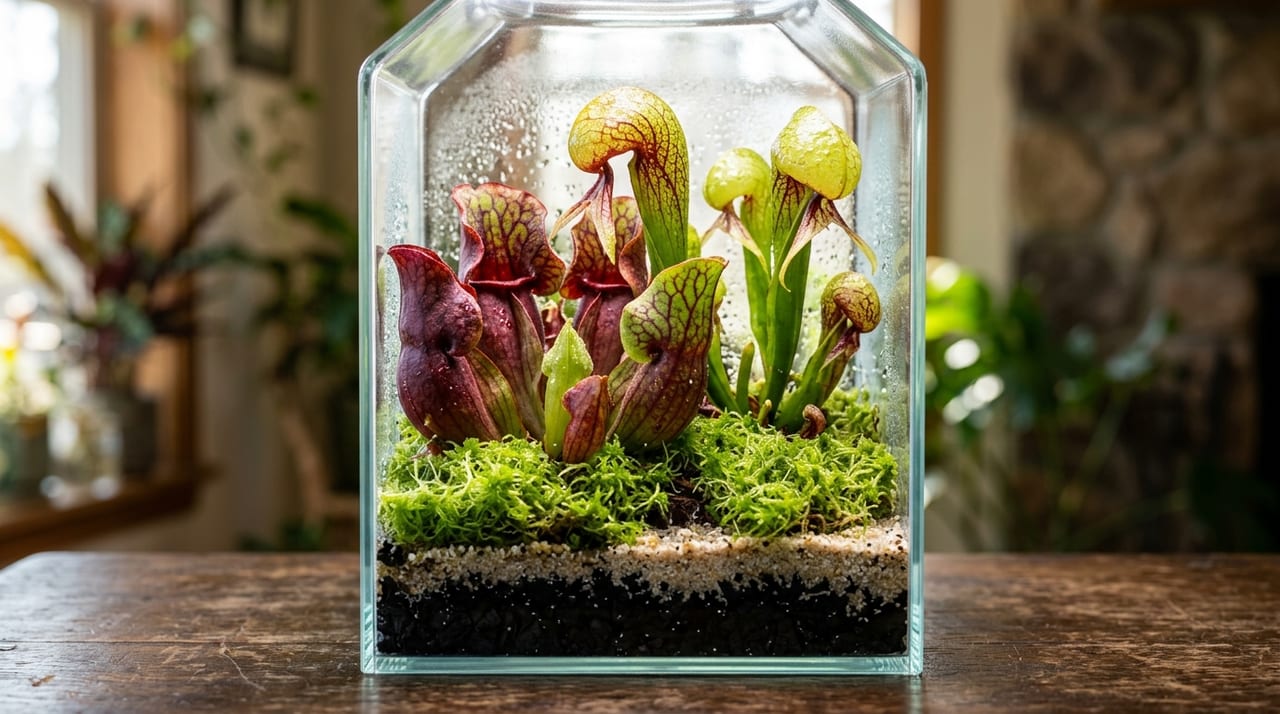
A bottle garden is a cultivation method that achieves self-sustaining water circulation within a sealed glass container. In standard open cultivation, carnivorous plants tend to wither easily, especially in the low-humidity environments of urban areas. The Wardian case—a glass greenhouse developed in 19th-century England—can be applied to solve this problem.
The greatest advantage of closed cultivation is that relative humidity is constantly maintained between 80–95%. As a result, leaves are less likely to dry out even in indoor spaces prone to dryness. In a sealed environment, transpired water condenses again inside the container, creating an automatic water cycle that the root system absorbs.
Characteristics of Sarracenia and Darlingtonia
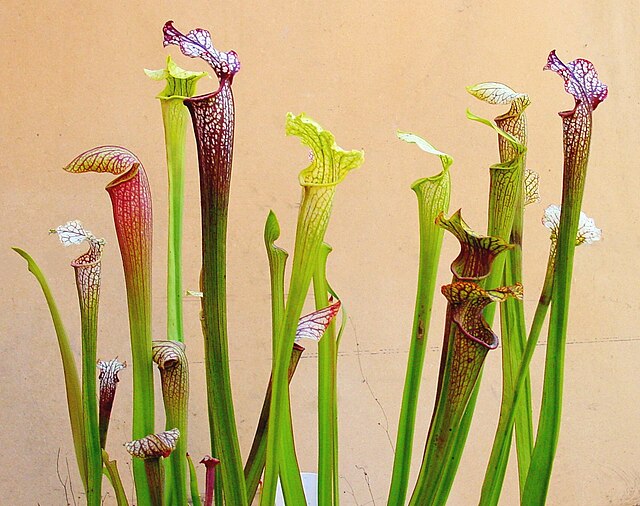
Sarracenia is a genus of carnivorous plants native to North American wetlands that capture insects using funnel-shaped leaves. The main species in commercial circulation include the following:
- Sarracenia purpurea (Purple Pitcher Plant): Cold-hardy; winter temperatures of 5–15°C are essential for flowering. Develops absorptive roots and responds well to soft water supply.
- Sarracenia leucophylla (White Trumpet Pitcher Plant): The upper part of the pitcher is white, with red reticulated veins.
- Sarracenia flava (Yellow Trumpet Pitcher Plant): Characterized by yellow pitchers. Can be cultivated at moderate humidity (75–85%), but is highly stable in closed environments.
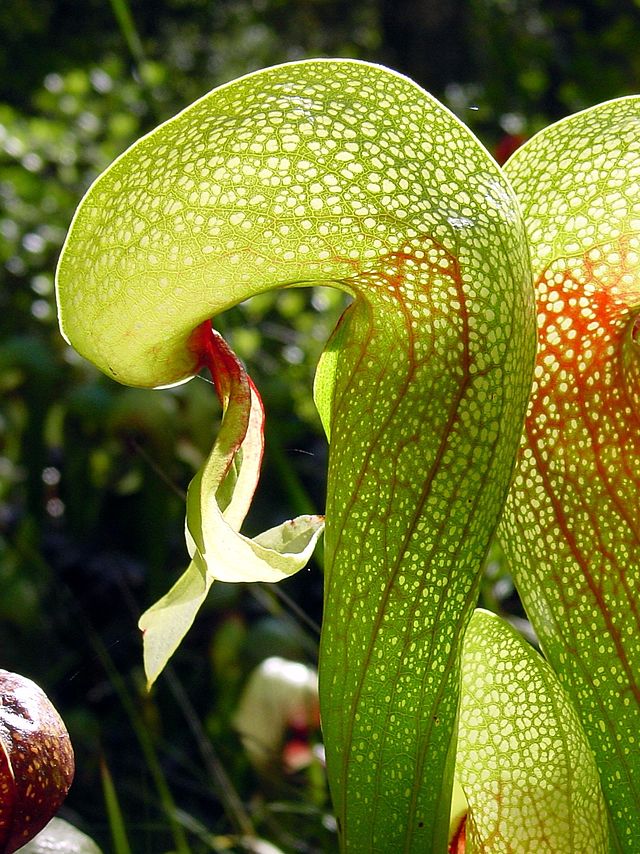
Darlingtonia californica requires stricter humidity and temperature management than Sarracenia. Native primarily to wetlands from northern California to Oregon in the US, its pitcher tips curve helmet-like. It requires a cold winter dormancy and cool roots, and is considered a species that is difficult to manage through Japan's hot summers.
Building a Closed Cultivation System
Container Selection
Choosing a glass bottle garden container is important. Recommended container types:
- Aquaterrarium-Style 21–45L Glass Tanks: Provide sufficient base area for multiple plant arrangements. Limited air intake makes humidity management more stable.
- Wardian Cases (Glass Greenhouse Boxes): Models 60–90 cm tall are optimal. Typically feature ventilation and watering holes in the top panel for easy internal access.
- Large Flask Containers (Bottle diameter 20 cm or larger): Suitable for single plants, with minimal humidity fluctuation.
Standard glass thickness is 4–6 mm. Do not use acrylic containers. Acrylic becomes cloudy over time, light transmittance decreases, and Sarracenia's photosynthetic efficiency declines.
Substrate (Potting Media)
Carnivorous plant root systems have evolved in acidic, nutrient-poor soil. Substrate selection in closed environments follows these principles:
- Sphagnum Moss: The standard substrate for bottle gardens. Use live sphagnum (freshly harvested material) packed in a moist state, not dried. Layer thickness: 5–8 cm.
- Gravel Layer (Drainage Layer): Place 2–3 cm of silica sand (or glass beads) directly beneath the substrate to ensure root system aeration.
- Activated Carbon Layer: Placing a thin layer of activated carbon below the gravel delays substrate decomposition and stabilizes the microbial balance within the container.
pH Management: Sphagnum naturally provides an acidic environment of pH 4.0–5.5. If tap water pH exceeds 7.0, use distilled water or rainwater for irrigation.
Moisture Management and Water Quality
The watering strategy in closed cultivation differs significantly from open cultivation.
Balancing Transpiration and Replenishment
In bottle gardens, daily watering is unnecessary. Because transpiration is minimal, overwatering leads to root rot. Standard schedule:
- Winter (November–March): Once every 2–4 weeks, adding just a light misting.
- Spring (April–May): Once every 10–14 days.
- Summer (June–September): Once every 5–7 days, or adjusted by observing surface moisture.
- Autumn (October): Once every 10–14 days.
Avoid large water additions; use a dropper or spray bottle to supply small amounts from the container's side.
Water Quality Options
- Distilled Water: Safest option. Use commercially available distilled water or water filtered through devices like Brita (though not completely mineral-free, so periodic water quality testing is ideal).
- Rainwater: An excellent choice in areas where natural collection is possible. Low in nitrogen and phosphorus, suitable for carnivorous plants. However, susceptible to pesticide and air pollution at collection sites.
- Reverse Osmosis (RO) Water: Premium option, but increases cultivation costs.
Electrical Conductivity (EC): Target 0.1 mS/cm or below. Measure with a commercial EC tester; if EC exceeds 0.3 mS/cm, change your water source.
Light Management and CO₂ Environment
Lighting and Light Quality
Carnivorous plants require relatively high light levels. However, temperature increases from direct sunlight should be avoided.
- Window Placement: Northeast to east-facing windows are optimal. Provide 4–6 hours of gentle morning light.
- Supplemental Artificial Lighting: Use LED grow lights (6500K color temperature, 20–30W power consumption) at a height of 30–50 cm for 10–12 hours/day.
- Photoperiod: Sarracenia and Darlingtonia flower in spring after passing through the cold period of winter.
CO₂ Concentration and Ventilation
If kept completely sealed, the air inside the container tends to become stagnant. Open the container for 5–10 minutes once or twice per month to exchange air. You can do this by opening vents in the top panel or fully opening the container for 30 minutes.
Excessive sealing causes oxygen deficiency in the root system. Darlingtonia is particularly sensitive; inadequate ventilation increases rot risk.
Seasonal Environment Management
Fall–Winter (October–February): Dormancy Period
Sarracenia and Darlingtonia are induced to flower by experiencing winter cold.
- Temperature Target: Daytime 10–15°C, nighttime 5–10°C.
- Humidity: 75–85% (maintained even in winter).
- Watering: Reduce significantly. Substrate should be slightly dry.
- Lighting: Keep in a bright location even during dormancy.
Without a cold period of about three months in winter, spring flowering is significantly delayed or absent. In environments where temperature control is difficult, turning off heating in winter and storing containers unheated is also an effective strategy.
Spring (March–May): Activity and Growth Period
Plants awakening from winter dormancy rapidly unfold new leaves.
- Temperature Target: Daytime 15–25°C, nighttime 10–15°C.
- Watering: Increase water supply; keep substrate constantly moist.
- Fertilization: Not necessary. Carnivorous plants obtain nitrogen through insect capture.
Flowering typically concentrates in April–May. New pitcher leaves also appear during this period.
Summer (June–September): Peak Growth and Dormancy Preparation
- Temperature Target: Daytime 20–28°C, nighttime 15–20°C.
- Humidity: 85–95% (automatically achieved in bottle garden conditions).
- Watering: Frequent (every 5–7 days).
- Insect Feeding: Dropping small flies or ants into Darlingtonia or Sarracenia pitchers once or twice monthly promotes vigorous growth. However, cultivation without feeding is possible (photosynthetic nutrient supply as a substitute).
From late summer (late August), sharp temperature drops (autumn's seasonal transition) induce fall–winter dormancy, and hormone cycles begin their next flowering cycle.
Troubleshooting
Pitchers Turn Black or Rot
Cause: Overwatering, substrate decay, inadequate ventilation. Solution: Reduce watering frequency by 50%. Open the container for 10 minutes to improve ventilation. Ensure the top 1–2 cm of substrate is dry.
New Leaves Become Smaller or Pale
Cause: Insufficient light, high-EC water quality, excess nitrogen. Solution: Move artificial lighting 10–20 cm closer or extend illumination time by 2 hours. Change water source to distilled water.
Summer Dieback
Cause: Temperature rise (root system enters shock state above 30°C). Solution: Position 1–2 m away from the window. Shade the entire bottle garden with a light cloth (75% reduction). Wrap a cool cloth around the container's outer surface at night.
Advantages and Future Prospects of Closed Cultivation
Cultivating carnivorous plants in bottle gardens surpasses traditional outdoor wetland gardens in the following ways:
- Easy Environmental Control: Highly reproducible cultivation unaffected by season or climate.
- Space Efficiency: Achievable even for gardening enthusiasts limited to indoor spaces.
- Aesthetic Appeal: The entire pitcher development process can be observed through the glass, offering high ornamental value.
- Hygiene Management: No mosquitoes or outdoor pests enter, enabling safe feeding.
With this method, Sarracenia and Darlingtonia grow into mature specimens within 3–5 years of mid-term cultivation, with annual flowering expected. This is a proposal for next-generation carnivorous plant cultivation that leverages limited indoor space as an advantage rather than a constraint.