Carnivorous Plant Growing Media and Watering from Below: Water Quality Matters Too
Learn about the right growing media mixes for carnivorous plants, watering-from-below methods, water quality management (TDS and pH), and solutions to common problems.
Key Takeaways
Learn about the right growing media mixes for carnivorous plants, watering-from-below methods, water quality management (TDS and pH), and solutions to common problems.
Related Species
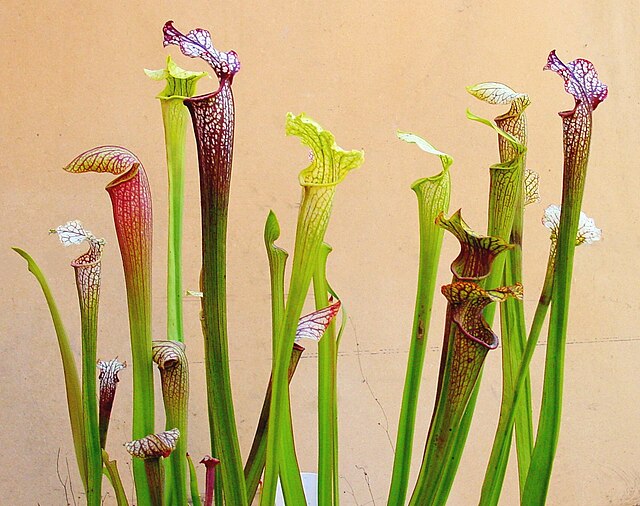
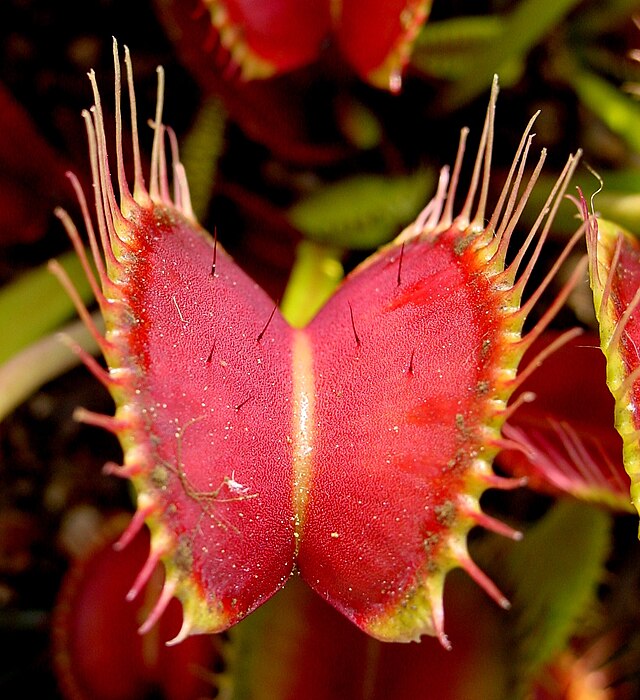
Carnivorous plant cultivation differs significantly from general gardening in its approach to growing media and water management. Many carnivorous plants naturally grow in nutrient-poor, acidic wetlands, so standard potting mixes and tap water can actually be harmful to them.
Growing Media for Carnivorous Plants
Carnivorous plants prefer nutrient-poor, acidic soil. Never use standard potting mixes or fertilizer-containing media.
Basic Growing Media Components
Sphagnum Moss This is the most commonly used material for carnivorous plant cultivation. It has excellent water retention and air circulation balance, creating a mildly acidic environment. Long-fiber New Zealand sphagnum moss is considered the highest quality. Since it degrades within 1–2 years, regular replacement is necessary.
Peat Moss (Unadjusted) It is acidic, low in nutrients, and well-suited for carnivorous plants. Always use "unadjusted" (pH-unadjusted) peat moss. Lime-neutralized "adjusted" peat moss cannot be used.
Perlite Mix it in to improve drainage and air circulation. It is a lightweight and clean material.
Vermiculite It is sometimes mixed in small amounts to enhance water retention.
Kanuma Soil (Fine Grade) An acidic growing medium with excellent air circulation and drainage. It is used mixed with sphagnum moss or peat moss.
Recommended Growing Media Mixes by Species
Venus Flytrap (Dionaea)
- Peat moss and perlite at 1:1
- Or sphagnum moss alone
Sarracenia
- Peat moss and perlite at 1:1
- For large plants: peat moss 2 : perlite 1 : kanuma soil 1
Nepenthes
- Sphagnum moss alone (most common)
- Sphagnum moss and perlite at 7:3
Sundew (Drosera)
- Peat moss and perlite at 1:1
- Or sphagnum moss alone
Watering-from-Below Method
Many carnivorous plants are managed using a method called "watering from below." The pot is placed in a saucer or tray filled with water, supplying moisture constantly from the bottom.
Basic Rules for Watering from Below
- Keep 1–3 cm of water constantly in the saucer
- Water level should just reach the bottom of the pot (the entire pot should not be submerged)
- Top up promptly when water is depleted (complete drying damages roots)
- Replace the water about once weekly to keep it clean
Species Not Suited for Watering from Below Nepenthes is prone to root rot, so constant watering-from-below is not recommended. Standard watering (watering when the growing medium begins to dry) is more appropriate.
Water Quality Management
Water quality is often overlooked in carnivorous plant cultivation.
TDS (Total Dissolved Solids) Guidelines
- Ideal: 50 ppm or below
- Acceptable: 100 ppm or below
- Danger: 200 ppm or higher
Most regions in Japan have tap water with TDS of around 50–150 ppm and can be used as-is in most cases. However, some areas exceed 200 ppm, so checking with a TDS meter provides peace of mind.
Recommended Water
- Rainwater: Lowest TDS and ideal. However, in areas with severe air pollution, discard the first few minutes
- RO water (reverse osmosis water): TDS is nearly zero. It is costly but safest
- Tap water: Usable in most regions. Standing water to allow chlorine to evaporate is even better
- Mineral water: Hard water cannot be used. Soft water (such as Southern Alps natural water) is acceptable
Water to Avoid
- Hard mineral water (such as Evian)
- Well water (may contain high mineral content)
- Alkaline ionized water from purifiers
- Water containing fertilizers
Common Problems and Solutions
Using Fertilizer-Containing Soil by Mistake Repot immediately. Carnivorous plant roots are sensitive to nutrient salts and will be damaged by fertilizer-containing soil.
Watering-from-Below Water has Gone Bad If the water is green or turbid, algae or bacteria are growing. Replace all the water and clean the tray. Summer especially promotes decay, so increase water-change frequency.
Poor Plant Condition with Tap Water High TDS is likely. Try switching to rainwater or RO water.
Carnivorous Plant Growing Media Mix Recipes
Here are optimal growing media mixes by species.
Venus Flytrap and Sarracenia (Temperate Species)
- Peat moss : perlite = 1 : 1
- Or peat moss : kanuma soil = 1 : 1
- Acidic pH 4.0–5.5 is ideal
Nepenthes (Tropical Species)
- Sphagnum moss alone (easiest)
- Or peat moss : perlite : bark = 2 : 1 : 1
- Good drainage is essential
Sundew
- Peat moss : sand (silica sand) = 1 : 1
- Planting on fresh sphagnum moss is also effective
Watering-from-Below Management Techniques
The basic principle is to keep the watering-from-below depth such that the growing medium surface stays constantly moist.
| Season | Watering-from-Below Depth | Notes |
|---|---|---|
| Spring–Summer | 1/4–1/3 of pot height | Watch for drying out. Check daily |
| Fall | About 1/5 of pot height | Gradually reduce |
| Winter (Dormant) | Minimal | Growing medium slightly moist |
Replace the watering-from-below water regularly, ensuring old water does not accumulate. If algae develops, wash the container and completely replace the water.
Common Mistakes and Improvements
Mistake 1: Not Changing Watering-from-Below Water Continually topping up only causes minerals and algae to concentrate through evaporation. Completely draining and replacing the tray water once monthly prevents root damage and algae growth.
Mistake 2: Using Adjusted Peat Moss Some peat moss at garden shops has been pH-adjusted with lime. Using this damages carnivorous plant roots. Always check that "unadjusted" is clearly marked when purchasing.
Mistake 3: Maintaining the Same Water Level Year-Round Summer brings risk of rot, winter of freezing. Summer is safer with shallower water changed daily; winter should be reduced to just keep the pot bottom damp.
Find Carnivorous Plants on GrowerDirect
On GrowerDirect, you can purchase carnivorous plants directly from specialist growers, properly managed in appropriate growing media. You can also consult with growers about growing media mixes and water quality, so they can teach you management methods suited to your environment.