Drosera Propagation Guide — Leaf Cuttings, Division & Seeds
Propagating sundews: leaf cutting technique, division method, seed sowing, and species-specific propagation recommendations.
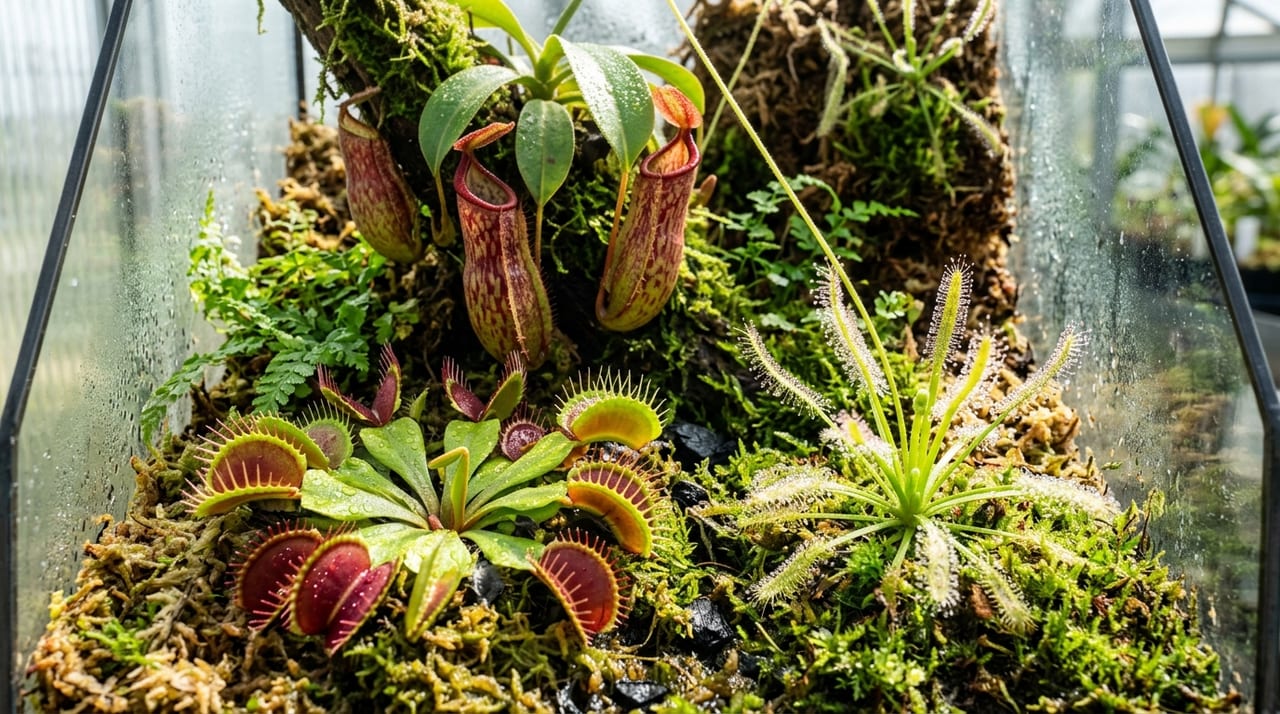
Key Takeaways
Propagating sundews: leaf cutting technique, division method, seed sowing, and species-specific propagation recommendations.
Sundew (Drosera) is a fascinating carnivorous plant with glistening mucilage that sparkles like precious jewels. Many species are remarkably easy to propagate, and can be multiplied through multiple methods including leaf cuttings, division, and seed sowing. Expand your collection by growing your favorite specimens and enjoying the satisfaction of cultivating new plants from existing stock.
Overview of Sundew Propagation Methods
Sundew propagation can be accomplished through three primary methods, each with distinct advantages and suitable applications depending on the species and your experience level.
| Method | Difficulty | Time Required | Best Suited Species |
|---|---|---|---|
| Leaf Cuttings | Low to Medium | 2-3 months | Capensis, Adelae, and others |
| Division | Low | Immediate independent plants | Colony-forming types generally |
| Seed Sowing | Medium | 3-6 months | Nearly all species |
Propagation by Leaf Cuttings
Leaf cutting is the most popular method for sundew propagation. This efficient technique can yield multiple new plants from a single leaf, making it highly attractive for enthusiasts seeking to expand their collection economically and quickly.
Species Best Suited for Leaf Cuttings
- D. capensis (Cape Sundew): Achieves the highest success rate and is ideal for first-time leaf cutting attempts
- D. adelae (Lanceleaf Sundew): Demonstrates exceptionally high success rates with leaf cutting propagation
- D. binata (Forked Sundew): Characterized by two-pronged leaves and easily propagated through cuttings
- D. tokaiensis (Tokai Sundew): Native to Japan, this hardy species propagates easily through leaf cuttings
Leaf Cutting Procedure
- Leaf Selection: Choose healthy, young leaves while avoiding old or damaged foliage
- Leaf Removal: Using tweezers, carefully remove leaves at the base, preserving as much of the petiole (leaf stalk) as possible
- Soil Preparation: Moisten sphagnum moss and spread it in a shallow container, or use a 7:3 mixture of peat moss and perlite
- Leaf Positioning: Lay leaves gently on the moss surface with light pressure—there is no need to bury them completely
- Environmental Setup: Cover the container with plastic wrap or a lid to maintain high humidity and establish watering tray management
- Placement: Position in bright but indirect light, avoiding direct sunlight exposure
- Waiting for Growth: Expect to see small shoots emerging from the leaf surface or edges within 2-8 weeks
Tips for Maximizing Success Rates
- Position leaves in substrate immediately after removal to prevent desiccation
- Maintain consistently high humidity levels (ideally 80% or above)
- Keep temperature within the optimal range of 20-25°C
- Remove any visible fungal growth immediately to prevent disease spread
Propagation by Division
Division represents the simplest and most reliable propagation method and proves especially effective for colony-forming varieties of sundews. This straightforward technique requires minimal special knowledge or equipment, making it ideal for beginners.
Species Best Suited for Division
- D. capensis (Cape Sundew): Forms colonies readily and divides easily
- D. spatulata (Spoon-leaf Sundew): Clusters grow naturally in rosette formations, facilitating separation
- D. adelae (Lanceleaf Sundew): Produces offshoots readily from root systems
- D. prolifera (Proliferous Sundew): Develops multiple plantlets via runners making division straightforward
Division Procedure
- Plant Removal: Carefully remove the entire plant clump from its container
- Root Assessment: Gently wash away old sphagnum moss in water to examine root condition thoroughly
- Separation: Divide at naturally occurring breaks rather than forcefully tearing the plant apart
- Root Verification: Ensure each separated section possesses sufficient roots for independent growth
- Transplanting: Plant each division in fresh sphagnum moss in separate containers
- Acclimatization: For 1-2 weeks after division, manage with elevated humidity levels in bright but sheltered conditions
Optimal Timing
- Spring during active growth (March to May) is most suitable
- Early summer when growth is vigorous also works well
- Avoid dividing during dormant periods
Propagation by Seed Sowing
Seed sowing requires patience but rewards the grower with the ability to produce many plants simultaneously. This method also offers the unique pleasure of creating new individual plants through cross-pollination between different varieties.
Seed Acquisition
- Self-Collection: Naturally pollinate or hand-pollinate flowers to collect seeds from blooming plants
- Purchasing: Obtain seeds from specialty retailers or plant growers
- Note: Sundew seeds are extremely small, nearly the size of sand grains
Seed Sowing Procedure
- Soil Preparation: Mix peat moss and perlite in a 7:3 ratio, place in a container, and thoroughly moisten
- Sterilization: Pour boiling water over soil to sterilize, then allow cooling before proceeding
- Sowing: Scatter seeds across the soil surface carefully—they are so small that covering is unnecessary
- Tray Setup: Place container in a watering tray and establish capillary watering management
- Covering: Cover with plastic wrap or a lid to maintain high humidity throughout germination
- Location: Place in a bright location such as under LED grow lights for consistent results
Germination Timeframes
- Capensis and Spatulata varieties: 2-4 weeks
- Temperate species: Often require cold stratification (4-6 weeks in a refrigerator) to break dormancy
- Germination may be staggered, with seedlings appearing sporadically over several months
Seedling Management After Germination
- Continue capillary watering and maintain high humidity after sprouting
- Transplant to individual containers once 3-4 true leaves have developed
- Keep seedlings in bright but indirect light, avoiding direct sun exposure
- Seedlings demonstrate successful establishment when mucilage droplets become visible
Post-Propagation Management Essentials
- Manage newly propagated plants in identical conditions to parent plants
- Small plants require exceptional attention to humidity as they are particularly drought-sensitive
- Fertilization is unnecessary—plants obtain necessary nutrition naturally from captured insects
- Until plants achieve stable growth, manage in partial shade rather than direct sunlight
Notable Sundew Species and Their Characteristics
| Species Name | Native Region | Plant Size | Cultivation Difficulty | Key Characteristics |
|---|---|---|---|---|
| D. capensis | South Africa | Medium | Easy | Most beginner-friendly, excellent starter species |
| D. spatulata | Asia to Oceania | Small | Easy | Compact and charming appearance |
| D. rotundifolia | Temperate Northern Hemisphere | Small | Medium | Native to Japan, requires dormant period |
| D. binata | Australia | Large | Medium | Features distinctive two-pronged leaves |
| D. regia | South Africa | Large | Difficult | The sundew royalty with impressively large leaves |
Tips for Successful Sundew Cultivation
Addressing Lack of Mucilage Production
Mucilage failure typically stems from three primary causes:
- Insufficient Light: Sundews fail to secrete mucilage without adequate illumination. Provide 4-6+ hours of direct sunlight daily or position under bright LED grow lights
- Low Humidity Levels: Mucilage dries out when ambient humidity is insufficient. Maintain humidity above 50% through misting, grouping plants, or using humidity trays
- Water Quality Issues: Extended use of mineral-rich tap water damages roots and inhibits mucilage production. Switch to rainwater or distilled water for best results
Sundew propagation through leaf cuttings and seed sowing offers accessible entry into successful plant multiplication. Embrace the challenge of propagating these jewel-like carnivorous plants—it truly represents one of the great pleasures of sundew cultivation.
Finding Sundews at GrowerDirect
At GrowerDirect, you can purchase healthy, propagation-ready sundew specimens directly from specialist growers. A significant advantage involves consulting directly with growers regarding species-specific propagation techniques and success strategies. Begin building your sparkling sundew collection at GrowerDirect, where every glistening droplet of mucilage tells a story of careful cultivation and horticultural expertise.